As the hotel industry keeps evolving toward a smarter and more personalized approach, traditional hotel management methods are increasingly failing to meet the needs of the new generation of travelers. Key cards, which are one of the most fundamental amenities in hotels, are designed to provide guests with safe and convenient access to their rooms. With technological advancements, traditional magnetic stripe cards are gradually being phased out, while RFID key cards, which are a more advanced and secure alternative, are quickly being adopted by an increasing number of upscale hotels.
As one of the leading hotel brands in the world, Hilton Hotels is at the forefront of this tech transformation, opting to introduce RFID key cards to enhance the guest experience and boost hotel operational efficiency.

Overview of RFID Technology
RFID technology stands for Radio Frequency Identification technology, which uses radio frequency waves to transmit information for identifying objects, reading information, and exchanging data.
Composition of RFID System
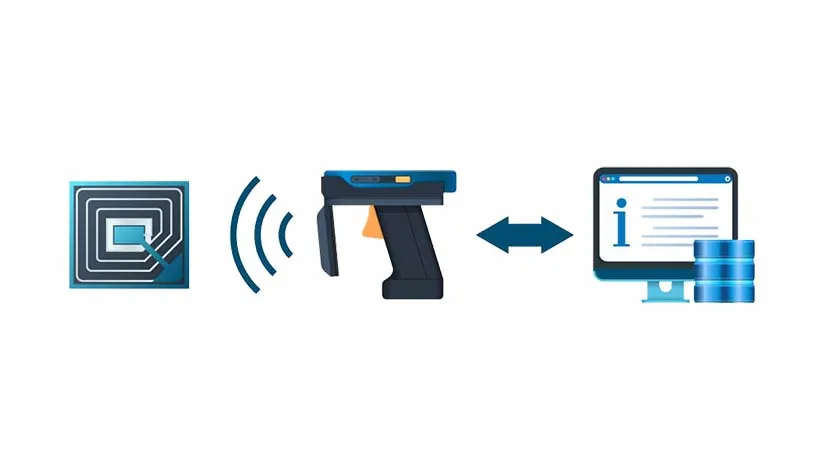
Its operating principle is based on a simple wireless communication mechanism, typically consisting of RFID tags, readers, and data transmission systems.
RFID Tags: Each RFID tag contains a microchip and an antenna that can store unique identification information about the object. When the tag enters the radio frequency range of the RFID reader, it automatically sends the stored information to the reader.
RFID Reader: The reader is responsible for transmitting radio waves and receiving the signal sent back by the RFID tag. Once it reads the information from the RFID tag, it transmits the data to the relevant system (such as the hotel management system, access control system, etc.) for appropriate actions.
Data Transmission System: Through wireless communication, the interaction between the RFID tag and the reader completes the information transmission, and the system reacts based on the received data.
How RFID Key Cards Work
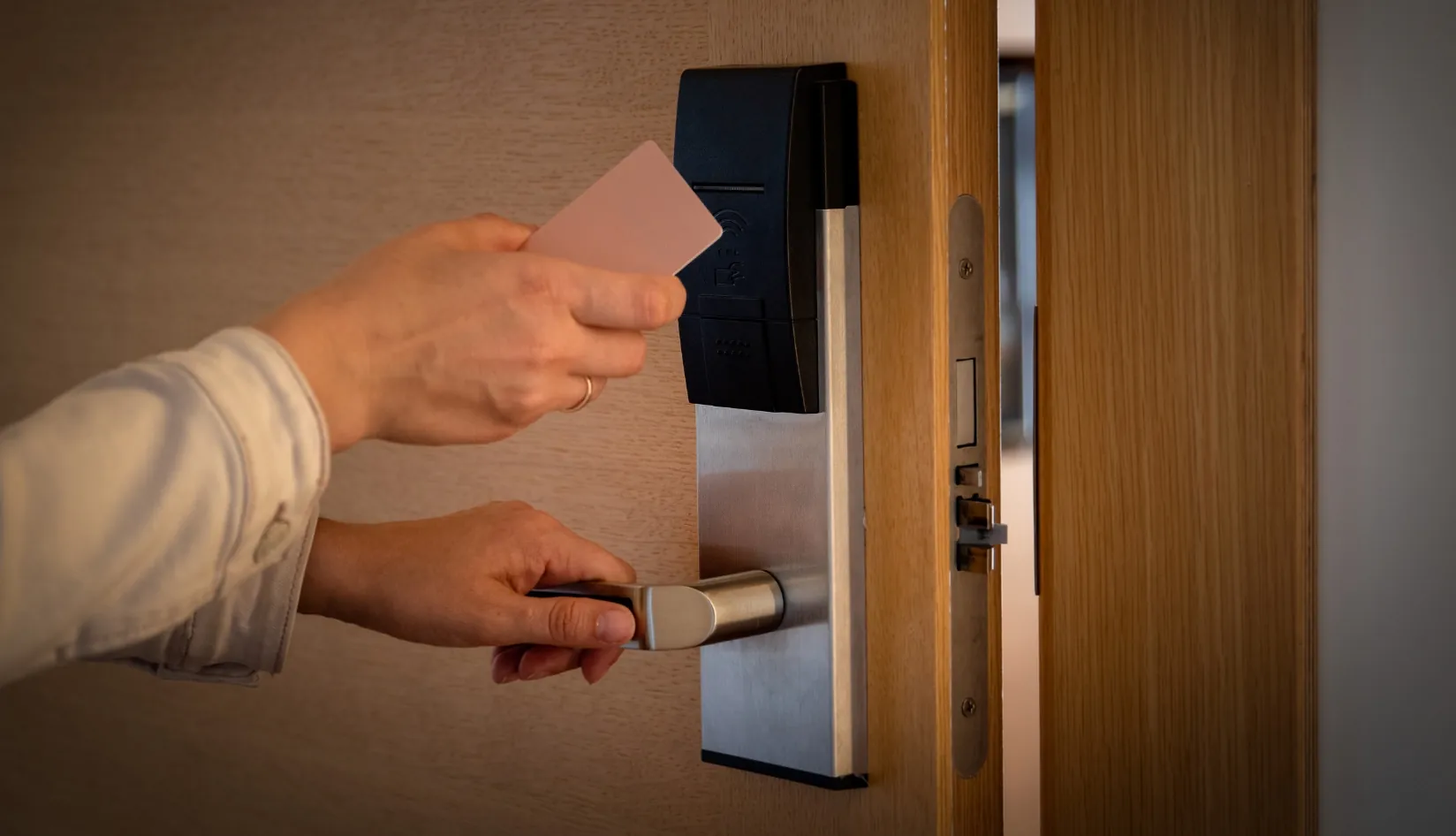
In the hotel industry, RFID key cards are an application of RFID technology. Each RFID key card acts as an RFID tag. When guests hold their RFID key cards near the sensing area of the door lock, the RFID tag in the card sends a radio signal to the reader in the door lock via the antenna. The door lock reads the card information and verifies it against the hotel’s management system. If the information matches, the door lock opens immediately, allowing the guest to enter the room. This entire process does not require inserting the card or any physical contact, greatly enhancing the convenience of use and hygienic safety.
Advantages of RFID Technology
As a modern object identification and data transmission technology, the application of RFID technology in the hotel industry has brought numerous advantages, particularly in key card systems, where RFID’s unique benefits are especially prominent:
Security
RFID key cards are more secure than traditional magnetic stripe cards. Magnetic stripe cards are susceptible to magnetic interference, making the content easily copyable or alterable, which poses security risks. RFID cards employ encryption technology and unique identification codes, rendering their data difficult to replicate or forge. Additionally, RFID cards do not have any magnetic stripes or physical contact points, reducing the risk of card damage or data leakage.
More importantly, RFID key cards can utilize encryption algorithms to ensure that only authorized users can access specific rooms. Every time an RFID card is used to open a door, the system real-time verifies the access request, effectively preventing unauthorized use and access.
Convenience
The convenience of RFID key cards is one of their biggest advantages. Unlike traditional mechanical keys or magnetic stripe cards, RFID cards can be automatically identified by sensors without inserting, sliding, or rotating the card. Guests simply need to bring their RFID key card close to the sensing area of the door lock, and the lock will automatically open. This process is very straightforward, saving guests the trouble of fumbling for keys and inserting cards, thus enhancing check-in efficiency.
Moreover, RFID technology supports contactless operation, meaning that guests do not need to physically touch the door lock or sensor when using their key card, which greatly improves hygiene and safety, especially during periods of epidemic prevention and control. This feature is particularly significant.
Efficiency
The data transmission speed of RFID key cards is very rapid, meaning that the hotel’s door locks can read data and verify it in a very short time. Compared to traditional magnetic stripe cards, RFID key cards can exchange information almost instantly, whether it’s opening doors, setting permissions, or providing operational feedback—all can be completed in a flash, ensuring a smooth and efficient customer experience.
In addition, RFID key card technology enables long-distance identification, so guests do not have to fully touch the card to the reader for identification verification. This further boosts efficiency, especially during peak check-in times, reducing wait and line times.
Why Hilton Uses RFID Key Cards
As one of the top hotel brands in the world, Hilton Hotels is constantly working to enhance the guest check-in experience and improve operational efficiency through innovative solutions. With the technology continually evolving, RFID (Radio Frequency Identification) key cards have become a crucial tool for Hilton in achieving these objectives. By implementing RFID key cards, Hilton not only boosts guest convenience and security but also streamlines hotel operations and energy management.
Enhancing Customer Experience
No more waiting in line: Guests can obtain key cards via digital or mobile apps, minimizing wait times at the front desk. The traditional hotel check-in process typically requires guests to line up at the front desk to collect their key cards, especially during peak periods, often leading to excessive wait times. With the rollout of RFID key cards, Hilton Hotels offers digital key services through the Hilton Honors app, enabling guests to retrieve electronic keys on their smartphones ahead of time and head straight to their rooms, eliminating the hassle of waiting. The digital key feature not only enhances check-in efficiency but also saves guests time, making their check-in experience much smoother.
Contactless entrance: RFID technology raises hygiene standards by reducing physical contact. The ongoing global pandemic has amplified the significance of contactless technology. Traditional key cards necessitate physical interaction with door locks, while RFID key cards leverage radio frequency technology, allowing guests to open doors without touching the locks. RFID cards, or smartphones that directly sense the door locks, significantly cut down on contact points, thus elevating hygiene standards and increasing guests’ sense of safety and comfort.
“Digital Key” feature: Hilton’s app lets guests unlock their doors directly using their smartphones for added convenience. Beyond RFID cards, Hilton’s app offers a digital key feature, enabling guests to unlock their room doors using their smartphones. Through Bluetooth or other wireless communication technologies, guests don’t need to fumble with traditional cards or keys; they can breeze right into their rooms with their phones. This feature makes life easier for modern travelers, particularly those who prefer not to carry multiple items. Digital keys streamline the whole lodging experience.
Improving Hotel Operational Efficiency
Automated process: Streamlining check-in and check-out boosts staff productivity. The introduction of RFID technology has made the check-in and check-out process at hotels much more automated. Guests can obtain electronic keys or RFID cards in advance via the app, eliminating the need to queue at the front desk for check-in. For check-out, guests can also complete the process through the app without having to return to the front desk to return the key card. This reduced interaction with the front desk allows staff to focus more on other tasks, such as addressing customer needs, thereby enhancing overall operational efficiency. Moreover, the RFID system can seamlessly integrate with the hotel’s management system to enable functions like automatic room assignments and status updates, further elevating the automation of hotel operations.
Energy-saving control: The RFID system can connect with the hotel’s smart system to automatically adjust air conditioning, lighting, and more to boost energy efficiency. The RFID key card isn’t just a way to unlock doors; it can also interface with the hotel’s smart systems for optimizing energy use. For instance, when a guest enters their room with an RFID card, the hotel’s air conditioning, lighting, and other systems will automatically power up, and when the guest leaves, these devices will shut down or switch to energy-saving mode. This intelligent control not only boosts energy efficiency but also aids in reducing operational costs and carbon emissions, supporting the hotel’s sustainability goals.
Enhanced Security and Anti-Theft Features
Preventing key card duplication: Each RFID card is unique and hard to replicate or tamper with. Compared to traditional magnetic stripe cards, RFID key cards are substantially more secure. Each RFID card possesses a unique identification code, ensuring data security and preventing tampering through encryption technology. Traditional magnetic stripe cards are vulnerable to copying or theft, but RFID cards make counterfeiting quite challenging thanks to their high-frequency wireless communication and encryption protection, which effectively bolsters hotel security.
Permission control: Through system settings, hotels can accurately manage which guests have access to specific areas or rooms. The RFID system also comes with robust permission management capabilities. Hotels can set varying access levels based on guests’ reservation details, ensuring that only authorized guests can enter designated rooms or areas. For example, certain VIP guests may be granted access to exclusive areas, while regular guests may be prohibited from entering those restricted zones. This precise access control not only enhances guest security but also helps hotels manage the movement of guests and employees better, preventing unauthorized individuals from entering sensitive spaces.

The Role of RFID Key Cards in Smart Hotels
With continuous advancements in technology, the operational model of traditional hotels is undergoing an unprecedented digital and intelligent transformation. Smart hotels have become a major trend in the modern hospitality industry, and RFID technology, particularly RFID key cards, has emerged as a core component of this evolution. RFID technology not only enhances the customer experience but also makes hotel management systems more efficient, safe, and intelligent.
Definition of Smart Hotels
Smart hotels refer to a contemporary hotel model that enhances operational efficiency and customer experience by integrating automation technology, Internet of Things (IoT) devices, and advanced information management systems. In smart hotels, various devices and services are interconnected via the Internet, forming an intelligent management and service network.
Automated services: Automation technology allows hotels to streamline processes like check-in, check-out, and room service, reducing manual operations and boosting efficiency.
IoT device integration: IoT technology connects various equipment in the hotel (like air conditioners, lights, TVs, curtains, etc.) to the hotel management system, enabling guests to remotely control in-room devices via smartphones, voice assistants, etc.
Personalized services: Through big data analysis and customer behavior prediction, smart hotels can offer personalized services to cater to the individual needs of different guests.
RFID technology is a key driver in the development of smart hotels. It enables hotels to provide guests with more convenient and secure services through digitalization, automation, and intelligence.
The Relationship Between RFID Technology and Smart Hotels
As a significant part of smart hotels, RFID key cards play a vital role.
Intelligent management: RFID key cards are not just tools for guests to access their rooms; they are closely integrated with the hotel’s management system. This integration allows for real-time updates on room status, cleaning status, and more. Hotel managers can monitor the status of each room in real-time, facilitating effective resource allocation and management.
Seamless smart experience: RFID key cards interact with IoT devices throughout the hotel. When guests use RFID cards or mobile phones to unlock doors, other smart systems (like air conditioning, lighting, and curtains) can automatically adjust to preset modes, creating a more personalized atmosphere. For instance, upon entering the room, the air conditioner can set to a comfortable temperature, lights can turn on automatically, and even the room’s ambiance can adjust based on guest preferences.
Integrated service platform: With RFID systems, hotels can achieve seamless connections between various service systems. For example, RFID key cards can serve multiple functions beyond unlocking doors; they can also link to dining, fitness, parking, and other service systems within the hotel. Guests can manage everything with a single card or mobile phone, greatly improving convenience and service quality.
The Future of Customer Experience
RFID key cards not only transform the check-in process but also usher in numerous innovations and personalized services for the future customer experience:
Personalized check-in experience: Combining RFID technology with big data and AI enables tailored services for each guest. For instance, hotels can prepare room environments based on guests’ check-in history and preferences. When guests enter with an RFID key card or digital key, the air conditioning, TV, lighting, and other devices will automatically adjust to their favored settings. RFID can also provide personalized recommendations, suggesting local attractions and dining options.
Seamlessly connected smart services: RFID systems facilitate a smoother service experience in smart hotels. For example, guests can directly receive their digital room key via a mobile app at check-in. Throughout their stay, they can control room devices using voice assistants and access other value-added services through the RFID key card, such as restaurant reservations and spa bookings. All operations can be managed on a single platform, enhancing convenience.
Efficient customer service: RFID technology makes interactions between guests and hotels more efficient. Guests no longer need to wait in line at the front desk; they can quickly retrieve room information through an app or self-check-in kiosk. For check-out, guests can complete the process using their digital key without returning to the front desk. This efficient process saves time and offers a smoother check-in experience.
Technology Trends in the Hotel Industry
The widespread adoption of RFID key cards is a significant indicator of the hospitality industry’s digital transformation. As RFID technology continues to develop and gain traction, the trends in the hotel industry are shifting toward greater intelligence and automation. In the future, RFID key cards will integrate with more emerging technologies to collectively advance the industry.
Integration of Artificial Intelligence and RFID: AI technologies can be deeply interwoven with RFID systems, utilizing customer behavior data and preferences to predict guest needs in advance and automatically adjust hotel settings. AI also aids operational efficiency by managing room occupancy and resource allocation through predictive analytics.
Combination of Augmented Reality (AR) and RFID: Future integration of AR technology with RFID may provide hotel guests with an even more immersive experience. For example, guests could scan RFID tags using smart devices to access real-time information about hotel facilities or nearby attractions and even navigate to specific locations like restaurants or meeting rooms within the hotel via AR.
Application of Blockchain and RFID: Blockchain technology enhances data security. When combined with RFID systems, it offers a more secure and transparent management process for hotel reservations, payments, and customer information. For instance, blockchain can ensure the uniqueness and security of RFID key cards, mitigating risks of data leakage and fraud.
Collaborative Development of 5G and RFID: 5G technology will significantly accelerate and stabilize data transmission speeds of RFID systems, enabling more complex real-time interactions and remote control services. Hotels will be able to offer immediate and intelligent services, such as real-time monitoring of room statuses and automatic adjustments to environmental settings.

Global Promotion of Hilton RFID Technology
As we dive into the age of intelligence and digitalization, Hilton Hotels has been actively pushing for tech innovation to boost customer experience and hotel operation efficiency. RFID technology, a key part of smart hotel solutions, is now being widely used across the globe. By rolling out RFID key cards in various countries and regions, Hilton Hotels is not just making check-ins easier for guests, but also strengthening its brand image and customer loyalty.
Application Scope: Global Rollout of RFID Key Cards
Hilton Hotel Group is aggressively promoting RFID tech worldwide, particularly in the planning and renovation phases of hotels, where RFID key cards have become essential. As guests demand more convenience and security, Hilton has started to implement RFID key cards in hotels globally, gradually replacing old-school magnetic stripe cards and mechanical keys.
New Hotels: RFID key cards have almost become the standard in Hilton’s newly opened hotels. New hotels typically adopt the latest technology to cater to modern travelers’ needs. RFID tech not only elevates the hotel’s advanced and modern vibe but also helps it stand out in a competitive market.
Renovated Hotels: For existing hotels, Hilton is also gradually rolling out RFID tech during renovations and upgrades. During these updates, Hilton usually revamps the room door lock system by installing smart locks that support RFID, enabling contactless unlocking and automated management. This enhancement improves the guest experience and gives older hotels a fresh start.
For instance, Hilton has integrated RFID key cards into most of its luxury brand hotels around the globe (like Waldorf, Conrad, and Hilton), driving the digitalization and intelligence of their operations. With RFID key cards available in many regions, Hilton not only elevates the guest experience but enhances its competitiveness on the world stage.
Brand-Specific Implementations: RFID Use Across Hilton’s Brands
Hilton Hotel Group has various brands, each adopting different levels of RFID tech based on their target clientele.
Waldorf Astoria: As one of the priciest brands in the Hilton portfolio, Waldorf Astoria’s guests expect a high-end experience and personalized service. Waldorf was the pioneer in fully implementing RFID key cards in its new hotels and renovation projects to enhance the guest experience. Through RFID, Waldorf not only provides a contactless door-opening service but also allows for personalized room settings, such as auto-adjusting temperature and lighting through smart device connectivity.
Conrad Hotels & Resorts: As a high-end Hilton brand, Conrad hotels focus on delivering top-notch service for business and high-end leisure travelers. Conrad is promoting RFID key cards worldwide and using RFID systems to automate and modernize room management. Moreover, Conrad integrates RFID key cards with its mobile app to offer a “digital key” feature, allowing guests to unlock their rooms via their phones, without needing physical cards or keys.
Hilton Hotels & Resorts: As Hilton Group’s flagship brand, Hilton Hotels has rolled out RFID key cards in most of its locations worldwide. They’ve launched a digital key feature through the “Hilton Honors” app, enabling guests to get digital keys for their rooms quickly and easily via their phones. Hilton’s RFID system is also intricately linked with other smart features in the hotel, offering more convenient room controls and personalized services.
Hilton Garden Inn: Among mid-range brands, Hilton Garden Inn is also starting to adopt RFID key cards. While its customer base is more budget-conscious, implementing RFID allows Garden Inn to enhance the check-in experience, cut down on wait times, and boost guests’ sense of security. Unlike high-end brands, Garden Inn’s RFID application is more about improving check-in efficiency and streamlining operations.
Digital Transformation Results: RFID System Boosts Brand Image and Customer Loyalty
Through the global promotion of RFID technology, Hilton has successfully driven its hotel management’s digital transformation, achieving notable results. This shift not only enhances customer experience but significantly boosts brand image and customer loyalty.
Enhancing Brand Image: With tech evolving, customers now demand more than just basic accommodation; they seek tech-savvy, modern service experiences. The use of RFID tech allows Hilton Hotels to deliver more convenient, safe, and smart services, helping to forge a brand image synonymous with cutting-edge technology, innovation, and quality. Specifically, high-end brands like Waldorf Astoria and Conrad offer seamless smart check-in experiences, solidifying their luxurious and upscale brand identity.
Improving Customer Loyalty: The introduction of RFID systems improves guests’ check-in experiences and reinforces their loyalty to the brand. Through the Hilton Member App, guests can easily manage bookings, access digital keys, reserve add-on services, etc., while enjoying a more personalized and convenient service experience. RFID tech cuts down on wait times, speeds up check-ins, and boosts guest satisfaction, leading to increased return rates and loyalty.
Boosting Operational Efficiency: RFID technology not only enhances customer experience but also streamlines hotel operations. With the RFID system, hotels can monitor occupancy, room status, and cleaning status in real-time, simplifying room management. At the same time, RFID works with other smart devices, automatically adjusting room environments and optimizing energy use, further boosting hotel operational efficiency and energy savings.

Challenges and Solutions of RFID Technology
While RFID technology has brought numerous advantages to the hotel industry and advanced the intelligent and digital transformation of hotels, there are still challenges in the implementation process. This is particularly true for the renovation and systems integration of older hotels, where the application of RFID technology may encounter issues like cost and system compatibility. To tackle these challenges, hoteliers and tech providers have adopted various solutions to ensure the smooth application of RFID technology and promote the modernization of hotel management.
Cost: The High Initial Cost of Implementing RFID Technology, Especially in Renovating Old Hotels
The high initial cost of implementing RFID technology is a major concern for many hotels considering this adoption. RFID systems involve investments in hardware, software, and facility upgrades, and the cost issues are more pronounced when older hotels are renovated or equipment is upgraded. Specifically, hotels need to purchase RFID-enabled smart locks, RFID key cards, readers, and other related equipment, and may need to upgrade their network and management systems as well. Additionally, implementing RFID requires training staff to ensure they are proficient in using the new system, which adds to expenses.
Solutions
Phased Implementation: To minimize one-time investments, hotels can opt for a phased approach to rolling out RFID technology. For instance, RFID tech might be implemented first in new or high-end hotels, with gradual expansion to others based on pilot experiences. Existing hotels can start with high-traffic areas like lobbies or VIP rooms before gradually replacing the traditional key card and lock systems.
Collaboration with Tech Suppliers: Hotels can partner with RFID technology suppliers to select tailored solutions and negotiate lower prices through long-term collaborations. Besides, some suppliers may offer equipment leasing or installment payment plans to alleviate financial pressure on hotels.
Long-term Savings: Although the initial investment in RFID technology is high, it can yield substantial long-term savings for hotels. For example, RFID can reduce labor costs (like decreasing workload at front desk check-ins) and enhance energy efficiency (by minimizing energy waste through smart room controls), thereby gradually offsetting the initial investments over time.
Enhancing Customer Satisfaction and Loyalty: RFID technology can significantly enhance the customer experience, offering features like contactless unlocking and personalized services, boosting customer satisfaction and loyalty, ultimately resulting in increased hotel revenue. Positive customer experiences and strong brand reputations enhance hotel market competitiveness, leading to more repeat customers and higher occupancy rates.
System Compatibility: Ensuring RFID Technology is Compatible with Existing Hotel Management Systems
Many hotels—especially older ones—may not support RFID technology or may face compatibility issues during the integration process. RFID technology requires seamless integration with other core systems, like the hotel’s property management system (PMS), customer relationship management system (CRM), and smart room control system, which necessitates upgrades or transformations of existing systems. In this respect, system compatibility issues can result in project delays, additional technical investments, or system failures.
Solutions
Choose Open-Platform RFID Solutions: When selecting RFID technology suppliers, hotels should prioritize solutions providing open platforms to ensure system compatibility. Open platforms enable RFID systems to integrate smoothly with existing management systems, lowering the difficulty and cost of upgrades. Suppliers typically provide dedicated API interfaces or custom services to help hotels achieve compatibility with other systems.
System Upgrades and Integration: For older hotels, upgrading their existing management systems might be necessary to support RFID technology. Before implementing RFID, hotels can conduct detailed system assessments to pinpoint which components require upgrades and collaborate with system suppliers to ensure seamless integration with RFID technology. For more complex integration issues, hiring professional tech consultants or engineers can help ensure the entire system operates smoothly.
Cloud Technology and Data Management: With the rise of cloud computing, more hotel management systems are moving to the cloud, offering greater flexibility and compatibility. RFID systems can be integrated into cloud platforms to ensure real-time data synchronization and management. This cloud integration solution helps hotels achieve unified management of equipment, data, and systems, improving operational efficiency and reducing reliance on traditional hardware and software systems.
Supplier Training and Technical Support: Implementing RFID technology typically requires suppliers to provide professional technical support and training, ensuring hotel tech teams can effectively manage and maintain the system. Suppliers can offer regular technical training and troubleshooting services to ensure stable system operation. Additionally, hotels should establish comprehensive maintenance and upgrade protocols to address compatibility issues promptly.
Other Challenges and CopingStrategies
Technology Updates and Iterations: With the continuous advancement of RFID technology, new technologies and standards may frequently emerge. Hotels need to ensure their RFID systems can adapt to these updates and evolutions. A strategy to resolve this is to choose a highly scalable system that allows for easy technology upgrades in the future.
Privacy and Data Security: The customer data collected and transmitted by RFID technology may raise privacy concerns. Hotels must ensure their RFID systems comply with privacy protection regulations (like GDPR) during data transmission and storage. To this end, hotels should opt for RFID systems equipped with encryption tech to safeguard customers’ personal information from leaks or misuse.
Staff Adaptation and Training: Once RFID technology is introduced, hotel staff may require time to adjust to the new operational methods. Hotels should conduct training in advance to help employees familiarize themselves with RFID tech, improving work efficiency. Simultaneously, hotels should set up a tech support team to tackle issues during day-to-day operations.
Conclusion
Hilton’s selection of RFID key cards as a smart hotel solution showcases its strategy to enhance customer experience, optimize operational efficiency, and boost security. RFID technology not only offers guests a more convenient check-in process but also streamlines hotel operations with smart management, upping service quality and resource utilization. Plus, the security benefits of RFID help protect data for both hotels and their customers, building trust and satisfaction.
Looking ahead, RFID key cards are just a slice of the smart hotel movement. With technology continuously advancing, we can expect more innovations in the hotel industry, such as artificial intelligence, the Internet of Things, and augmented reality. These advancements will further improve the lodging experience and push the hospitality sector toward a more convenient and intelligent future.
As a leader in the industry, Hilton’s efforts in promoting and implementing RFID technology have provided valuable insights and benchmarks for other hotel brands. This initiative not only drives the digital transformation of the entire industry but might also inspire more hotels to adopt these trends, serving global customers with smarter and more comfortable accommodations.

FAQs
How RFID key cards work in hotels?
RFID key cards communicate with door lock systems via radio waves. Each card has a unique ID encoded in it. When the card is near the door lock, the lock’s RFID reader picks up the signal from the card and checks its validity. If it’s valid, the lock will automatically open. Unlike traditional magnetic stripe cards, RFID cards don’t need to touch the lock directly, making it easier and safer to use.
Does Hilton Hotels have mobile apps that support RFID?
Yes, Hilton Hotels offers a mobile app that utilizes RFID technology – Hilton Honors. Through this app, members can use their phones as digital keys to access their rooms without the hassle of carrying physical key cards. This streamlines the check-in process and cuts down wait times at the front desk, providing a more convenient service for guests.
What are the benefits of RFID technology for hotel security?
Anti-copying: Each RFID card has a unique identifier, making it tough to duplicate or tamper with, and harder to forge than traditional magnetic stripe cards.
Access control: Hotels can accurately manage which guests can enter certain areas or rooms through the system, boosting security.
Data encryption: Sensitive information (like customer data) on RFID cards is typically encrypted, enhancing data security further.
Are RFID key cards appropriate for all kinds of hotels?
Yes, RFID key cards can work for all hotel types, but hotels of various sizes and classes may choose different methods of implementation based on their needs, budget, and target market. Luxury hotels often prioritize RFID technology to enhance guest experience, while mid-range hotels might adopt it gradually based on cost-effectiveness. In some older hotels, the costs and technical compatibility of retrofitting RFID systems can pose challenges, but as technology advances and equipment updates occur, RFID is becoming more of an industry standard.
How does RFID technology impact hotel staff workflows?
The introduction of RFID technology has streamlined the workflow for hotel employees significantly. First, the check-in and check-out processes have become much more efficient, reducing the burden on staff at the front desk who handle key cards. Second, the RFID system can integrate with other hotel management systems (like room status management and smart control systems), enabling staff to monitor room statuses (like check-ins, cleaning, etc.) in real time. By cutting down on manual tasks, employees can focus more on improving customer service quality, boosting overall work efficiency.