


In today’s increasingly digital campus environment, the smart student ID card has become much more than a simple identification badge. Universities and schools around the world are shifting from traditional PVC cards to RFID-powered smart IDs that can manage multiple functions—from door access to cashless payment—within a single tap. As student expectations grow and campuses become more connected, RFID technology has emerged as the backbone enabling security, efficiency, and a seamless student experience. This article will explore why RFID is not just a feature, but the essential foundation for any truly smart student ID system, detailing how this technology works and the unparalleled advantages it brings to the modern campus.
1. What Makes a Smart Student ID Card “Smart”?

A smart student ID card integrates an RFID chip that allows contactless communication between a card and a reader device. This technology enables schools to automate various operations that once required manual verification or multiple separate systems.Unlike conventional student IDs that only display a name and photo, RFID-based cards can communicate encrypted data, authenticate students, and interact with campus applications. This transforms the card into a multifunctional campus credential.
Core features that make a card “smart” include:
- Embedded RFID chip with secure storage
- Contactless tap-and-go functionality
- Ability to run multiple applications (access, attendance, payments, library, etc.)
- Compatibility with campus management software and security systems
In essence, the smart student ID card becomes a digital identity that travels with the student across every part of campus life.
2. How RFID Technology Works in Student ID Cards
RFID technology is based on a simple yet powerful concept: communication between a reader, tag, and antenna using radio waves. When a student taps their smart card near a reader, the system instantly verifies identity and triggers the associated action—granting access, logging attendance, or processing a payment.
A key feature of the RFID used in student IDs is the short read range. This is a deliberate design choice that ensures controlled access. The card must be held close to the reader, preventing unauthorized reading from a distance and ensuring that only the intended transaction or access event occurs.
The most common types of RFID used in modern student credentials are High-Frequency (HF) 13.56 MHz systems, which are often NFC-compatible. This compatibility is vital, as it allows the card to interact not only with dedicated campus readers but also with a growing number of NFC-enabled devices. This fast, secure, and contactless authentication process is the backbone of the modern campus experience.
3. Key Advantages RFID Brings to Smart Student ID Cards
The adoption of RFID technology for the smart student ID card brings a cascade of benefits that fundamentally improve security, convenience, and operational efficiency across the entire institution.

3.1 Enhanced Campus Security
One of the biggest advantages of RFID is the strong security it provides. Modern RFID chips support advanced cryptographic methods to prevent cloning, duplication, or unauthorized access.
How RFID improves security:
- Encrypted authentication for sensitive zones like dormitories, labs, and server rooms
- Anti-cloning protections using dynamic encryption keys
- Lost card instant deactivation, reducing security risks
When paired with robust access control systems, a smart student ID card becomes a powerful tool to maintain a safe and controlled campus environment.
3.2 Seamless Student Experience
For students, the most immediate and appreciated benefit is the seamless, tap-and-go access. The contactless nature of the card means students can move quickly through their day. This translates to faster lines at high-traffic points like library gates, cafeteria checkouts, and campus entry points.
The card supports a wide array of daily services, transforming routine tasks into quick, effortless interactions. This includes using the card for secure printing services, operating vending machines, and checking in for campus events or mandatory lectures. The convenience provided by a single, multi-purpose credential significantly reduces friction in the student’s daily life.
3.3 Improved Operational Efficiency
From an administrative perspective, the RFID system delivers substantial gains in efficiency. It enables automated attendance tracking, providing accurate, real-time data for compliance and academic monitoring without requiring manual roll calls.
The system facilitates centralized data management. All transactions, access logs, and application data are managed through a single, integrated platform. This not only improves data integrity but also provides valuable insights into campus usage patterns. Ultimately, this integration leads to a reduced administrative workload, freeing up staff from manual data entry and reconciliation tasks.
4. RFID vs. Magnetic Stripe / Barcode Student ID Cards

To fully appreciate the value of the RFID-enabled smart student ID card, it is helpful to compare it with its predecessors: the magnetic stripe and barcode cards. The comparison highlights why the older technologies are rapidly becoming obsolete.
| Feature | RFID Smart Card | Magnetic Stripe Card | Barcode Card |
| Security | High (Encrypted data, mutual authentication) | Low (Easily cloned, data exposed) | Very Low (Data easily copied/printed) |
| Data Capacity | High (Can store multiple applications) | Low (Limited, static data) | Very Low (Only a number string) |
| Durability | High (Chip protected inside the card) | Low (Stripe wears out easily) | Medium (Barcode can be scratched) |
| Functionality | Multi-application, dynamic data | Single application (e.g., payment) | Single application (e.g., library ID) |
The contrast is stark. Magnetic stripe cards are notoriously vulnerable to wear and tear, and their data is easily compromised. Barcode cards are limited to simple visual identification or database lookups. The RFID card, by contrast, offers superior security, higher data capacity, and a vastly improved, frictionless student experience, making it the clear choice for modern campus infrastructure.
5. Real Campus Use Cases

The versatility of the RFID-based smart student ID card is best illustrated through its real-world applications across various campus functions:
- University Access Management: Beyond simply opening doors, the system can enforce time-based access rules, ensuring students only enter labs or specialized facilities during authorized hours.
- Library Automation: RFID tags on books, combined with the student’s ID, allow for self-service check-out kiosks, dramatically speeding up the borrowing process and improving inventory management.
- Smart Dormitory Systems: The card acts as the key to the student’s room, but also integrates with utility management, allowing administrators to monitor energy usage or restrict access to common areas based on residency status.
- Cashless Cafeteria Payments: Students can link their ID card to a prepaid account or a digital student wallet. Transactions are completed in seconds with a tap, reducing cash handling, and providing detailed spending reports for budgeting.
- Digital Student Wallet Integration: In advanced systems, the physical card can be linked to a mobile application, allowing the student to use their smartphone as a digital credential, further enhancing convenience and providing a backup in case the physical card is lost.
6. How to Choose the Right RFID Smart Student ID Card
For institutions considering an upgrade, selecting the right smart student ID card solution requires careful consideration of several technical and practical factors:
- Selecting the Right Chip: The choice of chip is critical. It dictates the level of security, data storage capacity, and compatibility with existing or planned campus infrastructure. High-security chips like DESFire are recommended for applications involving financial transactions or sensitive access.
- Choosing Durable Materials: The card must withstand daily use for several years. Options include standard PVC, more durable PETG, or highly resilient polycarbonate and calcium carbonate materials. Durability ensures a longer lifespan and reduces replacement costs.
- Printing / Personalization Options: High-quality personalization is essential for visual identification. This includes printing the student’s photo, name, and ID number, as well as incorporating secondary identifiers like QR codes or barcodes for legacy system compatibility.
7. Conclusion
The smart student ID card has become a foundational element of modern campus life. Powered by RFID technology, it enables advanced security, streamlined student experiences, and improved administrative efficiency. From secure access control to cashless payments and multi-application functionality, RFID is the technology that brings true “smart” capabilities to student identification. As campuses continue to digitalize and demand more secure, convenient systems, RFID-based smart student ID cards will remain essential. Ready to Upgrade Your Campus with Smart Student ID Cards? Contact us today to discuss your project. Let’s build a smarter, safer, and more efficient campus together.
Recommended Product
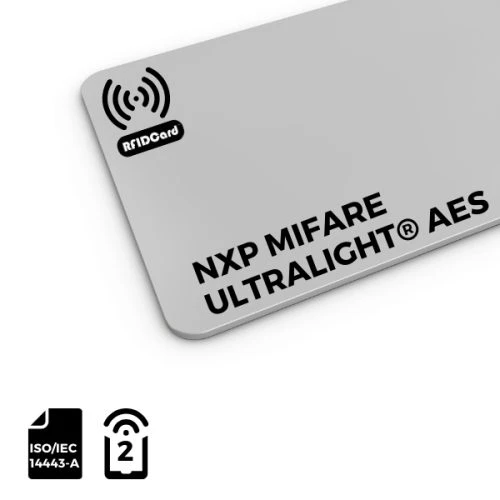
MIFARE Ultralight® AES PVC RFID Card

MIFARE Ultralight® AES PVC card is a contactless smart card based on MIFARE Ultralight AES chip, which supports AES encryption authentication, provides excellent performance and security, and is the highest security card in the MIFARE Ultralight® series. The card is made of PVC material and is widely used in access control, public transportation, ETC, events management, etc.
IMPORTANT NOTICE: All MIFARE Ultralight® AES cards supplied on this site is factory default (non-encrypted) version.



