Plastic waste has become one of the most visible environmental challenges facing the hospitality industry today. From single-use toiletries to packaging and disposable amenities, hotels are under increasing pressure to reduce their environmental footprint. Yet one often-overlooked contributor to plastic waste is the hotel key card. Millions of plastic key cards are produced, issued, and discarded every year, frequently after just a single stay. As sustainability moves from a “nice to have” to a business imperative, the sustainable key card is emerging as a practical and impactful solution for hotels seeking to reduce plastic waste without compromising security or guest experience.
1. How Traditional Hotel Key Cards Contribute to Plastic Waste
Most conventional hotel key cards are made from virgin PVC plastic. While PVC is durable and inexpensive, it is also derived from fossil fuels and is difficult to recycle, especially once an RFID chip, antenna, inks, and coatings are embedded in the card.
Although PVC is technically recyclable, most hotel key cards never enter a proper recycling stream. The embedded RFID chip and antenna complicate recycling processes, and many municipal recycling systems do not accept mixed-material cards. In practice, used key cards often end up in landfills or are incinerated. Individually, a single key card seems insignificant. But when multiplied across thousands of hotels worldwide, the environmental impact becomes substantial. This makes key cards a prime target for sustainability improvements—high volume, low visibility, and relatively easy to replace with better alternatives.
2. What Is a Sustainable RFID Key Card?
A sustainable key card is designed to reduce environmental impact across its lifecycle, from raw materials and manufacturing to usage and disposal. Importantly, sustainability does not mean sacrificing performance, compatibility, or security.

The market for eco-friendly key cards has rapidly evolved, offering several viable alternatives:
- BioPoly™ Stone: This innovative material is a composite made primarily from mineral powder (such as calcium carbonate) and a small percentage of non-toxic resin. These cards contain significantly less plastic—often less than 20%—and are more durable than PVC, potentially extending their useful life.
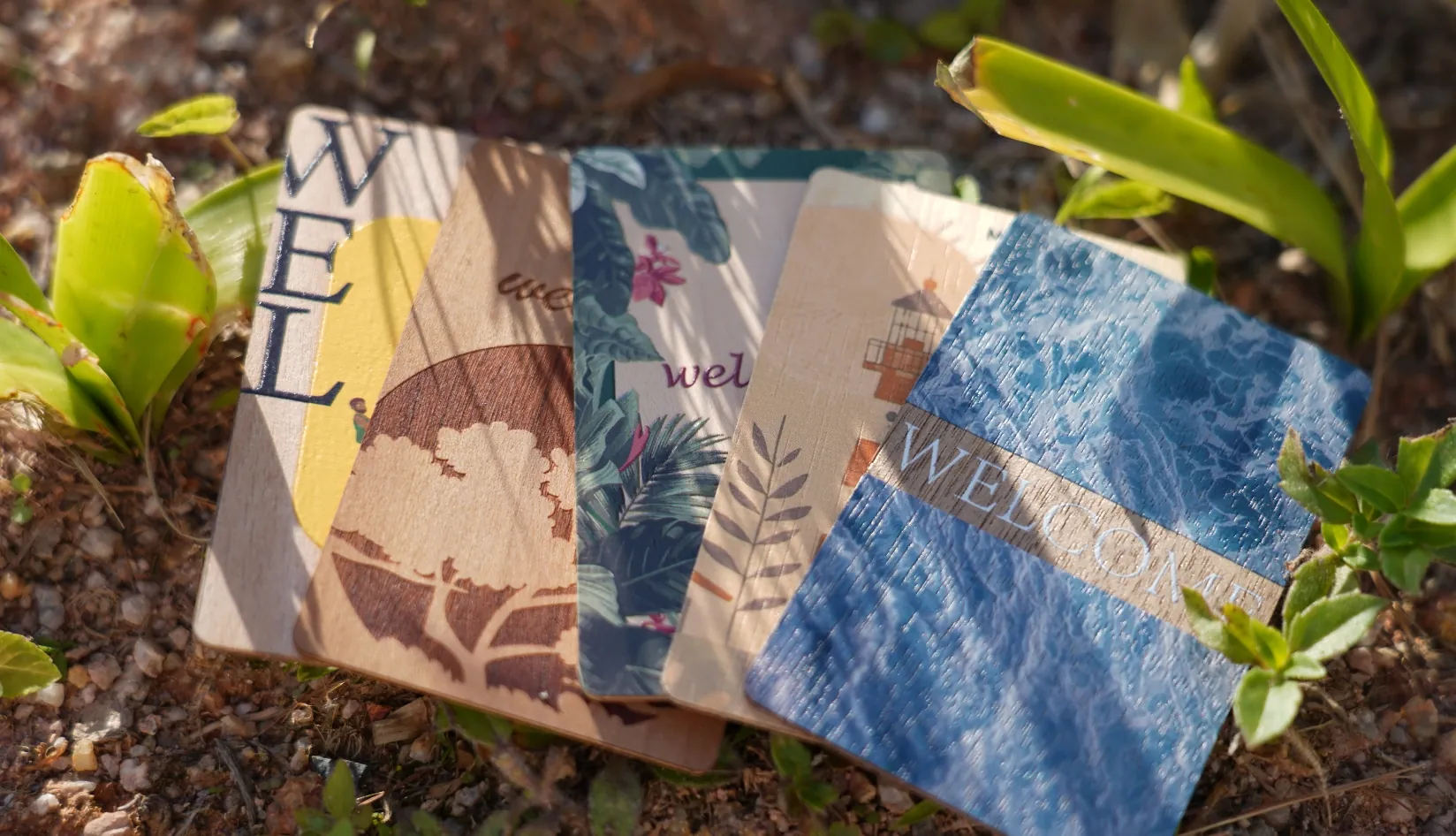
- FSC-Certified Wood: Wood RFID cards, typically made from sustainably sourced birch or bamboo, offer the most natural and biodegradable option. They provide a premium, tactile experience for the guest.
- PLA (Polylactic Acid): Derived from renewable resources like corn starch or sugarcane, PLA is a biodegradable bioplastic.
3. How Sustainable RFID Key Cards Reduce Environmental Impact
Switching to a sustainable key card directly addresses several environmental pain points in hotel operations.
- Reduced use of virgin plastic: By replacing virgin PVC with recycled or bio-based materials, hotels can significantly lower the amount of new plastic entering the supply chain. This helps conserve resources and reduces reliance on fossil fuels.
- Lower carbon footprint: Manufacturing recycled PVC generally consumes less energy than producing virgin plastic. As a result, sustainable key cards often have a smaller carbon footprint per unit, supporting broader carbon reduction goals.
- Longer lifespan and durability: Many sustainable RFID cards are designed with durability in mind. Improved resistance to bending, heat, and wear means cards can be reused more times before replacement, further reducing waste.
- Contribution to circular economy initiatives: Using recycled materials and designing cards for longer use aligns with circular economy principles. Some suppliers also offer take-back or recycling programs, helping hotels close the loop on card usage.
4. Benefits for Hotels Beyond Sustainability
While the environmental imperative is clear, the decision to switch to sustainable key cards offers significant, tangible benefits that directly impact a hotel’s bottom line and market positioning.

The most compelling non-environmental benefit is the enhancement of brand image with eco-conscious travelers. Today’s guests, particularly Millennials and Generation Z, actively seek out and are willing to pay a premium for brands that align with their values. Presenting a guest with a key card made of wood or a stone composite is a powerful, tactile statement of the hotel’s commitment to sustainability. This small, daily interaction reinforces the brand’s green credentials, leading to higher guest satisfaction scores and positive word-of-mouth marketing.
Moreover, modern sustainable key cards support the same secure RFID chips used in traditional cards, including encrypted communication and mutual authentication. Guests enjoy the same fast, contactless access, while hotels maintain strong security standards. For hotel groups and chains, standardizing sustainable key cards across properties is an easy way to align procurement decisions with corporate sustainability commitments.
5. Key Considerations When Switching to Sustainable Key Cards
The transition to sustainable key cards requires careful planning and due diligence to ensure the chosen product meets both the hotel’s operational needs and its sustainability goals.
A critical decision involves material selection versus durability requirements. While wood cards are the most biodegradable, they may be less suitable for high-traffic environments or for cards that are frequently exposed to moisture. BioPoly™ Stone offers superior durability and water resistance, making it a robust choice for resorts or properties with long-stay guests. Hotels must assess their average card lifespan and usage conditions to select the material that offers the best balance of environmental benefit and operational longevity.
RFID chip compatibility and security level are non-negotiable. Hotels must verify that the new cards are encoded with the correct chip type (e.g., Mifare, DESFire, or proprietary chips) and frequency to ensure flawless operation with their existing lock infrastructure. Print quality and branding needs are also essential. The material choice affects how colors are rendered and how logos are printed. Wood and stone composites offer a unique, natural aesthetic that can enhance branding.
Finally, supplier transparency and sustainability claims are paramount. Hotels should request certifications (e.g., FSC for wood, ISO standards for manufacturing) to substantiate the environmental benefits claimed by them. RFIDCard can provide relevant certifications to support your sustainability goals and help you implement a truly sustainable RFID solution.
6. Real-World Use Cases: Hotels Adopting Sustainable Key Cards
The adoption of sustainable key cards is rapidly moving from a niche trend to a mainstream industry standard, driven by successful implementations across various segments of the hospitality market.

- Boutique hotels and eco-resorts: Smaller properties and eco-focused resorts were among the earliest adopters of sustainable key cards. For these hotels, sustainability is central to the brand story, and switching key cards was a natural extension of broader environmental initiatives.
- Large hotel chains and pilot programs: In recent years, major hotel groups have begun piloting recycled RFID key cards across selected properties. These pilots often focus on: measuring card durability and reuse rates, evaluating guest feedback and assessing cost implications at scale.
7. Conclusion
By replacing traditional plastic cards with more responsible alternatives, hotels can reduce waste, lower their environmental footprint, and demonstrate a genuine commitment to sustainability—all without disrupting operations or guest experience. As ESG expectations continue to rise across the U.S. and EU markets, sustainable RFID key cards offer a practical, cost-effective step toward a greener future. Ready to switch to a sustainable key card? Contact us to request a quote or sample today and find the right eco-friendly RFID key card for your hotel
Recommended Product

BioPoly™ Stone RFID Card Made with 100% Paper-Based Antenna NXP® MIFARE Ultralight® EV1

The RFID BioPoly™ Stone Card Made with 100% Paper-Based Antenna is designed for brands seeking high performance with a lower environmental footprint. Featuring a Zero PET, Zero PVC paper-based antenna combined with durable BioPoly™ Stone, it delivers rock-solid strength and reliable RFID performance. As the industry’s first developer of paper-antenna RFID cards, we continue to advance eco-friendly RFID solutions through sustainable innovation. Powered by NXP® MIFARE Ultralight® EV1 and compliant with ISO/IEC 14443-A, it is ideal for access control and identification applications.