In a world where businesses demand smarter, stronger, and more sustainable card solutions, the choice of card material matters more than ever. Traditional PVC cards have dominated the industry for decades, but as environmental concerns and durability expectations continue to rise, new materials are capturing attention. Among these innovations, the BioPoly™ Stone Card has emerged as a promising alternative that offers both performance and environmental advantages. Whether you are purchasing cards for corporate IDs, RFID access control, membership programs, or retail branding, understanding the differences between these two materials can help you make a more informed decision.
1. What Is a BioPoly™ Stone Card?
The BioPoly™ Stone Card represents a significant leap forward in material science, offering a high-performance, low-plastic alternative to traditional card substrates. At its core, the material is a composite primarily derived from mineral sources, often calcium carbonate (limestone), which is one of the most abundant minerals on Earth. This stone powder is combined with a minimal amount of non-toxic resin or binder to create a material that is both robust and flexible.

The key properties of this stone-based material are compelling:
- Mineral Composition: The high percentage of mineral content drastically reduces the reliance on petroleum-based plastics, leading to a lower carbon footprint during production.
- Waterproof and Moisture-Resistant: Unlike some paper-based alternatives, the stone card is inherently waterproof, making it ideal for high-humidity environments or applications where liquid exposure is common.
- Tear and Bend Resistance: Despite its mineral base, the final product is surprisingly flexible and highly resistant to tearing, often outperforming PVC in terms of structural integrity under stress.
- Print Quality: The smooth, bright white surface provides an excellent substrate for high-quality printing, ensuring vibrant colors and sharp text for branding and security features.
Typical applications for the BioPoly™ Stone Card are rapidly expanding, including RFID access cards, durable membership cards, loyalty programs, and any application where longevity and sustainability are paramount.
2. What Is a PVC Card?
PVC (polyvinyl chloride) cards have been the industry standard for decades. From credit cards to employee IDs to access cards, PVC-based solutions are everywhere. PVC is produced from petroleum and chlorine, and its plastic structure offers flexibility, durability, and compatibility with a wide range of printing and encoding technologies.
PVC cards are ubiquitous, found in everything from credit and debit cards to standard ID badges and driver’s licenses. Their popularity stems from several factors:
- Cost-Effectiveness: PVC is relatively inexpensive to produce in large volumes.
- Processing Ease: It is easily laminated, printed, and embossed using standard industry equipment.
- Familiarity: The entire card manufacturing and personalization ecosystem is built around PVC standards.
However, PVC’s environmental profile has come under increased scrutiny. The production of PVC involves chlorine chemistry and can release hazardous compounds if improperly processed or disposed of. Recycling PVC is also challenging because of its chemical makeup, and only a small percentage of PVC cards end up being recycled at all. Most are discarded in landfills or incinerated.
3. Durability Comparison
Durability is a non-negotiable requirement for any card designed for long-term use. The comparison between the BioPoly™ Stone Card and PVC reveals significant differences across various stress factors.
3.1 Water Resistance
While PVC is generally considered water-resistant, the stone card offers a superior, inherent waterproof quality.
- Stone Card’s Advantage: Because the stone card’s material is largely mineral-based, it does not absorb moisture. This makes it impervious to water damage, swelling, or delamination, even after prolonged submersion. This is a critical advantage for cards used in outdoor settings, aquatic centers, or humid climates.
- PVC Performance: PVC cards while generally water-resistant, can swell or delaminate if exposed to moisture over long periods—especially if they contain multiple laminated layers or embedded chips.
3.2 Tear & Bend Resistance
The mechanical strength of a card determines its lifespan under physical stress.
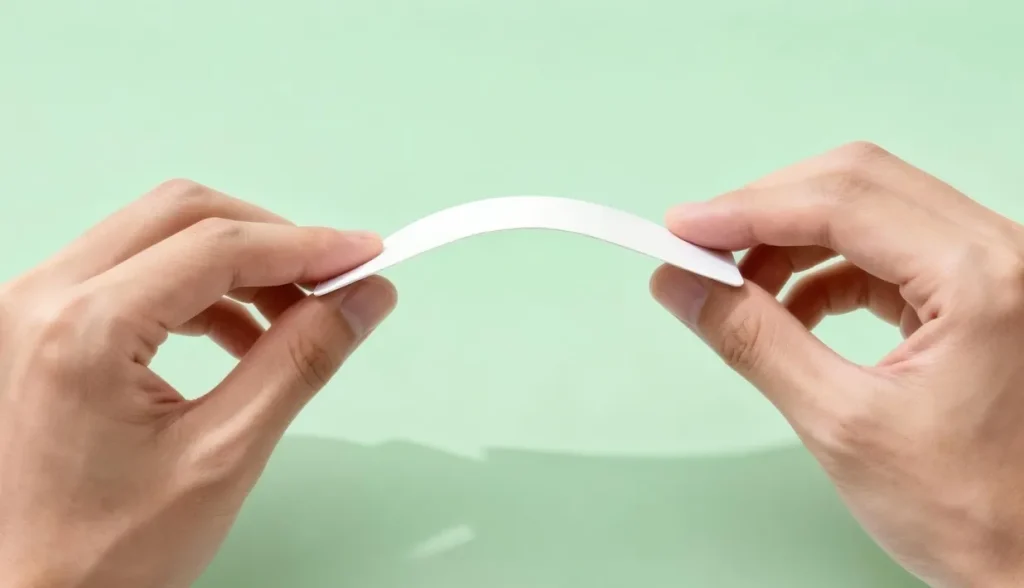
- Stone Card’s High Flexibility: The unique composition of the stone card, combining fine mineral powder with a binder, results in a material that is highly flexible and resistant to tearing. When bent, it tends to flex and return to its original shape without the white stress marks or cracking often seen in plastic. Its tear resistance is notably high, making it difficult to rip accidentally.
- PVC’s Vulnerability: PVC is prone to developing “white stress marks” when bent sharply, indicating structural damage. More critically, repeated bending can lead to cracking, particularly around the edges or near embedded chips. This cracking can compromise the card’s security features and functionality.
3.3 Temperature & Weather Resistance
Stone-based cards exhibit excellent performance in harsh temperature conditions. They are resistant to UV exposure, heat, and cold, making them ideal for outdoor or semi-outdoor use. Their printed surfaces do not easily warp or fade, and the card maintains structural stability even under extreme weather changes. PVC cards can warp or become brittle when exposed to high heat or prolonged sunlight. Under cold conditions, PVC may become more rigid and more susceptible to cracking.
3.4 RFID Performance Stability
For RFID applications, material stability is critical. A BioPoly™ Stone Card maintains its shape and internal structure extremely well, preventing antenna shifts, air gaps, or delamination—common issues that cause RFID failures in low-quality PVC cards. Because BioPoly™ Stone Cards resist moisture and temperature fluctuations, the embedded chip or antenna is less likely to degrade. Businesses that rely heavily on RFID access (hotels, offices, transportation systems) can benefit from improved consistency and fewer malfunctioning cards. PVC cards have long been compatible with RFID, but environmental stress can lead to internal layer separation over time, affecting chip performance.
4. Environmental Impact Comparison: A Choice for the Planet
The most significant divergence between these two materials lies in their environmental footprints. Choosing a card material today is often a choice between legacy pollution and sustainable innovation.
4.1 Raw Material Source
The origin of the materials sets the stage for the entire lifecycle impact.
- Stone Card’s Mineral Base: The BioPoly™ Stone Card is predominantly made from calcium carbonate, a naturally occurring, abundant, and non-toxic mineral. This drastically reduces the reliance on finite fossil fuels. By utilizing a mineral resource, the card sidesteps the entire petrochemical supply chain associated with plastic production.
- PVC’s Petrochemical Origin: PVC is derived from petroleum (a non-renewable resource) and chlorine. The extraction and processing of these raw materials are energy-intensive and contribute significantly to greenhouse gas emissions.
4.2 Carbon Footprint
Stone card manufacturing produces fewer carbon emissions than PVC manufacturing, primarily because mineral extraction and processing are less energy-intensive than producing synthetic plastics from petroleum. The production of PVC also involves multiple steps requiring high heat, chemicals, and stabilization additives.
4.3 Recyclability & End-of-Life
BioPoly™ Stone Cards can be processed more easily than PVC in recycling systems because they contain fewer hazardous additives. In many regions, stone-based material can be mechanically recycled or broken down into mineral powder for reuse. PVC, unfortunately, is one of the most difficult plastics to recycle. Chlorine content complicates the process, and contamination risks often lead recycling facilities to reject PVC entirely. As a result, billions of PVC cards end up in landfills each year.
5. Which Material Is the Better Choice?
Choosing between a BioPoly™ Stone Card and a PVC card ultimately depends on your priorities. For organizations that value environmental responsibility, long-term durability, and superior performance in challenging conditions, the BioPoly™ Stone Card stands out as the better choice. It is particularly ideal for:
| Scenario | Priority | Why BioPoly™ Stone Card Excels |
| Businesses Seeking Eco-Friendly Solutions | Sustainability & Corporate Responsibility | Significantly lower carbon footprint, reduced reliance on fossil fuels, and a non-toxic, mineral-based composition. It aligns with modern ESG goals. |
| Outdoor or High-Humidity Environments | Durability & Longevity | Superior waterproof properties and resistance to warping from heat and UV light, ensuring the card remains functional and aesthetically pleasing in harsh conditions. |
| Long-Term RFID Performance | Reliability & Functionality | Greater resistance to physical stress (bending, cracking) provides a more stable and protective housing for sensitive embedded RFID antennas and chips, extending the card’s reliable service life. |
| Premium or Brand-Conscious Applications | Quality & Image | The material’s unique feel and its association with cutting-edge, sustainable technology enhance the perceived value and image of the brand issuing the card. |
6. Conclusion
The shift toward more responsible materials is reshaping the card industry, and the BioPoly™ Stone Card represents a powerful step in that direction. With superior waterproofing, tear resistance, temperature stability, and eco-friendly material composition, it offers a strong alternative to traditional PVC card solutions. As businesses continue to prioritize sustainability and durability, stone-based cards are becoming a preferred option for RFID systems, membership programs, and corporate identity cards. Whether you’re upgrading your existing card program or exploring greener options for the first time, choosing the BioPoly™ Stone Card is a forward-thinking decision that delivers both performance and environmental benefits.
Recommended Product
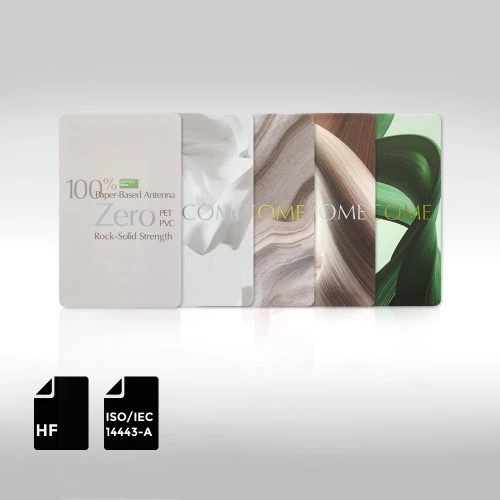
BioPoly™ Stone RFID Card Made with 100% Paper-Based Antenna NXP® MIFARE Ultralight® EV1

The RFID BioPoly™ Stone Card Made with 100% Paper-Based Antenna is designed for brands seeking high performance with a lower environmental footprint. Featuring a Zero PET, Zero PVC paper-based antenna combined with durable BioPoly™ Stone, it delivers rock-solid strength and reliable RFID performance. As the industry’s first developer of paper-antenna RFID cards, we continue to advance eco-friendly RFID solutions through sustainable innovation. Powered by NXP® MIFARE Ultralight® EV1 and compliant with ISO/IEC 14443-A, it is ideal for access control and identification applications.