Introduction
In modern commerce and public services, radio frequency identification (RFID) technology has become central to achieving efficient, secure access control and asset management. From luxury hotel room access to inventory tracking at major retailers, and rapid payments on urban subways, RFID cards and tags are redefining how we interact with the physical world through their convenient “tap-and-go” operation. Yet behind this convenience lies a complex ecosystem of authentication requests and security protocols operating silently in the background, ensuring every tap represents legitimate access authorization.
This article aims to explore in depth—in a professional yet accessible manner—the core role of security cards in the RFID authentication request process, its key technologies, and its applications across various industries. Understanding how these security mechanisms function is therefore critical for any enterprise seeking to deploy or upgrade its RFID systems.
Part I: Fundamentals of RFID Authentication Requests
An RFID system consists of three fundamental components: tags or cards, readers, and backend systems. When an RFID card is brought into the radio frequency field of a reader, an interaction process known as an “authentication request” is immediately initiated.
Authentication Request Process Overview
The authentication request is a digital handshake process that verifies the legitimacy of a card’s identity. It typically involves the following key steps:
| Step | Description | Purpose |
| Wake-up and Identification | The reader transmits an RF signal to power the card and request it to send its unique identification code (UID). | Initiate communication and perform preliminary card identification. |
| Authentication Request | The reader sends a random number (Nonce) or challenge message to the card. | Prevents replay attacks and ensures communication is real-time. |
| Card Response | The card uses its internally stored key and the received nonce to compute a response value via an encryption algorithm. | Proves the card possesses the correct key, thereby verifying its identity. |
| Reader Verification | The reader transmits the card’s response value to the backend system. The backend performs the same calculation and compares the result with the card’s response. | Confirming the card’s identity legitimacy. |
| Access Authorization | If verification succeeds, the backend system sends an “access granted” instruction to the reader based on predefined permission rules. | Completion of authentication, granting access privileges (e.g., door unlocking, payment). |
Why is an authentication request necessary?
Without strict authentication requests, any card with the same frequency and format could be used for unauthorized access. The core value of the authentication request mechanism lies in:
Anti-Cloning: By employing dynamic random numbers and cryptographic algorithms, even if an attacker intercepts communication data, they cannot use it to forge a card.
Data Integrity: Ensures data transmitted between the card and reader remains unaltered.
Privacy Protection: Advanced authentication protocols conceal the card’s true identity, preventing malicious tracking.
Part II: Core Technologies and Security Protocols of the Security Card

The security of RFID security cards stems from their integration of advanced chip technology and complex encryption algorithms. These technologies form the foundation for reliable authentication requests.
Chip Types and Security Levels Comparison
RFID cards can be categorized into different types based on their storage capacity, processing capabilities, and security features. Selecting the appropriate chip is the first step in ensuring system security.
| Chip Type | Typical Applications | Security Features | Authentication Mechanism | Suitable Scenarios |
| Low-Frequency (LF)/High-Frequency (HF) Basic Cards | Simple access control, identity verification | UID identification only, no encryption | UID-based matching only | Scenarios with low security requirements |
| Mifare Classic (MF1K/4K) | Transportation Cards, Low-Security Access Control | Proprietary Encryption Algorithm (Crypto-1), Key Authentication | One-Way or Two-Way Authentication | Early-Adoption Applications with Lower Security |
| Mifare DESFire Series | High-Security Access Control, Payments, Electronic Passports | Hardware-Level DES/3DES/AES Encryption, Multi-Application Support | Robust Two-Way Authentication | Hotel key cards, access cards, corporate ID cards |
| Ultra-high frequency (UHF) security tags | Supply chain management, asset tracking | EPC Gen2 V2 standard, supports password protection and authentication | Password authentication, optional encryption | RFID tags, custom RFID tags |
Key Security Protocols: Encryption and Authentication
During the authentication request process, security protocols are central to ensuring secure data transmission and identity verification.
Symmetric Encryption: Examples include AES (Advanced Encryption Standard). The card and reader share a common key. The card encrypts its response using this key, and the reader decrypts and verifies it using the same key. AES is widely adopted in high-security RFID cards (e.g., DESFire series) due to its high strength and efficiency.
Challenge-Response Mechanism: This forms the core of authentication requests. The reader issues a “challenge” (random number), and the card provides a “response” (encrypted computational result). Since each challenge is random, every communication is unique, effectively preventing replay attacks.
Mutual Authentication: Not only must the card prove its identity to the reader, but the reader must also prove its legitimacy to the card. This bidirectional verification mechanism prevents malicious readers (such as eavesdropping devices) from stealing data from legitimate cards.
Part III: Applications and Value of RFID Security Cards Across Different Industries
For target clients such as renowned hotel chains, major retailers, and subway operators, RFID security cards are more than just tools—they represent a critical investment in enhancing customer experience, ensuring operational security, and optimizing management processes.
Hospitality Industry: From Key Cards to Customer Experience
Products: Hotel Key Cards, RFID Wristbands
| Pain Points | RFID Security Card Solutions | Value Proposition |
| Key Cards Prone to Duplication | Utilizes DESFire chips with AES encryption and mutual authentication to prevent easy card cloning. | Ensures guest safety and safeguards hotel brand reputation. |
| Multi-Function Card Requirements | Supports multiple applications, integrating access control, elevator permissions, and payment functions. | Enhances guest experience and enables seamless service. |
| Eco-Friendly Requirements | Optional key cards made from environmentally friendly materials are available. | Meets Corporate Social Responsibility (CSR) requirements and attracts eco-conscious customers. |
Retail & Apparel Industry: Inventory Management and Brand Protection
Products: RFID Tags, Custom RFID Tags
| Pain Points | RFID Security Tag Solutions | Value Proposition |
| Low Inventory Accuracy | UHF RFID tags enable rapid, bulk inventory counts with over 99% accuracy. | Optimize supply chains, reduce stockouts and overstocking, and improve capital turnover. |
| Product Anti-Counterfeiting | Embedded security authentication makes labels difficult to forge, used for anti-counterfeiting in apparel brands (e.g., Uniqlo, Zara). | Protects brand value and combats counterfeit goods. |
| Customization Requirements | Offers custom logos and shapes to adapt to diverse product packaging and brand identities. | Meets personalized needs of distributors and retailers. |
Public Transportation & Corporate Access Control: Prioritizing Speed and Security
Products: Access Control Cards, RFID Cards, RFID Key Fobs
| Pain Points | RFID Security Card Solutions | Value Proposition |
| High Transaction Speed Requirements | High-frequency cards (e.g., Mifare series) support rapid contactless transactions, meeting subway operators’ high-throughput demands. | Enhances access efficiency, reduces congestion, and boosts user satisfaction. |
| Complex Access Permission Management | Backend systems enable flexible configuration of access permissions for different cards, achieving granular management. | Strengthens corporate security, ensuring only authorized personnel access restricted areas. |
| Durability and Bulk Procurement | Five production lines guarantee industry-leading quality and flexible minimum order quantities, catering to B2B and wholesale-only procurement needs. | Reduces long-term operational costs while ensuring stable supply. |
Part IV: Advantages of Choosing RFID Labels
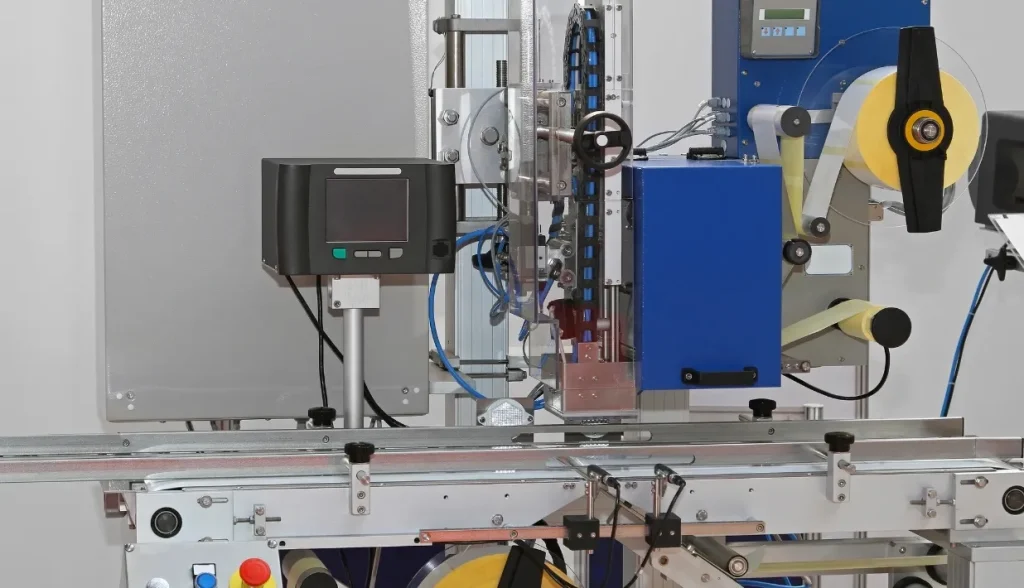
We fully understand the stringent demands of global markets for industry-leading quality and reliable supply chains. Our strengths lie not only in technology but also in our deep understanding of customer needs and flexible collaboration models.
Quality and Manufacturing Capabilities
Industry-Leading Quality: Our products have withstood long-term market testing in major export markets including North America, Europe, and Australia.
Scalable Production: Our factory operates five production lines, enabling rapid fulfillment of large-volume orders while offering flexible minimum order quantities to accommodate clients of all sizes.
Customization Services: We provide logo and shape customization, along with eco-friendly material options, helping clients achieve brand differentiation and sustainability goals.
Business Model & Partnership Assurance
Our business model focuses exclusively on B2B wholesale, enabling us to dedicate full resources to delivering the most competitive products and solutions for distributors, retailers, and large-scale projects.
| Collaboration Advantages | Description | Target Customer Value |
| Wholesale-Only Model | Focused on bulk orders and long-term partnerships, offering more attractive pricing structures. | Maximizes cost efficiency while safeguarding profit margins. |
| Flexible Minimum Order Quantities | Supports even small-scale testing or custom projects. | Reduces trial-and-error costs and accelerates time-to-market. |
| Global Export Expertise | Familiar with certification and logistics requirements for markets including North America, Europe, and Australia. | Streamlines procurement processes and ensures seamless delivery of goods. |
Conclusion
RFID security cards are an indispensable component of modern access control and asset management systems. From the convenient tap of a hotel key card to the precise authentication of RFID tags in supply chains, every successful access authorization relies on a rigorous, encrypted authentication request process between the card, reader, and backend system.
Choosing a reliable partner is paramount. As a supplier with industry-leading quality and robust manufacturing capabilities, RFIDCard is committed to providing the safest, most reliable customized products and RFID solutions to globally renowned hotel brands, distributors, retailers, and all enterprises requiring RFID cards and tags.
Recommended Product
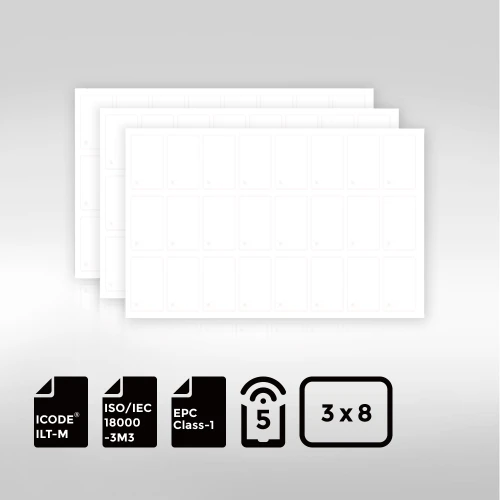
BioPoly™ Vinyl RFID Inlay Sheet NXP® ICODE® ILT-M

The NXP® ICODE® ILT-M BioPoly™ Vinyl RFID Inlay Sheet combines cutting-edge high-frequency RFID performance with a commitment to sustainability. Featuring the advanced ICODE® ILT-M chip and compliant with ISO/IEC 18000-3 Mode 3, it delivers ultra-fast data transfer, high memory capacity, and superior reading distances, making it ideal for applications such as supply chain management, asset tracking, logistics, and industrial automation.
Made from eco-friendly BioPoly™ vinyl, this inlay sheet helps your business reduce its environmental footprint while maintaining exceptional durability and printability. Whether used in custom labels, smart packaging, or intelligent inventory systems, the ILT-M BioPoly™ enables your brand to achieve operational efficiency, environmental responsibility, and a stronger connection with customers—all in one smart solution.