In recent years, the demand for smart access solutions across Europe has surged, driving significant growth in the RFID card import market. From hotels and offices to transportation and retail, RFID cards have become a core component of secure and contactless access systems. China, as a global manufacturing hub, offers advanced production capabilities, competitive pricing, and fast turnaround for customized RFID card solutions. However, importing RFID cards into the European market requires careful planning, compliance awareness, and logistical precision. This guide provides a professional overview of every stage involved in RFID card import from China to Europe — from supplier selection and certification to customs clearance and shipping.
1. How to Choose the Right RFID Card
Selecting the right RFID card can make a big difference in system performance, security, and user experience. Here are the key factors to consider before making your choice:
1.1 Identify the Operating Frequency
RFID cards operate on three main frequencies—LF (125 kHz), HF (13.56 MHz), and UHF (860–960 MHz).
- LF cards are suitable for simple access control and animal identification.
- HF cards, such as MIFARE® or NFC, are ideal for secure authentication, ticketing, or payment systems.
- UHF cards support long-range reading and are widely used in logistics and asset tracking.
1.2 Confirm Chip Type and Protocol
Check which RFID chip and communication standard (e.g., ISO 14443A/B, ISO 15693) the card uses. These determine whether it’s compatible with your existing readers or access systems.
1.3 Evaluate Memory and Security Features
Different chips offer varying memory capacities and encryption methods (like DES, 3DES, or AES). Choose one that meets your data storage needs and provides adequate protection against cloning or unauthorized access.
1.4 Consider Physical Material and Durability
RFID cards come in materials like PVC, PET, or composite plastic. Each has different levels of flexibility, temperature tolerance, and print quality. If your cards are used frequently or in harsh conditions, prioritize durability and scratch resistance.
By considering these factors, you can ensure your RFID cards deliver consistent performance, long service life, and secure communication tailored to your application.
2. Finding Reliable RFID Card Suppliers in China
The foundation of a successful import operation lies in identifying and partnering with trustworthy suppliers. The Chinese market offers a vast array of manufacturers, and discerning reliable partners is paramount. Reputable platforms such as Alibaba and rfidcard.com as excellent starting points, offering extensive directories and supplier verification services.

Before committing to a purchase, several key checks are indispensable:
- Factory Audit & Production License: Request evidence of the factory’s production license. This ensures the supplier operates legally and possesses the necessary infrastructure for manufacturing RFID cards.
- ISO Certification or Quality Control (QC) Process: Verify that the supplier adheres to international quality management standards, such as ISO 9001, or has a robust internal QC process. This indicates a commitment to consistent product quality.
- Sample Testing Before Bulk Order: Always request samples for thorough testing and evaluation. This step is critical for confirming that the RFID cards meet your technical specifications and performance requirements before placing a large order.
Building long-term partnerships with suppliers is beneficial for sustained quality assurance and preferential terms. Regular communication, clear specifications, and periodic quality checks can significantly mitigate risks associated with international sourcing.
3. Understanding EU TARIC Classification for RFID Cards
Correct product classification is essential for a smooth customs clearance process. In the European Union, importers must rely on the EU TARIC system (The Integrated Tariff of the European Union) to determine the correct code, tariff rate, and import regulations applicable to their products.
For RFID card import, the product is generally categorized under TARIC code 8523 52 10 00, which refers to “Smart cards containing a magnetic stripe or integrated circuit.”
However, variations may apply depending on the card’s chip type, embedded antenna, or additional electronic components (e.g., contactless or dual-interface cards).
Importers should:
- Use the official EU TARIC database to confirm the correct classification and check all applicable measures.
- Review import duty (typically 0% for smart cards) and note any additional EU requirements such as CE marking or RoHS compliance.
- Ensure that the same TARIC code appears consistently on the commercial invoice, packing list, and customs declaration.
- Be aware that incorrect TARIC classification can cause customs delays, revaluation of duties, or administrative penalties.
Accurate use of EU TARIC classification allows importers to calculate total landed cost, determine duty and VAT rates, and ensure compliance for every RFID card import shipment entering the European market.
4. Required Certifications and Compliance for Europe
Importing RFID cards into the European market necessitates adherence to a strict set of regulations and certifications designed to protect consumers and the environment. Key mandatory certifications include:
- CE Marking: This is a mandatory conformity marking for products sold within the European Economic Area (EEA). It signifies that the RFID cards meet EU safety, health, and environmental protection requirements.
- RoHS Compliance (Restriction of Hazardous Substances): The RoHS Directive restricts the use of specific hazardous materials found in electrical and electronic products. Ensuring your RFID cards are RoHS compliant is crucial for market entry.
- WEEE Directive (Waste Electrical and Electronic Equipment): This directive aims to reduce the amount of electrical and electronic waste. Importers are responsible for ensuring that their products contribute to WEEE collection and recycling schemes.
To confirm supplier compliance, always request official test reports and Declarations of Conformity for CE and RoHS. These documents provide verifiable proof that the products meet EU standards. Additionally, while not always mandatory, certifications such as ISO/IEC 14443 (for proximity cards), ISO 9001 (quality management), ISO 14001 (environmental management), and ISO 27001 (information security management) can further demonstrate a supplier’s commitment to quality and ethical practices, enhancing the credibility.
5. Preparing Documentation for Customs Clearance
Efficient customs clearance is contingent upon the meticulous preparation of all required documentation. Any missing or incorrect document can lead to significant delays and additional costs. Essential documents for RFID card import include:
- Commercial Invoice: A detailed invoice outlining the goods, their value, quantity, and terms of sale. This is crucial for customs valuation and duty calculation.
- Packing List: A document detailing the contents of each package, including dimensions, weight, and quantity of RFID cards. This aids customs in verifying the shipment’s contents.
- Bill of Lading (for sea freight) / Airway Bill (for air freight): These are contracts between the shipper and the carrier, serving as a receipt for the goods and a document of title.
- Certificate of Origin: This document certifies the country of origin of the RFID cards. Depending on trade agreements, a Form A or RCEP certificate might offer preferential duty rates. This is vital for accurate duty assessment.
- CE and RoHS Certificates: As mentioned, these compliance documents are mandatory for market entry into the EU.
Importers should also clarify Incoterms (such as FOB, CIF, or DDP) in the sales contract to define responsibilities for freight, insurance, and customs fees.
6. Choosing the Right Shipping and Logistics Method

Selecting the appropriate shipping method is a strategic decision that balances speed, cost, and the nature of the RFID card shipment. The primary options for shipping from China to Europe are:
- Air Freight: This is the fastest option, ideal for urgent or high-value RFID card imports. While offering quick transit times, it is generally the most expensive.
- Sea Freight: The most economical choice for bulk orders, sea freight is suitable when time is not a critical factor. It involves longer transit times but significantly reduces per-unit shipping costs.
- Rail Transport (China–Europe Express): Offering a balance between cost and speed, rail transport has become an increasingly popular option. It is faster than sea freight and more cost-effective than air freight, providing a viable middle-ground for many businesses.
Packaging should protect RFID chips from static electricity, humidity, and bending during transit. Partnering with experienced freight forwarders ensures proper export declaration and import handling.
7. Calculating Import Duties, VAT, and Total Cost
Understanding the financial breakdown of RFID card import helps businesses plan their budgets effectively. The main cost components include:
- Product Price: The cost of the RFID cards from the Chinese supplier.
- Freight and Insurance: Shipping costs (air, sea, or rail) and marine or cargo insurance to cover potential loss or damage during transit.
- Import Duty: Calculated based on the TARIC code and the customs value of the goods. Duty rates vary significantly depending on the product classification and any trade agreements in place.
- Value Added Tax (VAT): This is levied on the imported goods and varies by EU member state (e.g., 19% in Germany, 21% in Spain). VAT is typically calculated on the sum of the customs value, import duty, and freight costs.
8. Customs Clearance and Post-Import Steps
Once the RFID cards arrive at the EU border, they undergo customs inspection. This process involves verifying documentation, assessing duties and taxes, and sometimes physical inspection of the goods. Common reasons for delays during customs clearance include incomplete or incorrect documentation, discrepancies between declared goods and actual contents, or mismatches in certification details.
Upon successful clearance, the process doesn’t end. Post-import steps include:
- Distribution and Warehousing: Arranging for the onward transportation of the RFID cards to your warehouse or distribution centers within the EU.
- Labeling Requirements: Ensuring that the RFID cards and their packaging comply with any specific EU labeling requirements, which might include language, safety warnings, or recycling symbols.
- Record Keeping: Maintaining comprehensive records of all import documentation, including invoices, customs declarations, and certificates, is essential for potential audits and product traceability. This also aids in demonstrating compliance with all regulatory frameworks.
9. Conclusion
The European RFID market continues to expand as businesses embrace digital access technologies. To ensure a successful RFID card import process from China, importers must combine supplier due diligence, certification compliance, precise documentation, and professional logistics coordination. By adhering to these principles, businesses can minimize import risks, maintain product integrity, and strengthen their competitive position in the European market.
FAQs
What is the best shipping method for RFID cards from China to Europe?
The ideal shipping method depends on order volume and delivery timeline:
Air Freight: 5–10 days, ideal for urgent or small shipments.
Sea Freight: 30–40 days, best for large-volume orders.
Rail Freight (China–Europe Express): 15–25 days, a balanced option for cost and time.
Can I import RFID cards under my own brand?
Yes. Many Chinese RFID manufacturers offer OEM and ODM services.You can import RFID cards with custom designs, logos, or chip types, provided all products still meet EU certification requirements.
Recommended Product
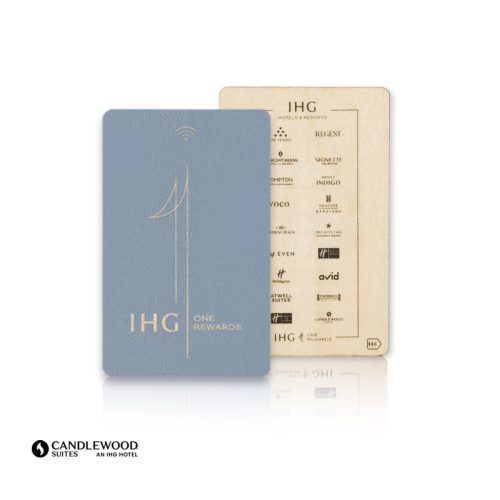
Wooden Candlewood Suites Key Card

The Wooden Candlewood Suites RFID Key Card is designed for seamless integration with your hotel’s locking systems. Crafted from eco-friendly wood, these cards blend nature with modern design, promoting sustainability. With RFID technology and the durability of wood, they offer a reliable, functional, and stylish solution, ensuring a unique and environmentally conscious experience for your guests.
IMPORTANT NOTICE: All MIFARE Ultralight® AES cards supplied on this site is factory default (non-encrypted) version.