In today’s business environment, efficiency and accuracy are critical to corporate success. Radio Frequency Identification (RFID) technology serves as a powerful tool capable of significantly enhancing inventory management, asset tracking, and supply chain visibility. However, many enterprises face a core challenge when deploying RFID: how to seamlessly integrate RFID readers into their existing software systems? This article explores various methods, best practices, and potential challenges in RFID card reader integration, aiming to help businesses understand and successfully implement RFID solutions.
1. Why is integrating an RFID reader crucial?

RFID systems identify and track tags attached to items via radio waves. RFID readers are critical components responsible for reading tag data and transmitting it to backend systems. Without effective integration, this raw data cannot be understood or utilized by existing business applications such as enterprise resource planning (ERP) systems, warehouse management systems (WMS), or custom databases. Successful integration means:
- Real-time data insights: Immediate access to inventory levels, asset locations, and goods movement information.
- Enhanced operational efficiency: Automated data collection processes reduce manual errors and time-consuming tasks.
- Optimized decision-making: More informed business decisions based on accurate, up-to-date data.
- Improved supply chain visibility: Comprehensive tracking of product flow from production to delivery.
2. RFID Reader Integration Methods

There are multiple approaches to integrating RFID readers into existing software systems, each offering distinct advantages and suitable scenarios. Selecting the most appropriate method depends on the enterprise’s specific requirements, existing IT infrastructure, and technical capabilities.
Direct Database Integration
- Description: This approach involves connecting the RFID reader directly to the database of the existing software system. Reader data is written directly into the database or formatted via a simple application before insertion. This method typically requires deep knowledge of database structures and may necessitate developing custom scripts or programs to process the data.
- Advantages: Fast data transmission speed, high customizability.
- Disadvantages: High complexity, high maintenance costs, and scalability challenges.
Middleware Integration
- Description: Middleware acts as a software layer connecting RFID readers to backend business applications. It collects data from multiple readers, filters, aggregates, and formats it before sending to target applications. Middleware handles large volumes of raw RFID data, transforming it into actionable information to reduce backend system load.
- Advantages: Simplified integration, robust data filtering/processing, high scalability, enhanced reliability.
- Disadvantages: Additional costs, learning curve.
API Integration
- Description: Many modern RFID readers and software systems provide Application Programming Interfaces (APIs). Through APIs, developers can write code to invoke reader functions and receive data. Simultaneously, business applications can use APIs to send data to other systems or retrieve data from them. This method is commonly used to build customized integration solutions.
- Advantages: High flexibility, standardization, loose coupling.
- Disadvantages: Significant development effort, version compatibility.
Integration via IoT Platforms
- Description: With the advancement of IoT technology, integrating RFID readers into IoT platforms has become a trend. In this model, RFID readers are treated as IoT devices, with their data securely transmitted to cloud-based IoT platforms via IoT gateways. The IoT platform handles data storage, analysis, and visualization, and can integrate with other enterprise systems.
- Advantages: High scalability, robust data analytics capabilities, global visibility, and high security.
- Disadvantages: Network dependency, potential latency, and cost.
3. Comparison of Different Integration Methods
To provide a more intuitive comparison of different integration approaches, the table below summarizes their key characteristics:
| Features | Direct Database Integration | Middleware Integration | API Integration | IoT Platform-Based Integration |
| Integration Complexity | High | Medium | Medium | Low to Medium |
| Development Effort | High | Low | Medium | Low |
| Scalability | Low | High | Medium | Very High |
| Data Processing Capability | Limited | Powerful | Depends on implementation | Extremely powerful |
| Flexibility | Medium | Medium | High | High |
| Cost | Low upfront, high maintenance | Medium to high | Medium | Variable cost |
| Suitable Scenarios | Simple applications with few card readers | Complex systems with many card readers | Applications requiring high customization | Large-scale deployments requiring cloud analytics |
4. Best Practices

Regardless of the integration method chosen, adhering to the following best practices ensures successful RFID deployment:
- Define Objectives: Clearly articulate business goals and expected outcomes.
- Assess Existing Systems: Conduct a thorough analysis of current IT infrastructure, software systems, and business processes to identify compatibility, bottlenecks, and integration points.
- Select Appropriate Hardware and Software: Choose compatible RFID readers, tags, and necessary software based on business requirements and integration strategy.
- Standardize and Clean Data: Ensure data collected by RFID readers is consistent and accurate in format. Implement data filtering and cleansing mechanisms.
- Security: Incorporate security considerations from the outset. Encrypt data in transit and enforce strict access controls.
- Phased Implementation and Testing: Begin with small-scale pilot projects, gradually expanding integration scope. Conduct thorough testing at each stage.
- Employee Training: Provide comprehensive training for staff using the RFID system, ensuring they understand how to operate equipment and handle data.
- Continuous Monitoring and Optimization: Continuously monitor system performance, data accuracy, and business benefits. Continuously optimize the system based on feedback and business changes.
5. Industry Case Studies

RFID technology has been widely adopted across multiple industries, delivering significant results. Below are several integration case studies:
- Retail: Apparel brands utilize RFID to track inventory, achieving real-time visibility across stores and warehouses. This enhances replenishment efficiency, reduces stockouts, and supports omnichannel sales strategies. For instance, a major clothing retailer increased inventory accuracy to over 99% through an RFID system, substantially reducing inventory count time.
- Manufacturing: Automotive parts manufacturers use RFID to track components on production lines, ensuring the right parts arrive at the right location at the right time, thereby improving production efficiency and quality control. For instance, an automaker achieved over 99% read accuracy in complex environments like paint shops using RFID technology, optimizing production processes.
- Logistics and Supply Chain: Logistics companies utilize RFID to track packages and pallets, accelerating cargo handling speed and accuracy while reducing losses and damage. This facilitates more efficient warehouse management and faster order fulfillment.
- Healthcare: Hospitals utilize RFID to track medical equipment, medications, and patients, enhancing asset utilization, reducing equipment loss, and ensuring patient safety. For instance, through RFID systems, hospitals can locate critical healthcare devices in real time, improving their turnover rate.
Conclusion
Integrating RFID readers into existing software systems is a critical step toward unlocking the full potential of RFID technology. While the integration process may involve technical challenges, businesses can build an efficient, reliable, and scalable RFID solution by selecting appropriate integration methods, following best practices, and learning from successful industry case studies.
RFIDCard is dedicated to providing customized RFID products and solutions for global customers. We understand that successful integration is central to realizing customer value. If you are seeking reliable RFID products and wish to seamlessly integrate RFID technology into your business processes, feel free to contact us anytime. We will provide professional consultation and support to help you achieve exceptional operational efficiency and business growth.
Recommended Product
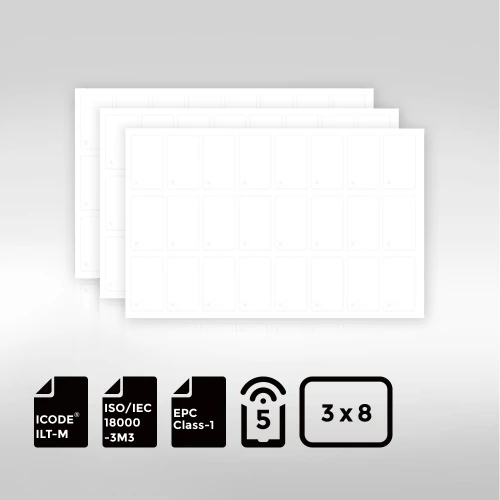
BioPoly™ Vinyl RFID Inlay Sheet NXP® ICODE® ILT-M

The NXP® ICODE® ILT-M BioPoly™ Vinyl RFID Inlay Sheet combines cutting-edge high-frequency RFID performance with a commitment to sustainability. Featuring the advanced ICODE® ILT-M chip and compliant with ISO/IEC 18000-3 Mode 3, it delivers ultra-fast data transfer, high memory capacity, and superior reading distances, making it ideal for applications such as supply chain management, asset tracking, logistics, and industrial automation.
Made from eco-friendly BioPoly™ vinyl, this inlay sheet helps your business reduce its environmental footprint while maintaining exceptional durability and printability. Whether used in custom labels, smart packaging, or intelligent inventory systems, the ILT-M BioPoly™ enables your brand to achieve operational efficiency, environmental responsibility, and a stronger connection with customers—all in one smart solution.