
Introduction
In today’s highly digitised world, radio frequency identification (RFID) technology has become ubiquitous. From hotel key cards and corporate access cards to payment cards and public transit passes in our wallets, RFID technology has profoundly transformed our lives with its convenience. However, as this technology becomes more widespread, a growing concern has emerged: Is it legal to copy an RFID card? The answer to this question is not a simple “yes” or “no,” as it involves multiple dimensions, including technology, law, and ethics. Delving into the truth about RFID card cloning will help you understand its complexities, potential risks, and how to protect your own security.
1. RFID Technology Overview: More Than Just a Plastic Card
Before delving into replication issues, it is essential to first understand the fundamentals of RFID technology. An RFID system typically consists of three components: the RFID tag (or card), the reader, and the backend data processing system. The tag contains a microchip and an antenna, with the chip storing a unique identification code (UID) and other potential information. When the tag enters the electromagnetic field of the reader, it activates and wirelessly transmits its stored data to the reader, enabling authentication or information exchange.
Commercial RFID cards primarily fall into two categories: ID cards (identity cards) and IC cards (integrated circuit cards). These two types exhibit significant differences in technology and security, and understanding these distinctions is crucial for assessing the difficulty of cloning.
| Features | ID Card (Low Frequency) | IC Card (High Frequency/Ultra-High Frequency) |
| Operating Frequency | Typically 125 kHz | Typically 13.56 MHz or higher |
| Data Storage | Typically read-only, storing a fixed, unique ID number | Read/write capability, larger storage capacity, divisible into multiple sectors |
| Security | Extremely low; no encryption; ID number transmitted openly | Higher; built-in encryption algorithms; data transmission verified and encrypted |
| Difficulty of Cloning | Very easy; numerous inexpensive cloning tools available commercially | More difficult; requires key cracking, especially for advanced encrypted cards |
| Typical Applications | Simple access control systems, attendance systems, animal identification | Complex access control systems, payment cards, public transit cards, hotel key cards |
In short, an ID card is like a business card with your name on it, visible to anyone; whereas an IC card is more like a password-protected safe, accessible only to those who know the code to open it and view its contents. This fundamental difference determines their vulnerability when faced with cloning.
2. The Technical Reality of RFID Card Cloning

When we talk about “copying,” we’re actually discussing “cloning”—creating an exact replica of the original card with identical functionality. Is this technically feasible? The answer is yes, but the difficulty varies depending on the card type.
For low-frequency ID cards, the cloning process is exceptionally straightforward. Since their ID numbers are publicly accessible and unencrypted, anyone can use an inexpensive, readily available handheld RFID cloner to read the original card’s ID number in seconds and then write it onto a blank, writable ID card. The entire process has virtually no technical barriers, which is why access cards in many older residential complexes are so easily duplicated.
However, the situation is vastly different for high-frequency IC cards. These cards typically employ encryption to protect stored data. For example, the widely used MIFARE Classic series divides its storage into multiple sectors, each protected by independent keys (Key A and Key B). To successfully clone an IC card, the duplicator must first crack these keys. While specialized tools and techniques (such as “sniffing attacks” or “brute force cracking”) exist to attempt key extraction, they require advanced technical expertise and offer no guarantee of success. For IC cards employing more advanced encryption standards like AES or 3DES, the difficulty of cloning increases exponentially, making it nearly impossible to crack using conventional methods.
3. The Grey Areas of Legality and Legal Red Lines
Having established the technical feasibility, we return to the core question: Is it legal to duplicate an RFID card? This depends on the intent and authorisation behind the duplication.
In certain circumstances, duplicating an RFID card may be legal, or at least exist in a legal grey area. For example, creating a backup access card for your own home’s entry system for personal convenience, in case the original is lost. In this scenario, you are the legitimate holder of the card, and the duplication does not infringe upon another’s property or privacy. However, even then, you must consider property management regulations, as some entities explicitly prohibit residents from duplicating access cards without authorisation.
The situation changes entirely when duplication occurs without permission. Unauthorised replication of another person’s RFID card—whether to gain access to restricted areas or to obtain sensitive information—is unquestionably illegal. This may violate multiple laws, including but not limited to:
Trespassing: Using a duplicated access card to enter private residences, office buildings, or restricted areas constitutes unlawful entry onto another person’s property.
Theft: If the duplicated card is used to steal goods or services (e.g., using a cloned payment card for purchases), it constitutes theft.
Personal Information Infringement: If the card contains personally identifiable information, unauthorised duplication and use may violate data protection and privacy-related laws and regulations.
4. Cloned RFID Cards: A Security Risk That Cannot Be Ignored
Beyond legal risks, cloning RFID cards poses serious security threats, with potentially massive consequences for both individuals and businesses.
| Risk Type | Description | Impact on Individuals/Businesses |
| Unauthorised Physical Access | Attackers using cloned access cards or hotel key cards can freely enter and exit sensitive areas such as private residences, offices, and warehouses. | Individuals may face property loss or even threats to personal safety; businesses may suffer significant losses including trade secret leaks and asset theft. |
| Identity Impersonation and Fraud | Cloned ID cards or employee badges can be used to impersonate legitimate cardholders for fraudulent activities or to gain unauthorised privileges. | Individuals may suffer reputational damage; businesses may incur financial losses or security breaches due to false authentication. |
| Data Theft | If RFID cards store sensitive data (e.g., payment information, personal profiles), cloned cards signify that this data has been compromised. | Individuals may face risks like unauthorised bank account transactions and privacy breaches; businesses face legal risks for violating data protection regulations and crises of customer trust. |
| Replay Attack | Attackers can intercept and record a legitimate RFID communication session, then later “replay” these signals to deceive systems and gain unauthorised access. | This attack is difficult for traditional systems to detect, posing a severe threat to systems relying on static authentication. |
5. How to Protect Your RFID Card from Cloning Threats?
Given such high stakes, how can we protect ourselves? Fortunately, multiple measures can significantly enhance RFID system security.
Select high-security IC cards: This is the most fundamental and effective measure. Abandon unsecured ID cards and transition entirely to IC cards employing advanced encryption standards (such as AES). These cards are specifically designed to resist cloning, providing robust protection for your assets and information security.
Implement dynamic keys and authentication mechanisms: For applications requiring high security, adopt dynamic authentication systems. This means each communication uses a one-time key or verification code, rendering interception useless for “replay attacks.”
Employ physical shielding measures: For individual users, a simple yet effective solution is using RFID-blocking card sleeves or wallets. These products contain specialised materials that block electromagnetic signals, preventing unauthorised scanning by distant readers without your knowledge.
Regularly Review and Update Security Systems: Technology advances continuously, and hackers’ attack methods evolve. Businesses and institutions should conduct regular security audits of their RFID systems, promptly update firmware and software, patch known vulnerabilities, and ensure security measures remain at the forefront of the industry.
Choose Trusted Suppliers: A professional RFID product supplier not only provides high-quality products but also leverages their expertise to deliver optimal solutions tailored to your security requirements.
Conclusion
Returning to our original question: “Is it legal to duplicate RFID cards?” The answer is complex, but the principle is clear: unauthorised duplication is illegal and poses significant security risks. The convenience of technology should not be an excuse to neglect security. Whether you’re an individual user or a large enterprise, RFID security should be taken seriously.
We are living in an era of ubiquitous connectivity, where RFID technology serves as a vital bridge between the physical and digital worlds, its importance growing ever more prominent. Protecting this small card is, in essence, safeguarding our property, privacy, and even personal safety. By choosing more secure technologies, implementing appropriate preventive measures, and partnering with professional suppliers, we can confidently enjoy the conveniences offered by RFID technology while minimising risks.
If you’re seeking reliable RFID solutions for your hotel, business, or any project, or have questions about enhancing the security of your existing systems, feel free to contact RFIDCard anytime. Our expert team is dedicated to serving you.
Recommended Product
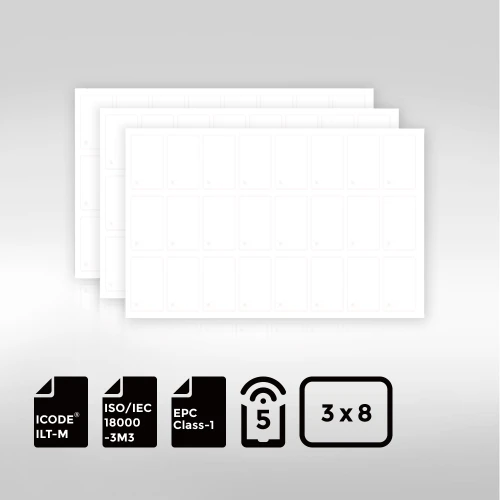
BioPoly™ Vinyl RFID Inlay Sheet NXP® ICODE® ILT-M

The NXP® ICODE® ILT-M BioPoly™ Vinyl RFID Inlay Sheet combines cutting-edge high-frequency RFID performance with a commitment to sustainability. Featuring the advanced ICODE® ILT-M chip and compliant with ISO/IEC 18000-3 Mode 3, it delivers ultra-fast data transfer, high memory capacity, and superior reading distances, making it ideal for applications such as supply chain management, asset tracking, logistics, and industrial automation.
Made from eco-friendly BioPoly™ vinyl, this inlay sheet helps your business reduce its environmental footprint while maintaining exceptional durability and printability. Whether used in custom labels, smart packaging, or intelligent inventory systems, the ILT-M BioPoly™ enables your brand to achieve operational efficiency, environmental responsibility, and a stronger connection with customers—all in one smart solution.