Today, we will focus on the NXP MIFARE® Classic® chip series RFID cards and delve into their technical features, benefits, and application scope within the hotel industry. Whether you are a hotel manager or an industry professional seeking to understand how NXP MIFARE® Classic® RFID cards can enhance the customer experience, this article will provide you with:
Technical Features: A detailed introduction to the core technology of NXP MIFARE® Classic®.
Benefit Analysis: An exploration of the advantages of this series of cards in terms of security, cost-effectiveness, and customer experience.
Application Cases: An analysis of the specific applications of NXP MIFARE® Classic® RFID cards in the hotel industry and the benefits they bring.
Are you interested in learning how NXP MIFARE® Classic® RFID cards can help your hotel improve customer satisfaction and optimize operations? Read on to gain valuable insights and references!
1. Basic knowledge of NXP MIFARE® Classic® RFID Cards
As a classic chip series developed by NXP, NXP MIFARE® Classic® is extensively utilized in the hotel industry. Its unique contactless technology not only enhances the customer experience but also streamlines the hotel’s management processes. RFID cards equipped with NXP MIFARE® Classic® chips have become the preferred solution for hotel managers in various areas, including room access control, payment systems, and loyalty programs, due to their security and convenience.

NXP MIFARE® Classic® RFID cards feature a high storage capacity and support multiple data storage formats, making them suitable for a variety of application scenarios. The primary attributes of these cards include ease of use and seamless integration.
How NXP MIFARE® Classic® RFID Cards Work
NXP MIFARE® Classic® RFID cards operate at a frequency of 13.56 MHz and utilize the ISO/IEC 14443 Type A communication protocol. When the cards come into proximity with the reader, they transmit data through an electromagnetic field. During this interaction, the reader sends a request to the card, which then responds by transmitting the stored information. This entire process is both fast and secure, making NXP MIFARE® Classic® an ideal choice for environments such as hotels that require efficient management solutions.
With their ability to improve operational efficiency and enhance guest experiences, NXP MIFARE® Classic® RFID cards are a valuable asset in the hospitality industry.
2. Advantages of NXP MIFARE® Classic® RFID Cards
The widespread adoption of NXP MIFARE® Classic® RFID cards in hotels is attributed to their numerous advantages, which not only enhance operational efficiency but also significantly improve the customer experience.

Improve Customer Experience
NXP MIFARE® Classic® RFID cards provide customers with a seamless check-in and check-out experience. The contactless technology allows guests to enter their rooms effortlessly—simply by holding the card close to the door lock, which unlocks quickly. This convenience enhances customer satisfaction and creates a notable differentiation in a competitive market. Additionally, customers can use the same card to access various hotel facilities, such as gyms, swimming pools, and meeting rooms, further enriching their overall experience.
Enhanced Security
Security is paramount in hotel management. NXP MIFARE® Classic® cards offer a variety of security features, including encryption mechanisms and access control. These cards employ a unique key management system to ensure that only authorized users can access specific areas. Furthermore, the anti-collision mechanism prevents multiple cards from interfering with each other’s reading simultaneously, effectively mitigating security risks. These robust security measures significantly bolster customer trust in the hotel.
Cost-Effectiveness
By implementing NXP MIFARE® Classic® technology, hotels can lower their overall operating costs. The production and maintenance costs of these cards are relatively low, and their durability and long service life minimize the need for frequent replacements. Additionally, the efficient management system associated with NXP MIFARE® Classic® reduces labor costs and enhances resource utilization, allowing hotels to maintain strong economic performance while providing high-quality services.
Integration Capabilities
NXP MIFARE® Classic® cards boast excellent integration capabilities, allowing for seamless connections with existing management systems and hardware. This means that hotels can easily adopt new technologies without undergoing extensive technical transformations. Moreover, NXP MIFARE® Classic® supports the integration of multiple applications, including room access, payment systems, and loyalty programs, enabling hotels to configure solutions flexibly according to their specific needs. This adaptability ensures that hotels can respond swiftly to market changes and remain competitive.
The advantages of NXP MIFARE® Classic® RFID cards make them an invaluable asset in the hospitality industry. By improving customer experience, enhancing security, offering cost-effectiveness, and providing robust integration capabilities, NXP MIFARE® Classic® technology empowers hotels to optimize their operations and deliver exceptional service to their guests.
3. Application of NXP MIFARE® Classic® RFID Cards in Hotels
The flexibility and versatility of NXP MIFARE® Classic® RFID cards have made them widely adopted in the hotel industry, enhancing both operational efficiency and customer satisfaction. Here are some key applications of NXP MIFARE® Classic® RFID cards in hotels:

Room Access Control
One of the most common uses of NXP MIFARE® Classic® RFID cards in hotels is for room access control. Guests can simply approach the door lock with their RFID card, and the lock will recognize the card and unlock automatically. This contactless access method improves convenience and reduces the risk of losing or damaging traditional keys. Additionally, hotel managers can easily modify or revoke access rights to accommodate the needs of different guests.
Payment System
Beyond room access, NXP MIFARE® Classic® RFID cards can be integrated into the hotel’s payment system. Guests can use the same card for purchases at restaurants, bars, and other services. This centralized payment method simplifies the checkout process and enhances customer satisfaction. It also allows hotels to monitor real-time consumption, optimizing financial management.
Loyalty Programs
NXP MIFARE® Classic® RFID cards are increasing in customer loyalty programs. Hotels can track customers’ points and rewards through these cards, making it easy for guests to query and redeem their benefits. This convenience enhances customers’ sense of participation and encourages them to continue choosing the same hotel brand. Furthermore, hotels can customize personalized reward programs based on customers’ consumption habits, further increasing loyalty.
Facility Access
NXP MIFARE® Classic® RFID cards are not limited to room access and payments; they can also control entry to various hotel facilities. Guests can use their cards to access amenities such as gyms, swimming pools, and SPAs, ensuring that only authorized cardholders can utilize these exclusive services. This approach improves security and optimizes facility management while enhancing the overall customer experience.
Event Management
NXP MIFARE® Classic® RFID cards play an important role in hosting meetings or events. Hotels can issue specific cards to attendees for check-in, catering, and other event services. This allows for effective management of participant numbers, attendance tracking, and personalized services. Additionally, after the event, hotels can leverage data analysis to evaluate its effectiveness and improve future event arrangements.
The diverse functions of NXP MIFARE® Classic® RFID cards in the hotel industry not only enhance operational efficiency but also improve customer experiences, providing hotel managers with greater flexibility and security. By integrating RFID technology into various aspects of their operations, hotels can ensure a seamless and satisfying experience for their guests.
4. Chip Technical Characteristics of NXP MIFARE® Classic® RFID Card
After exploring the advantages of NXP MIFARE® Classic® RFID cards and their applications in hotels, let’s delve into the technical details. These characteristics not only define the functionality of the card but also directly impact its performance in the hotel industry.

Operating Frequency
NXP MIFARE® Classic® RFID cards operate at a frequency of 13.56 MHz, which is a standard frequency widely used in contactless smart card technology. This frequency is crucial as it enables quick and stable communication between the card and the reader. Additionally, the relatively low frequency of 13.56 MHz offers good penetration and resistance to interference, making it suitable for use in various environments. This ensures that the card can be read quickly in high-traffic areas of the hotel, thereby enhancing the customer experience.
Memory Structure
The memory structure of NXP MIFARE® Classic® RFID cards is available in different versions, primarily 1K and 4K, each with distinct memory distributions and organizational structures:
NXP MIFARE® Classic® 1K:
This version has 1KB of available memory, typically divided into 16 sectors, with each sector containing 4 blocks. Each block is 16 bytes in size. This card is well-suited for basic access control applications and simple data storage.
NXP MIFARE® Classic® 4K:
This version provides 4KB of memory, usually divided into 40 sectors. Its larger storage capacity makes it ideal for applications that require the storage of more information, such as complex loyalty programs or detailed consumption records.
This hierarchical memory structure allows NXP MIFARE® Classic® RFID cards to be flexible in various application scenarios, catering to diverse needs in the hotel industry and beyond.
Data Storage Type
The data storage type of NXP MIFARE® Classic® RFID cards is primarily divided into two areas: read-only and writable.
Read-Only Area:
This section of the memory is designated for storing fixed information, such as the card’s serial number and issue date, which cannot be altered. This feature ensures the security and stability of essential information.
Writable Area:
This part of the memory is used to store dynamic data, such as customer consumption records, points, and personal information. Hotels can update this data as needed to provide personalized services. For example, different consumption areas can be activated based on individual customer usage patterns.
This flexible data storage design allows NXP MIFARE® Classic® RFID cards to meet a variety of application requirements effectively.
Communication Protocol
NXP MIFARE® Classic® RFID cards operate based on the ISO/IEC 14443 Type A communication protocol. This protocol defines the fundamental communication method between the card and the reader. Through this protocol, the reader can send a request to the card, which then responds and transmits data. The read/write speed typically ranges from 106 kbps to 848 kbps, accommodating the demands for fast processing in practical applications and ensuring that customers can smoothly access rooms or make payments.
Read/Write Speed
The read/write speed of NXP MIFARE® Classic® RFID cards directly impacts their application efficiency in high-traffic environments such as hotels. Generally, the read/write speed is around 100 ms, though specific speeds can be affected by reader performance and environmental factors. In a hotel setting, this speed is sufficient to meet real-time needs, allowing customers to check in, pay, and access facilities without delays.
Security Features
NXP MIFARE® Classic® RFID cards incorporate multiple security features to ensure data confidentiality and integrity. Key security features include:
Encryption Mechanism:
NXP MIFARE® Classic® utilizes the CRYPTO1 encryption algorithm to secure data transmission between the card and the reader. This encryption effectively prevents data interception and tampering.
Anti-Collision Mechanism:
When multiple cards are near the reader simultaneously, the anti-collision mechanism ensures that each card can be read in order, avoiding data confusion and reading errors. This feature is particularly important in high-traffic hotel venues.
Compatibility
NXP MIFARE® Classic® cards demonstrate strong compatibility with a variety of card readers and can be seamlessly integrated into existing hotel management systems. Additionally, they are compatible with other NXP MIFARE® products and support the integration of multiple technology platforms. This compatibility offers hotels greater flexibility when upgrading or expanding systems, reducing the complexity of technical integration.
Power Consumption
NXP MIFARE® Classic® RFID card power consumption is categorized into working mode and sleep mode:
Working Mode:
During communication with the reader, power consumption is relatively high, typically in the range of 15-30 mA, which is acceptable for mobile devices.
Sleep Mode:
When not in use, the card enters a sleep state, significantly reducing power consumption to less than 1 μA. This feature extends the card’s service life and lowers maintenance costs.
From the technical overview provided, it is evident that NXP MIFARE® Classic® cards exhibit excellent performance across multiple parameters, including operating frequency, memory structure, data storage, communication protocol, security, compatibility, and power consumption. These technical features position NXP MIFARE® Classic® as an ideal choice for hotel management, facilitating efficient operations and enhancing the overall guest experience.
5. Analysis of CRYPTO1 Encryption Algorithm for NXP MIFARE® Classic® RFID Card
CRYPTO1 is a proprietary encryption algorithm used by NXP MIFARE® Classic® RFID cards, primarily designed to safeguard the security of data transmission. In the hotel industry, where security is paramount, understanding how CRYPTO1 operates is essential for both managers and customers.

Basic Principles of Encryption
CRYPTO1 is based on symmetric encryption, which means that the same key is utilized for both encryption and decryption. This approach ensures that only devices with the correct key—such as card readers—can decrypt and access the data. All communications between NXP MIFARE® Classic® cards and card readers are encrypted using CRYPTO1, ensuring that information cannot be intercepted or altered by unauthorized third parties during transmission.
Key Features
Key Management:
CRYPTO1 employs a dynamic key generation method that creates a new key for each communication session. This enhances security by making it difficult for attackers to exploit the key in subsequent communications, even if it is stolen.
Anti-Attack Capability:
The CRYPTO1 algorithm is designed to resist common security threats, such as replay attacks. This means that even if an attacker intercepts communication data, they cannot simply replay that data to gain unauthorized access.
Speed and Efficiency:
Although CRYPTO1 is an encryption algorithm, it is designed for speed and efficiency, ensuring fast reading and unlocking while maintaining security. This is particularly important in the hospitality industry, where quick response times are essential for customer satisfaction.
The CRYPTO1 encryption algorithm is a critical component of the security framework for NXP MIFARE® Classic® cards. Through its use of symmetric encryption and dynamic key management, it ensures secure communication between the card and the reader, preventing data interception or tampering. This robust security feature makes NXP MIFARE® Classic® a reliable choice for protecting customer information and enhancing overall security in the hospitality industry.
6. NXP MIFARE® Classic® RFID Card Types and Their Differences
The NXP MIFARE® Classic® series includes several different versions, each tailored for specific functions and application scenarios. Below is a detailed comparison of three common types of NXP MIFARE® Classic® cards and their features.

NXP MIFARE® Mini (S20) PVC RFID Card
The NXP NXP MIFARE®® Mini (S20) RFID PVC card is an efficient and affordable entry-level solution within the NXP MIFARE® Classic® series, designed to meet basic needs. It has a storage capacity of 320 bytes, complies with the ISO/IEC 14443 A standard, and features simple encryption and authentication mechanisms to ensure basic data security.
Storage Capacity:
The Mini version has a storage capacity of 320 bytes, suitable for storing simple data information, effectively meeting the needs of lightweight applications.
Applicable Scenarios:
Ideal for situations where minimal storage is necessary, such as temporary visitor access, straightforward access control, and identity authentication at small events. Its economical price makes it particularly suitable for large-scale deployment, widely used in public transportation, access control systems, and event ticketing.
Advantages and Disadvantages:
Advantages:
Cost-effective, with fast read/write capabilities and durable PVC material, making it suitable for various basic application scenarios.
Disadvantages:
Limited functionality; not suitable for high-end applications requiring complex data storage and processing.
NXP MIFARE® Classic® EV1 1K RFID Card
The NXP MIFARE® Classic® EV1 1K is a more widely used version, offering a larger storage capacity and additional features. This card is made from photo-quality standard PVC/PET and has a CR80 size, compatible with most thermal transfer card printers.
Storage Capacity:
With 1KB of storage space divided into 16 sectors (each containing 4 blocks), this card can store more data, including user identity information and consumption records.
Applicable Scenarios:
Suitable for small to medium-sized hotels, restaurants, and public transportation systems. It can be used for room access control, simple loyalty programs, and small payment systems.
Advantages and Disadvantages:
Advantages:
The relatively high storage capacity increases application flexibility, making it suitable for a wider variety of use cases.
Disadvantages:
Although it offers improved storage, there is still room for enhancement in terms of security features and data processing capabilities.
NXP MIFARE® Classic® EV1 4K RFID Card
The NXP MIFARE® Classic® EV1 4K is the version with the largest storage capacity in the series, making it suitable for more complex application requirements. This card also supports direct card making and printing on transfer printers.
Storage Capacity:
With 4KB of storage space divided into 40 sectors, this card can store a substantial amount of information and support multiple data formats. This capability makes it highly suitable for complex application scenarios.
Applicable Scenarios:
The NXP MIFARE® Classic® EV1 4K is widely used in large hotels, complexes, and locations that require efficient customer management. It can be utilized for advanced loyalty programs, detailed consumption records, visitor management systems, and multifunctional payment systems.
Advantages and Disadvantages:
Advantages:
The larger storage capacity and diverse functionalities enable the card to perform effectively in complex environments, supporting a wide range of applications.
Disadvantages:
Its relatively high cost may make it less suitable for small businesses with limited budgets.
Other NXP MIFARE® Classic® Products
In addition to the three main cards, the NXP MIFARE® Classic® series includes various other products, such as key fobs and wristbands, which also carry the advantages of NXP MIFARE® Classic® technology and are suitable for various application scenarios:
NXP MIFARE® Classic® EV1 4K/1K RFID Key Fob:
Ideal for access control and keychain management, these key fobs are easy to carry, making them particularly convenient for users who frequently enter and exit secure areas.
NXP MIFARE® Classic® EV1 4K/1K RFID Wristband:
Commonly used for event tickets and tourist attractions, these wristbands are easy to wear and manage, enhancing the user experience. Many hotels are now also utilizing RFID wristbands for access control.
Choosing the right NXP MIFARE® Classic® card depends on specific application requirements and budget considerations. The NXP MIFARE® Classic® Mini is more suitable for simple, temporary applications; the NXP MIFARE® Classic® EV1 1K offers a good balance of storage capacity and flexibility for small and medium-sized needs; while the NXP MIFARE® Classic® EV1 4K delivers superior performance in both storage and functionality, making it ideal for complex and large-scale scenarios. Understanding these differences will assist hotel managers in making the best choice based on their actual needs.
7. Why Choose NXP MIFARE® Classic® RFID Card?
The NXP MIFARE® Classic® card has established a strong presence in the market, primarily due to its unique advantages and flexible positioning. Here are several key reasons to consider NXP MIFARE® Classic® cards:

Unique Advantages
Mature Technology:
Since its launch, NXP MIFARE® Classic® has been widely adopted worldwide. Its technology is mature and has been validated in the market over many years, demonstrating reliability and stability.
High Cost Performance:
Compared to other advanced RFID cards, NXP MIFARE® Classic® cards are relatively low-cost, especially when deployed on a large scale. This can lead to significant budget savings for hotels and other industries.
Easy to Integrate:
NXP MIFARE® Classic® cards can be seamlessly integrated with a variety of readers and management systems, making them suitable for numerous application scenarios. Hotels can easily incorporate these cards into existing management platforms without the need for complex system upgrades.
Flexibility and Scalability:
NXP MIFARE® Classic® offers different storage capacities and functionalities, making it adaptable for a wide range of applications, from simple access control to complex customer management systems. As hotel needs evolve, the type of card used can be adjusted flexibly.
Security:
Although NXP MIFARE® Classic® has faced some security scrutiny, its built-in encryption mechanism and anti-collision features provide a certain level of data protection. For general application scenarios, these security measures are typically sufficient to meet basic security needs.
Market Positioning
Wide Applicability:
NXP MIFARE® Classic® RFID cards are not only suitable for the hotel industry but are also widely used in transportation, retail, and public services. This broad applicability allows them to fit into various market scenarios effectively.
Customer Loyalty Programs:
With the ability to store customer information, NXP MIFARE® Classic® RFID cards are commonly utilized in customer loyalty programs, helping companies accumulate valuable customer data and enhance satisfaction.
Ideal Choice for High-Traffic Places:
In high-traffic environments such as hotel lobbies and restaurants, NXP MIFARE® Classic® RFID cards can perform quick, contactless reading, reducing wait times and improving the overall customer experience.
Ability to Cope with Future Challenges:
As the Internet of Things (IoT) and smart devices become more prevalent, NXP MIFARE® Classic® RFID cards are continuously adapting to the challenges posed by emerging technologies, ensuring their competitiveness in the future market.
8. Which Hotels Are Suitable for NXP MIFARE® Classic® RFID Cards?
NXP MIFARE® Classic® cards are suitable for a wide range of hotel types due to their diverse functions and affordability. Below is a detailed analysis of the needs and situations of different types of hotels to help identify which establishments are best suited to utilize these cards.

Small Hotels
Applicability:
Small hotels often operate with limited budgets, making NXP MIFARE® Classic® RFID cards an ideal choice due to their low cost and straightforward management. These hotels can easily implement room access control and basic customer management, thereby enhancing operational efficiency.
Advantages:
- Cost-Effectiveness: Small hotels can significantly reduce initial investment and operating costs when deploying RFID cards.
- Simplified Operation: The easy integration and user-friendly features allow small hotels to get started quickly without the need for extensive training or complex system adjustments.
- Customer Experience: Fast contactless reading improves the check-in experience for customers, reducing wait times.
Large Hotels
Applicability:
While the needs of large hotels tend to be more complex, NXP MIFARE® Classic® RFID cards can still meet their requirements to some extent, especially in medium-sized hotels or high-traffic scenarios.
Advantages:
- Versatility: NXP MIFARE® Classic® cards can be used for room access, payment systems, and loyalty program management, providing a flexible solution for hotels.
- High-Traffic Handling: The fast reading capabilities are well-suited for high-traffic environments, helping to enhance overall service quality.
Economy Hotels
Applicability:
For economy hotels, the low cost and basic functionalities of NXP MIFARE® Classic® RFID cards align well with their operational needs.
Advantages:
- Budget-Friendly: These cards help economy hotels effectively control costs while meeting essential customer service requirements.
- Basic Functions: Simple room access and payment functionalities cater to the daily operational needs of economy hotels.
High-End Hotels
Applicability:
Although high-end hotels primarily focus on delivering a superior customer experience, NXP MIFARE® Classic® RFID cards can still be applicable in specific scenarios, albeit with careful consideration.
Advantages and Considerations:
- Personalized Service: While NXP MIFARE® Classic® RFID cards can facilitate room access and payment functions, they may not meet the stringent security and scalability requirements expected by high-end hotels.
- Higher Standards: High-end hotels often prefer more secure and advanced card options to ensure robust customer data protection and to provide enhanced services.
In general, small and budget hotels are the best candidates for using NXP MIFARE® Classic® RFID cards, benefiting from the cost-effectiveness and ease of management to improve customer experience and operational efficiency. Large hotels can also utilize NXP MIFARE® Classic® cards in certain situations, though they may require more advanced solutions for complex and security-related needs. For high-end hotels, while NXP MIFARE® Classic® can be considered in specific scenarios, opting for more secure and scalable card options is advisable to meet their high standards for customer service and security.
9. Evolution and Potential of NXP MIFARE® Classic® RFID Cards in the Hotel Industry
As technology continues to advance, the application of NXP MIFARE® Classic® cards in the hotel industry is also evolving. Looking ahead, these cards will encounter numerous new opportunities and challenges. Here are several key trends to consider:

Migration to Higher Security Standards
With the growing emphasis on data security and privacy protection, the hotel industry’s requirements for security standards are becoming increasingly stringent. NXP MIFARE® Classic® RFID cards will need to transition to higher security standards, potentially integrating stronger encryption technologies and anti-collision mechanisms to safeguard customers’ sensitive information.
Improve Encryption Technology:
The adoption of more advanced encryption protocols will be essential to prevent unauthorized access and tampering of data.
Meet Compliance Requirements:
With regulations such as the General Data Protection Regulation (GDPR) coming into effect, hotels must ensure that all customer data is processed in accordance with the latest legal standards, further necessitating enhanced security measures.
Integration with the Internet of Things (IoT)
The rapid development of the Internet of Things presents new opportunities for the hotel industry. NXP MIFARE® Classic® RFID cards can be integrated with IoT devices to facilitate smarter management and enhanced services.
Smart Room Management:
By leveraging IoT devices, hotels can achieve intelligent room control, allowing customers to use their RFID cards to adjust room temperature, lighting, and other amenities seamlessly.
Real-Time Data Analysis:
Integrating IoT technology enables the collection of real-time data on customer usage patterns, helping hotels gain insights into customer needs and optimize their services accordingly.
10. Embrace NXP MIFARE® Classic® RFID Cards for a New Era in Hospitality
In summary, NXP MIFARE® Classic® cards represent more than just a technological component in the hotel industry; they are evolving into a key tool for enhancing customer experience, ensuring security, and optimizing operations. As market demand for efficient and convenient solutions continues to rise, the flexibility and integration capabilities of NXP MIFARE® Classic® make it an indispensable asset for modern hotels.
For hotels, choosing NXP MIFARE® Classic® RFID cards is not merely about keeping up with trends; it is a strategic investment aimed at creating a unique and memorable experience for guests.
In this rapidly changing era, embracing such technology will help hotels differentiate themselves from the competition. Let us look forward to the limitless possibilities that NXP MIFARE® Classic® RFID cards will bring to the hotel industry!
11. FAQs
1. What types of NXP MIFARE® Classic® RFID cards are available?
NXP MIFARE® Classic® cards are available in various memory sizes, including 1KB and 4KB, to accommodate different application requirements.
2. How secure are NXP MIFARE® Classic® RFID cards?
NXP MIFARE® Classic® cards utilize cryptographic methods to ensure secure communications, making them a reliable choice for access control and payment applications.
3. Can NXP MIFARE® Classic® RFID cards be used for multiple applications?
Yes, NXP MIFARE® Classic® cards can serve multiple functions, including room access, payment processing, and loyalty programs, all integrated into a single card.
4. What is the communication range of NXP MIFARE® Classic® RFID cards?
NXP MIFARE® Classic® cards communicate at a range of up to 10 cm, ensuring fast and convenient access.
5. What is the lifespan of NXP MIFARE® Classic® RFID cards?
The typical lifespan of NXP MIFARE® Classic® RFID cards ranges from 5 to 10 years, depending on usage frequency and environmental conditions. To extend the card’s durability, it is advisable to avoid exposure to high temperatures and humidity, and to regularly check the physical condition of the card.
Recommended products
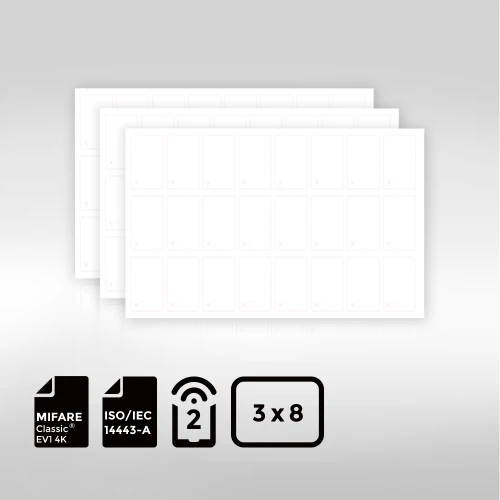
BioPoly™ Vinyl RFID Inlay Sheet MIFARE Classic® EV1 4K

The MIFARE Classic® EV1 4K BioPoly™ Vinyl RFID Inlay Sheet combines cutting-edge RFID technology with sustainable materials. Crafted from BioPoly™ Vinyl, a biodegradable and eco-friendly PVC alternative, it reduces environmental impact without sacrificing durability and flexibility. Featuring the MIFARE Classic® EV1 4K chip, this inlay offers expanded 4KB memory, enhanced security with mutual three-pass authentication, and fast, reliable data transmission. Ideal for applications like access control, event management, and smart cards, it delivers excellent compatibility and performance. By utilizing BioPoly™ Vinyl, this product supports green initiatives while maintaining top-tier RFID functionality.