In today’s data-driven and access-controlled world, RFID technology has become a cornerstone of modern business operations. From employee identification to parking management and industrial automation, RFID cards enable seamless and contactless interactions across countless applications. Among these, the PVC RFID card remains the most commonly used due to its excellent printability, low production cost, and aesthetic flexibility. However, for organizations that demand greater durability and environmental resistance, ABS RFID cards are emerging as a preferred alternative. This article compares the two materials in detail, helping businesses make an informed decision when selecting the right RFID solution.
1. Overview of RFID Card Materials
The physical material of an RFID card acts as the protective shell for the embedded electronic components—the microchip and the antenna. This material choice dictates several critical factors, including the card’s mechanical strength, its resistance to environmental stressors, its aesthetic quality, and its overall longevity. While the RFID chip determines the card’s functional capabilities, the housing material determines its physical resilience.
The two dominant materials in the RFID card market are:
- PVC (Polyvinyl Chloride): A flexible, thermoplastic polymer known for its smooth surface and excellent printability. It is the industry standard for most general-purpose cards.
- ABS (Acrylonitrile Butadiene Styrene): A common thermoplastic polymer known for its strength, rigidity, and impact resistance. It is often used in applications requiring a higher degree of physical toughness.
These materials are selected based on a trade-off between durability, printability, and the intended use environment. Understanding the inherent properties of each is the first step toward optimizing an RFID deployment.
2. What Is a PVC RFID Card?
Polyvinyl Chloride (PVC) is the third-most-produced synthetic plastic polymer globally, and its ubiquity in the card industry is no accident. A PVC RFID card is constructed from layers of this material, which are laminated together to encapsulate the RFID inlay.

PVC is a relatively soft and flexible plastic, offering a smooth, non-porous surface that is ideal for high-quality dye-sublimation or thermal transfer printing. This characteristic is why PVC is the material of choice for cards where visual appeal and branding are paramount.
The widespread adoption of PVC stems from its balanced properties:
- Excellent Print Quality: The smooth finish allows high-resolution printing, including full-color logos, photos, and barcodes—essential for branding and personalization.
- Low Manufacturing Cost: PVC is inexpensive to produce, making it suitable for large-scale card issuance such as employee IDs, membership programs, and transit passes.
- Versatility: PVC cards are compatible with nearly all standard card personalization equipment, including magnetic stripe encoding, signature panels, and holographic overlays.
PVC cards are best suited for indoor, low-wear environments where the card is handled regularly but not subjected to extreme physical stress or temperature fluctuations. Common applications include:
- Office and Hotel Access Control
- Membership and Loyalty Programs
- Gift Cards and Retail Vouchers
- Public Transportation Passes
3. What Is an ABS RFID Card?
ABS (Acrylonitrile Butadiene Styrene) is an engineering plastic known for its strength, toughness, and resistance to physical impact. When used to produce RFID cards, ABS provides a more rugged shell for the embedded chip and antenna, making it ideal for challenging environments.
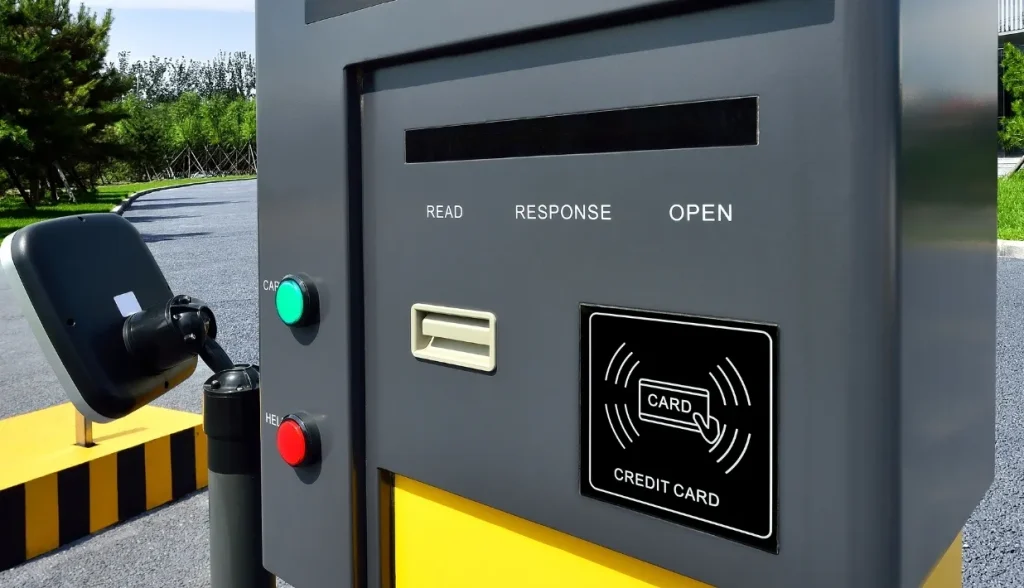
The key benefits of an ABS RFID card are centered on its superior physical strength and resilience:
- Excellent Physical Strength: ABS cards are difficult to bend, snap, or deform, making them ideal for environments where cards are frequently dropped, crushed, or roughly handled.
- High-temperature resistance: They can tolerate up to 90°C, ensuring stable performance in outdoor or industrial environments.
- Longevity in Harsh Environments: ABS is less susceptible to degradation from UV light and certain chemicals compared to PVC, extending its lifespan in outdoor or industrial settings.
ABS cards are the preferred choice when durability is non-negotiable. Their applications include:
- Industrial and Construction Site Access Control
- Outdoor Parking Management Systems
- Logistics and Warehouse Tracking Tags
- High-Frequency Daily Use Systems (e.g., laundry cards, vending machine tokens)
4. PVC vs. ABS: Key Differences Table
To facilitate a clear comparison, the following table summarizes the critical differences between the two materials across key business considerations.
| Feature | PVC RFID Card | ABS RFID Card |
| Material | Polyvinyl Chloride | Acrylonitrile Butadiene Styrene |
| Durability | Moderate (Prone to bending/cracking under stress) | High (Excellent impact and mechanical resistance) |
| Heat Resistance | Up to 60°C (Can warp in high heat) | Up to 90°C (Maintains shape at higher temperatures) |
| Cost | Lower (Ideal for large-volume, budget-conscious projects) | Slightly Higher (Higher initial investment) |
| Printing Quality | Excellent (Smooth surface for high-resolution graphics) | Good (Surface is less smooth; printing quality can be limited) |
| Ideal Use | Office access, hotel key cards, membership, retail | Industrial, outdoor, parking, construction sites |
| Recyclability | Less Eco-Friendly (Harder to recycle) | More Recyclable (Can be re-processed) |
5. Performance in Business Environments
When evaluating RFID materials, it’s crucial to consider actual working conditions rather than laboratory specifications. Let’s look at typical B2B scenarios:
5.1 Indoor Access Control
For typical office environments, corporate headquarters, or hospitality settings, the PVC RFID card is often the most sensible and cost-effective choice. In these settings, cards are generally carried in wallets or lanyards and are only swiped or tapped a few times a day. The environment is climate-controlled, minimizing exposure to temperature extremes, humidity, or direct sunlight.
- PVC Performance: PVC performs exceptionally well here. Its low unit cost makes it ideal for large-scale employee ID programs where hundreds or thousands of cards are required. The superior print quality also allows for professional, branded photo ID badges that enhance corporate image. The moderate durability is sufficient for the low-stress environment.
5.2 Industrial and High-Stress Settings
In contrast, environments such as manufacturing plants, construction sites, warehouses, or outdoor facilities subject cards to significant mechanical stress, dirt, and temperature variations. A card used by a logistics worker might be dropped, exposed to machinery vibration, or left in a vehicle on a hot day.
- ABS Performance: This is where the ABS RFID card excels. Its inherent rigidity and impact resistance ensure that the embedded RFID inlay remains protected even after repeated physical abuse. The higher heat resistance prevents the card from warping or delaminating, which is a common failure point for PVC in hot industrial settings.
5.3 Outdoor Use and Environmental Exposure
Outdoor applications, such as parking permits, toll collection tags, or resort access passes, require materials that can withstand the elements. Exposure to UV radiation, rain, humidity, and freeze-thaw cycles can rapidly degrade less robust plastics. ABS maintains its structural integrity and color stability better than PVC under prolonged outdoor exposure, making it the superior choice for any system deployed outside a climate-controlled building.
6. Which RFID Card Material Should Your Business Choose?
The decision between PVC and ABS ultimately depends on a careful assessment of three key factors: Environment, Usage Frequency, and Budget.
Choose a PVC RFID card if:
- Your environment is indoor and climate-controlled.
- The card usage frequency is low to moderate.
- Branding and high-quality graphics are a top priority.
- Your budget is highly constrained, or you require a very large volume of cards.
- The card is intended for short-term use.
Choose an ABS RFID card if:
- Your environment is harsh, outdoor, or subject to temperature extremes. (e.g., construction, manufacturing, outdoor parking).
- The card will be subjected to high mechanical stress, impact, or frequent rough handling.
- Longevity and minimal replacement rates are critical for operational stability.
Before finalizing the material for your RFID system, a thorough evaluation is essential. Evaluate your environment, usage frequency, and branding needs by consulting with RFIDCard. Requesting sample cards of both materials and subjecting them to real-world stress tests within your operational environment is the most reliable way to predict long-term performance and ensure the chosen material meets your specific durability requirements.
7. Conclusion
Both PVC RFID cards and ABS RFID cards serve important roles in modern access control and identification systems. The PVC option excels in affordability, smooth surface quality, and customizable printing—making it ideal for offices, hotels, and retail membership programs. The ABS alternative, on the other hand, provides superior durability, heat resistance, and environmental strength, perfectly suited for industrial or outdoor operations. Ultimately, the best choice depends on your organization’s specific environment, branding needs, and total cost goals.
Recommended Product
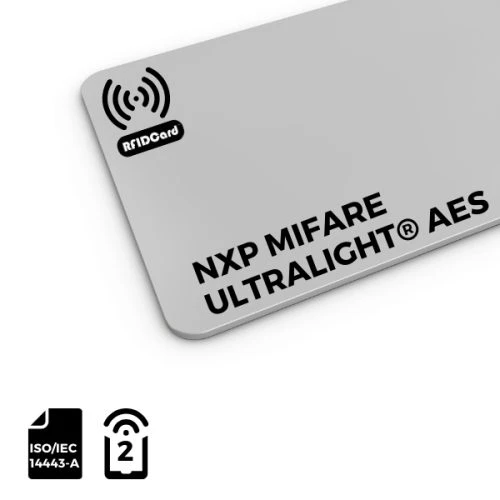
MIFARE Ultralight® AES PVC RFID Card

MIFARE Ultralight® AES PVC card is a contactless smart card based on MIFARE Ultralight AES chip, which supports AES encryption authentication, provides excellent performance and security, and is the highest security card in the MIFARE Ultralight® series. The card is made of PVC material and is widely used in access control, public transportation, ETC, events management, etc.
IMPORTANT NOTICE: All MIFARE Ultralight® AES cards supplied on this site is factory default (non-encrypted) version.