In today’s fast-moving world of logistics, manufacturing, and retail, the way businesses track, identify, and manage products has become a key factor in operational success. Among the most widely used technologies are RFID (Radio Frequency Identification) and traditional barcodes. While both serve the purpose of product identification and inventory tracking, they operate in fundamentally different ways and deliver varying levels of efficiency. Understanding RFID and Barcode is crucial for any company aiming to modernize its inventory control, improve accuracy, and boost productivity. Choosing the right technology can make a world of difference in cost, performance, and scalability. This article is about RFID vs Barcode.
1. What Is a Barcode?

A barcode is a familiar sight—those black-and-white lines printed on virtually every product. Barcodes represent data using patterns of parallel lines or geometric shapes that can be read by optical scanners. Each barcode encodes information such as product type, manufacturer, or serial number, which is linked to a database for identification. The technology behind barcodes is relatively simple and has been around since the 1970s. Scanning requires a line of sight—meaning the scanner must directly “see” the printed label to read it. There are several barcode formats, including the UPC (Universal Product Code) found on consumer goods, EAN codes for international retail, and QR codes, which can store more complex data.
Barcodes are widely used because they are cheap, easy to print, and universally recognized. They’re ideal for point-of-sale systems, libraries, inventory labeling, and packaging. However, the simplicity of barcodes can also be their limitation in advanced tracking environments that demand speed and automation.
2. What Is RFID?
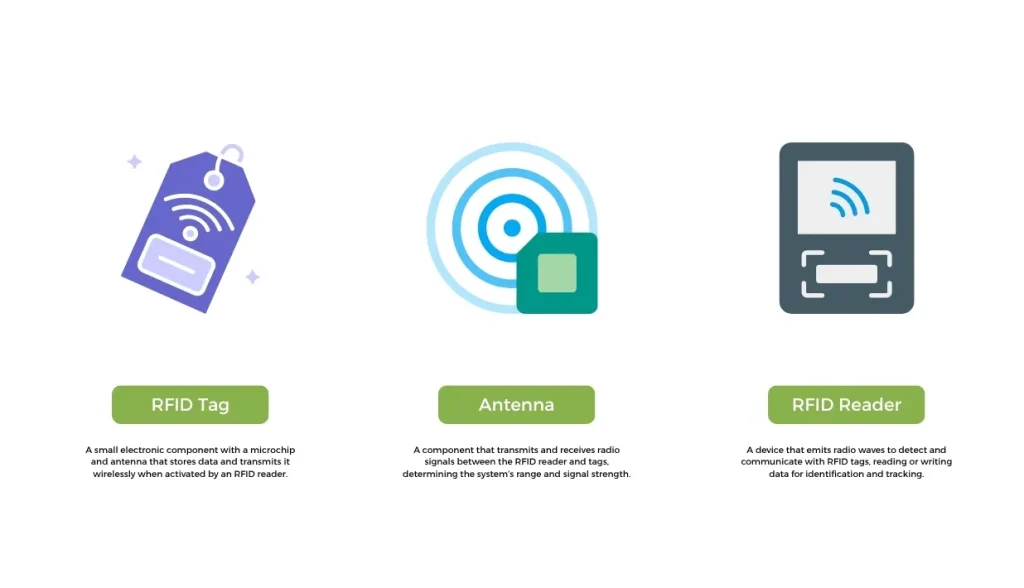
Radio Frequency Identification (RFID) is a more advanced technology that uses radio waves to identify and track objects. An RFID system consists of three main components: an RFID tag (also known as a transponder), an RFID reader (or interrogator), and an antenna. The tag, which contains a microchip and an antenna, is attached to the object to be tracked. The reader emits radio waves, which are picked up by the tag’s antenna. The tag then uses the energy from these waves to power its microchip and transmit a response, typically a unique identification number, back to the reader.
Unlike barcodes, RFID does not require direct line of sight. It can read multiple tags simultaneously and from greater distances—sometimes up to 10 meters or more for UHF (Ultra-High Frequency) RFID systems. RFID technology is used in various industries, including logistics, warehouse automation, access control, livestock tracking, and even toll collection systems. Because RFID can store more data and withstand harsh environments, it’s becoming a vital part of digital transformation initiatives across industries.
3. RFID vs Barcode: Key Differences
Although both technologies serve a similar purpose—identifying and tracking items—the way they work and the results they deliver differ significantly. The table below summarizes the core distinctions between RFID and Barcode:
| Feature | Barcode | RFID |
| Data Capture Method | Optical (line of sight required) | Radio frequency (no line of sight) |
| Read Range | Few inches to 1–2 feet | Up to 10+ meters (UHF) |
| Speed | One at a time | Multiple tags simultaneously |
| Durability | Easily damaged or dirty | More durable and reusable |
| Data Capacity | Limited | Can store more data |
| Use Cases | Retail checkout, packaging | Inventory tracking, access control |
In short, barcodes are simple, while RFID provides automation and advanced data capabilities.
4. When to Use RFID or Barcode
Choosing between RFID and Barcode depends on your specific operational needs, scale, and budget.
4.1 Use a barcode if:
- Cost is a primary concern. Barcode labels are extremely inexpensive, costing only a few cents each. This makes them an ideal choice for small businesses and applications where a large number of items need to be tagged, but the value of each item is relatively low.
- Line of sight is not an issue. In a retail checkout environment, for example, the cashier is already handling each item, so the need to scan each barcode individually is not a significant drawback.
- The volume of items to be scanned is manageable. For small inventories or low-throughput operations, the speed advantage of RFID may not be necessary.
4.2 Use RFID if:
- Automation and efficiency are top priorities. The ability to read multiple tags simultaneously without a line of sight can dramatically speed up processes like inventory counting and receiving. This is particularly beneficial in large warehouses and distribution centers.
- The environment is harsh. The durability of RFID tags makes them a better choice for industrial settings where they may be exposed to moisture, dirt, or extreme temperatures.
Several well-known companies have successfully implemented RFID to improve their operations. Walmart, for example, has been a pioneer in the use of RFID in the retail industry. By requiring its top suppliers to place RFID tags on pallets and cases, Walmart has been able to significantly improve inventory accuracy and reduce out-of-stocks. Similarly, the fashion retailer Zara uses RFID to track individual garments from the moment they are manufactured until they are sold. This allows Zara to maintain a tight control over its inventory and quickly respond to changes in customer demand.
5. Future Trends: Is RFID Replacing Barcodes?
While RFID adoption is growing rapidly, it’s unlikely that barcodes will disappear entirely. Instead, both technologies will coexist, serving different purposes. Barcodes remain the most cost-effective solution for basic tracking and labeling. Their simplicity and universal compatibility make them indispensable for small and medium-sized businesses.
On the other hand, RFID is increasingly being integrated into smart supply chains, IoT systems, and automation platforms. With falling tag costs and improved reader technology, RFID is becoming more accessible even for mid-sized enterprises. As companies seek more visibility and efficiency, RFID vs Barcode decisions will continue to evolve toward blended solutions that combine both systems’ strengths.
6. Conclusion
When comparing RFID vs Barcode, the choice ultimately depends on your business goals, operational environment, and budget. If your focus is on simplicity, low cost, and basic tracking, barcodes are still a reliable and proven choice. But if you need real-time visibility, automation, and scalability, RFID offers capabilities that barcodes simply can’t match. As technology continues to advance, RFID is no longer just for large corporations—it’s becoming a practical tool for any organization aiming to digitize its operations and improve accuracy.
Recommended Product
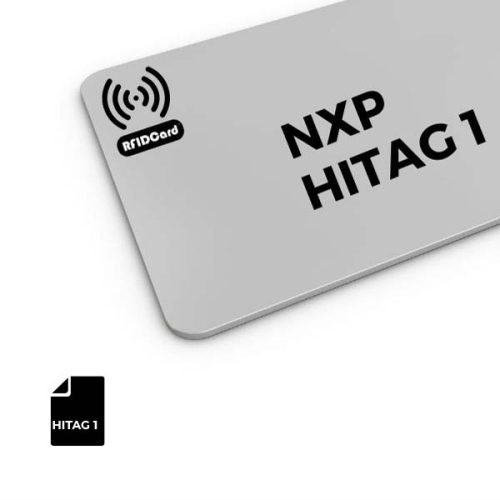
RFID Card CR80 HITAG® 1

The HITAG® 1 RFID card is a high-performance RFID card made from high-quality PVC material, designed for applications like access control, asset tracking, ticket management, and personalized gift cards. It’s durable and suitable for various environments. The card supports 125 kHz RFID communication, offers fast reading and writing capabilities, is compatible with a range of reading devices, ensuring smooth operation in different scenarios, and boasts strong anti-interference capability.In different scenarios, and boasts strong anti-interference capability.