In today’s rapidly urbanizing world, finding a parking space can be one of the most frustrating parts of daily life. As cities expand and the number of vehicles continues to grow, traditional parking management methods simply can’t keep up. That’s where the smart parking system comes in — an intelligent and automated solution that makes parking faster, more efficient, and more sustainable. It is powered by advanced technologies such as sensors, the Internet of Things (IoT), and RFID (Radio Frequency Identification). Together, these innovations are transforming how we manage space, time, and convenience. Among them, RFID technology play a key role. They enable seamless identification, access control, and payment automation — turning parking lots into efficient, contactless, and data-driven environments.
1. What Is a Smart Parking System and How Does It Work?
A smart parking system is an integrated solution that uses digital technologies to monitor, manage, and optimize parking spaces in real time. Instead of relying on manual attendants, paper tickets, or guesswork, smart systems use sensors, cameras, and connectivity to detect whether parking spots are occupied or vacant. This information is transmitted to a central server or cloud platform, allowing drivers to quickly locate available spaces through mobile apps, digital signs, or automated navigation systems.
Beyond convenience, smart parking systems reduce congestion, save fuel, and improve the overall urban driving experience. They can also integrate with payment gateways, mobile applications, and traffic management platforms — making them an essential component of any smart city infrastructure.
2. The Role of RFID technology in Smart Parking Systems

While various technologies contribute to a comprehensive smart parking solution, Radio Frequency Identification (RFID) technology plays a pivotal and often indispensable role, particularly in high-traffic, recurring-user environments like corporate offices, residential complexes, and dedicated commuter lots. Here’s how they fit into the smart parking system workflow:
- Entry – When a vehicle approaches the gate, an RFID reader scans the RFID tag automatically, authenticating the driver without manual input.
- Authorization – The central parking management software verifies the RFID tag’s data and grants entry. The gate opens instantly.
- Parking Duration Tracking – The system records the time of entry, monitors the stay duration, and calculates fees automatically.
- Exit and Payment – When the vehicle exits, the reader scans the RFID tag again. The system processes payment automatically (either deducted from a prepaid balance or charged online).
- Data Logging – Each transaction is stored for analytics, helping operators understand usage patterns and optimize operations.
3. How RFID Smart Parking Works
The integration of RFID technology into a smart parking system creates a highly efficient, automated workflow for vehicle access and payment. The process is designed to be as seamless and fast as possible for the end-user:
3.1 Approach and Identification
As the driver approaches the entry gate, the vehicle passes within the read range of a strategically positioned RFID reader. This reader, typically mounted on a pedestal or overhead gantry, immediately begins scanning for a valid RFID tag.
3.2 Data Verification and Access Grant
Upon detecting a tag, the reader captures the unique identification number and transmits it instantaneously to the central parking management software. The software verifies this ID against its database, checking for authorization status, subscription validity, and any outstanding balances. If the data is verified and the user is authorized, the system sends a command to the gate barrier. The gate opens automatically, often without the vehicle needing to come to a complete stop, dramatically improving traffic throughput.
3.3 Digital Tracking of Parking Duration
The moment the vehicle passes the entry gate, the central system logs the entry time and date associated with that specific RFID tag. This digital tracking replaces the need for physical tickets or manual timekeeping. The system then monitors the vehicle’s presence within the facility, often cross-referencing the entry data with occupancy data from other sensors to ensure accuracy and enhance security.
3.4 Exit and Automated Payment Processing
When the driver approaches the exit gate, the same process of RFID tag reading and verification occurs. The system calculates the total parking duration by comparing the exit time with the logged entry time. Based on the user’s pre-registered payment method (e.g., credit card, digital wallet), the calculated fee is processed automatically in the background. The driver receives a notification (often via a mobile app or a small display) confirming the charge, and the exit barrier opens, completing the transaction with zero manual intervention.
3.5 Data Storage for Reporting and Analytics
Crucially, every transaction—entry, exit, duration, and payment—is meticulously recorded and stored in the central database. This wealth of data is invaluable for parking operators. It allows them to generate detailed reports on peak usage times, average parking duration, revenue streams, and system performance. This analytical capability is what allows the smart parking system to continuously optimize pricing strategies, resource allocation, and operational efficiency.
4. Key Benefits of an RFID-Enabled Smart Parking System

Integrating RFID into a smart parking system delivers numerous advantages for both users and operators:
- Fast access and Contactless: RFID scanning happens in milliseconds. Drivers don’t need to stop, roll down windows, or present tickets. This smooth entry and exit flow reduces queues and traffic congestion.
- Reduced Labor Costs and Human Error: By automating the processes of access control, time tracking, and payment, the system significantly reduces the reliance on human attendants. This automation lowers operational labor costs and virtually eliminates the human errors associated with manual ticket handling, cash transactions, and time calculation.
- Real-Time Data and Analytics: RFID-enabled systems generate detailed reports on occupancy, duration, and peak hours. This data helps facility managers make better decisions about pricing, capacity, and design.
- Enhanced Security through Vehicle Tracking: Because every vehicle is uniquely identified upon entry and exit, and its presence is often monitored by additional sensors, the system offers a robust layer of security. It allows operators to track vehicle movements within the facility, quickly identify unauthorized vehicles, and provide precise information to law enforcement in case of theft or incident.
- Seamless Integration: RFID system can easily integrate with IoT devices, mobile apps, or license plate recognition (ANPR) systems, enabling multi-layered control and flexibility.
5. Conclusion
The modern smart parking system represents a major leap forward in how we think about mobility, automation, and urban infrastructure. By combining IoT, data analytics, and RFID technology, parking management becomes faster, safer, and more sustainable. As cities, campuses, and commercial facilities strive to improve user experience and reduce congestion, RFID-based smart parking systems will continue to set the standard for intelligent, data-driven infrastructure. At RFIDCard.com, we provide advanced RFID cards and solutions that empower next-generation smart parking systems — helping businesses, municipalities, and developers build the foundation for truly connected urban mobility.
Recommended Product
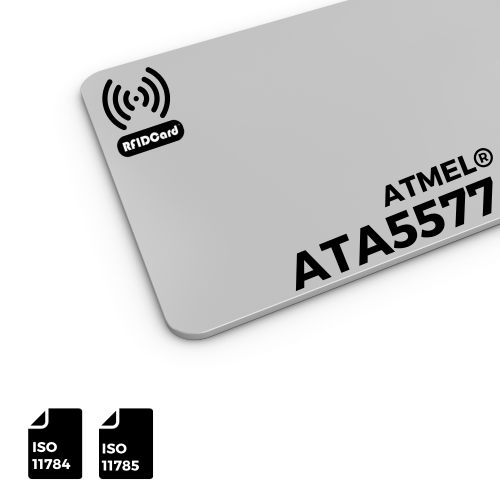
RFID Card Atmel® ATA5577

The ATA5577 RFID cards are made with Photo quality standard PVC sheets in the size of CR80, which are suitable for use with most direct thermal or thermal transfer card printers.. Atmel® ATA5577 is a contactless read/write identification transponder (IDIC®) for applications in the 125kHz frequency band. The total memory on-chip is 363-bit EEPROM (11 blocks with 33 bits each) where 7 × 32 Bits are user memory including 32-bit password memory.