Schools rely on student ID cards to identify students, improve campus security, and support daily campus operations. However, choosing the right student ID card requires more than selecting a card design. Schools need to consider factors such as card type, technology, material, customization options, and future requirements.
Whether you need basic identification cards or smart cards with RFID/NFC capabilities, understanding the available options can help you choose a solution that fits your school’s needs.
This guide will explain the different types of student ID cards and the key factors schools should consider before making a purchase.
Why Do Schools Need Student ID Cards?
Student ID cards provide a simple and reliable way for schools to identify students and manage daily campus activities. Depending on the school’s requirements, they can support basic identification as well as security and student services.
1. Student Identification
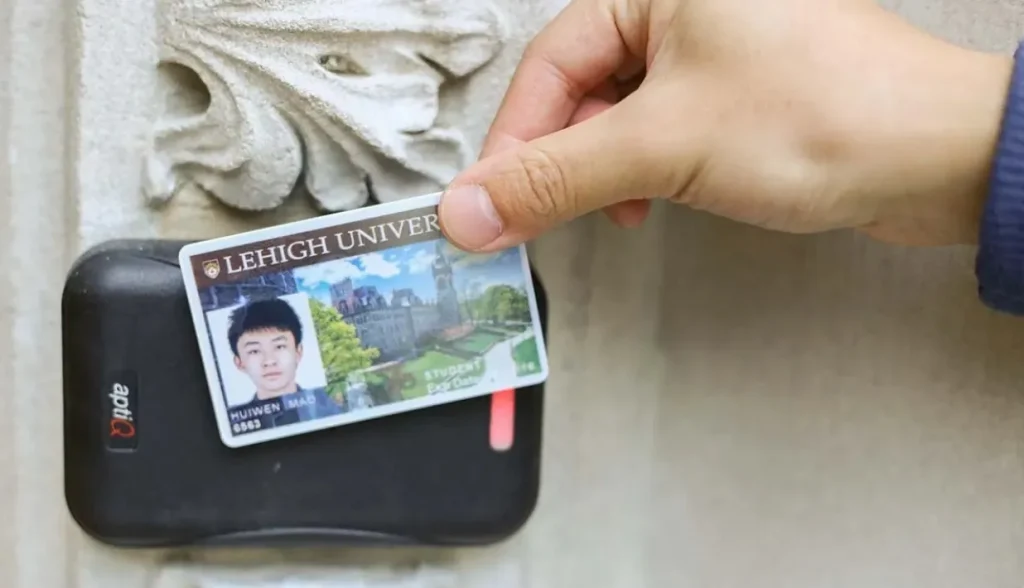
A student ID card typically displays essential information such as the student’s name, photo, student number, and school information. This allows staff to quickly verify a student’s identity and helps schools maintain an organized identification system.
2. Campus Security
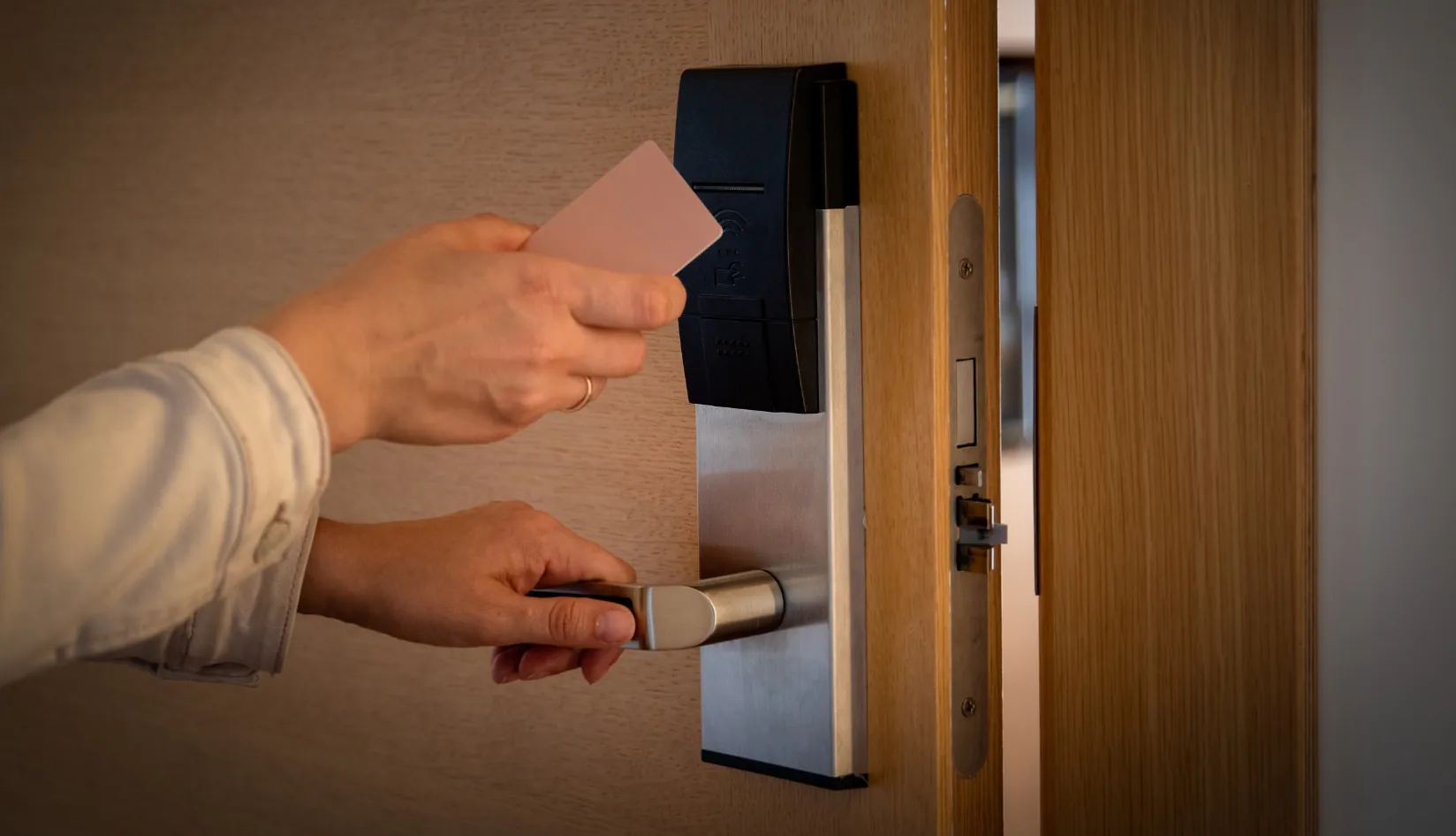
Student ID cards can also support campus security by controlling who can enter specific areas. When integrated with an access control system, they can be used for building access, restricted areas, and dormitory entry, helping schools manage access more efficiently.
3. Student Services
Beyond identification and security, student ID cards can be used to access various campus services, including library services, cafeteria services, and attendance systems. A single card can therefore support multiple daily activities across campus.
The functions required by your school will determine which type of student ID card is most suitable.
What Types of Student ID Cards Can Schools Choose From?
Schools can choose from several types of student ID cards depending on their identification, security, and campus service requirements. The main options include traditional ID cards, RFID cards, and NFC-enabled cards.

Traditional Student ID Cards
Traditional student ID cards are designed primarily for visual or basic electronic identification. They are suitable for schools that mainly need to verify student identity without requiring contactless access or advanced campus applications.
Printed Student ID Cards: These cards display information such as the student’s photo, name, student number, and school logo. They are a practical choice for basic student identification and are typically produced in PVC or other durable card materials.
Barcode / QR Code Cards: A barcode or QR code can be added to a printed student ID card for machine-readable identification. Schools can use them for applications such as library services, attendance, or student record management.
Magnetic Stripe Cards: Magnetic stripe cards store information on a magnetic stripe and require physical contact or swiping at a compatible reader. They are still used in some schools with existing or legacy systems, although contactless technologies are increasingly being adopted for new applications.
RFID Student ID Cards
RFID student ID cards contain an embedded chip and antenna that allow the card to communicate wirelessly with compatible readers. This makes them suitable for schools that want to use student cards for more than visual identification, such as access control, attendance, library services, or other campus applications.
RFID student ID cards can generally be divided into two main categories:
LF RFID Cards: Operating at 125 kHz, LF RFID cards are commonly used for basic identification and access control applications.
HF RFID Cards: Operating at 13.56 MHz, HF RFID cards support a wider range of applications and include technologies such as MIFARE. They are commonly considered for campus access, identification, and multi-application student card systems.
NFC Student ID Cards
NFC operates at 13.56 MHz and is based on HF RFID technology, but it is designed for short-range communication between compatible devices. NFC-enabled student cards can support applications involving smartphones and other NFC-enabled devices, making them suitable for contactless interaction and digital campus services.
For schools, the choice between these technologies depends largely on what the card needs to do. Traditional cards may be sufficient for basic identification, while RFID and NFC technologies can provide additional contactless functions and support more connected campus services.
As schools increasingly look for contactless ways to manage access and campus services, RFID and NFC technologies are becoming important options for modern student credentials. However, the right choice still depends on the school’s existing systems, required applications, and budget rather than simply choosing the newest technology.
How to Choose the Right Student ID Cards for Your School?
The right student ID card depends on how your school plans to use it, whether it needs to work with an existing system, and how the cards will be used on a daily basis. Consider the following factors before placing an order.
1. Define How Your School Will Use the Cards
Start by determining what you need the student ID cards to do.
If the cards are mainly used for student identification, a traditional printed ID card may be sufficient. Schools can include the student’s photo, name, student number, and other identifying information without adding electronic technology.
If the cards will also be used for access control, attendance, library services, or other contactless applications, consider an RFID student ID card. The embedded RFID chip allows the card to communicate with compatible readers without requiring physical contact.
In other words, choose the card technology based on its intended applications rather than selecting a more advanced card simply because it offers more features.
2. Check Your Existing School System
If your school already has a card-based system, first identify what technology it uses before choosing a new student ID card. The card must be compatible with the school’s existing readers, software, and access control or campus management system.
If your school does not have an existing card system, you have more flexibility to choose a card technology based on your planned applications, such as basic identification, access control, attendance, or other campus services.
If your school already has a card system, check:
- Current card technology: Does the system use printed cards, barcode/QR codes, magnetic stripes, RFID, or NFC?
- Reader technology: What type of card or credential does the existing reader support?
- Operating frequency: If it is an RFID system, does it operate at 125 kHz or 13.56 MHz?
- Chip type: What specific chip or card technology is required?
- Encoding requirements: Does the card need to be encoded with specific data?
For example, a school with an existing 125 kHz access control system should not simply switch to a 13.56 MHz RFID card because both are contactless technologies. Likewise, an existing MIFARE-based system may require a specific MIFARE card rather than any generic 13.56 MHz card.
If you are unsure which technology your current system uses or are planning to upgrade your card system, tell us your existing card, reader model, or system information. Our team can help identify the appropriate card technology and verify compatibility before you place a bulk order.
3. Select the Right Card Material
Once the card technology is determined, consider the material based on how frequently the cards will be used, the expected service life, and your school’s budget.
PVC Cards
PVC is a common choice for student ID cards because it provides a good balance between cost, print quality, and durability. It is suitable for schools that need standard student identification cards or RFID cards for everyday use.
PET Cards
PET can be considered when greater durability and resistance to repeated use are important. It may be suitable for student cards that are expected to withstand frequent handling over a longer period.
Eco-Friendly Student ID Cards
Schools with sustainability goals can also consider alternative materials, such as wood, bio-based materials, or paper-based card constructions. These options can provide a more environmentally conscious alternative while still supporting customized student identification and, where applicable, RFID functionality.
The best material depends on the school’s expected card usage, durability requirements, budget, and sustainability goals.
4. Consider Student ID Card Customization Options
Once you have selected the appropriate card technology and material, consider how the student ID cards need to be customized. Schools may require different printing, personalization, and data-encoding options depending on how the cards will be used.
Printing
Consider the card’s overall design and printing requirements, such as:
Full-color printing for school branding, student photos, and other visual information
Double-sided printing when more information needs to be included on the card
For many student ID cards, the card’s surface design can also affect printing quality. Traditional RFID cards may have a slightly raised area where the chip is embedded, which can make high-quality thermal transfer printing more difficult.
Our RFID UltraFlat™ technology uses an advanced manufacturing process to create a flat card surface, eliminating the noticeable chip protrusion found on traditional RFID cards. This provides a cleaner appearance and allows thermal transfer printers to produce high-quality, consistent prints across the card surface.
Personalization
Each student’s card can be personalized with individual information, including:
Student photo
Student name
Student ID number
Grade or class
This allows schools to produce cards with unique student information while maintaining a consistent school design.
Additional Features
Depending on the school’s requirements, additional identification features can be added, such as:
Barcode or QR code for scanning and identification
RFID encoding for cards used with compatible access control, attendance, library, or other campus systems
Before placing a bulk order, confirm the required card design, student data, and encoding specifications with your supplier to ensure the cards are produced correctly.
RFID Student ID Cards: When Should Schools Choose Smart Cards?
RFID student ID cards can be a good choice when a school needs its student cards to do more than display identification information. Instead of relying on visual inspection or physical scanning, RFID technology enables students to use their cards with compatible readers for contactless identification.

Schools may consider RFID student ID cards when they need:
Contactless access to classrooms, buildings, dormitories, or other restricted areas
Multiple campus applications, such as access control, attendance, library services, or cafeteria systems
Faster student identification without requiring physical contact with a reader
More secure card-based applications that require authentication or data protection
A scalable card system that can support additional campus applications in the future
Common RFID Chip Options for Student ID Cards
The appropriate RFID chip depends on the school’s existing system, security requirements, and intended applications.
| RFID Chip | Suitable Applications |
| MIFARE Classic® | Basic access control and identification applications |
| MIFARE® DESFire® EV2/EV3 | Higher-security applications and multi-application campus card systems |
For schools that need smartphone interaction or NFC-based applications, NFC chips such as NXP NTAG® may also be considered. These chips are designed for applications such as contactless information sharing and interaction with NFC-enabled smartphones.
The most suitable chip should not be selected based on features alone. Schools with an existing card system should first confirm the required chip technology and compatibility with their current readers and software. For new systems, schools can select a chip based on their current applications as well as potential future requirements.
What Should Schools Ask Before Ordering Student ID Cards?
Once you have determined the card type, technology, and material, confirm the following details with your supplier before placing a bulk order. A clear checklist can help prevent design errors, compatibility issues, and production delays.
Card Requirements
Confirm the basic specifications of the cards:
Quantity: How many cards are needed for current students, new enrollments, and replacements?
Card type: Traditional, RFID, or NFC?
Material: PVC, PET, or an eco-friendly material?
Printing design: What information, images, logos, and colors should appear on the cards? Is single-sided or double-sided printing required?
Technology Requirements
If the cards include RFID or NFC technology, confirm the technical specifications before production:
RFID frequency: Does the existing system use 125 kHz or 13.56 MHz?
Chip type: Which specific chip is required?
Encoding requirements: Does each card need to be encoded with unique student or system data?
System compatibility: Has the card been verified to work with the school’s existing readers and software?

Supplier Capability
The supplier should also be able to meet the school’s production and customization requirements. Ask about:
Sample availability: Can you review a physical sample before placing a bulk order?
Customization service: Can the supplier handle card design, personalization, printing, and chip encoding?
Production capacity: Can the supplier produce the required quantity within your expected timeframe?
Quality control: How does the supplier ensure consistent card quality across a bulk order?
Confirming these details before production can help schools avoid ordering cards that do not meet their design, technology, or system requirements.
Conclusion
Choosing the right student ID cards starts with understanding how your school plans to use them. Consider the required functions, compatibility with existing systems, card material, security requirements, and potential future applications before placing an order.
For schools that only need basic student identification, a customized printed card may be sufficient. If you need contactless access, attendance, library services, or other campus applications, RFID or NFC-enabled student ID cards can provide greater flexibility.
Whether you need custom student ID cards, RFID cards, or NFC-enabled cards, RFIDcard.com can provide customized card solutions based on your school’s requirements. Contact us to discuss your card technology, material, design, and encoding needs.
FAQs About Student ID Cards for Schools
What type of ID card is best for schools?
The best student ID card depends on how the school plans to use it. Printed ID cards are suitable for basic student identification, while RFID or NFC cards are better suited for applications such as contactless access, attendance, library services, and other campus functions. Schools with existing card systems should also prioritize compatibility when choosing a card.
Can student ID cards include RFID chips?
Yes. RFID chips can be embedded into student ID cards without changing the card’s basic appearance. RFID-enabled cards can be customized with the student’s photo, name, ID number, school logo, and other information while supporting applications such as access control and attendance.
Can RFID student ID cards be printed with student information?
Yes. RFID student ID cards can be customized with student photos, names, ID numbers, school logos, barcodes, and other information. For schools that require high-quality thermal transfer printing, RFID UltraFlat™ technology provides a flat card surface without the noticeable chip protrusion found on traditional RFID cards, helping achieve a cleaner appearance and more consistent print quality.
How do schools choose the right RFID chip for student ID cards?
Start by checking the school’s existing card readers and system requirements. If the school already has an RFID system, the card’s frequency, chip type, and encoding requirements must be compatible with the existing system. For new systems, the choice can be based on the required security level, applications, and potential future use.
Can schools order customized student ID cards in bulk?
Yes. Schools can order student ID cards in bulk with customized designs, student information, card materials, and, where required, RFID or NFC technology. For large orders, schools should confirm the card specifications, data or encoding requirements, sample approval, production capacity, and delivery schedule with us.
Recommended Products

BioPoly™ Vinyl RFID Inlay Sheet MIFARE Classic® EV1 4K

The MIFARE Classic® EV1 4K BioPoly™ Vinyl RFID Inlay Sheet combines cutting-edge RFID technology with sustainable materials. Crafted from BioPoly™ Vinyl, a biodegradable and eco-friendly PVC alternative, it reduces environmental impact without sacrificing durability and flexibility. Featuring the MIFARE Classic® EV1 4K chip, this inlay offers expanded 4KB memory, enhanced security with mutual three-pass authentication, and fast, reliable data transmission. Ideal for applications like access control, event management, and smart cards, it delivers excellent compatibility and performance. By utilizing BioPoly™ Vinyl, this product supports green initiatives while maintaining top-tier RFID functionality.

RFID Card NXP MIFARE Classic® EV1 4K (S70) CR80
The MIFARE Classic® EV1 4K RFID card is made with Photo-quality standard PVC sheets into the size of CR80, that are suitable for use with most direct thermal or thermal transfer card printers. MF1S70 series to be used in a contactless smart card according to ISO/IEC 14443 Type A.

RFID Card CR80 MIFARE® DESFire® EV2 2K
The MIFARE® DESFire® EV2 2K RFID card is a secure, high-capacity contactless smart card ideal for various applications like access control, transportation, and payment systems. It features 2KB of integrated memory, advanced encryption standards for security, and is compatible with existing MIFARE® systems. The EV2 version enhances data protection and transaction speed, making it a reliable and efficient choice for modern RFID solutions.