


As the electric vehicle (EV) market rapidly expands, operators of EV charging infrastructure face increasing challenges in managing user authentication and optimizing customer experience. Many charging stations still rely heavily on mobile apps for authentication and payment. While convenient, this approach presents notable drawbacks — complicated app registration processes, high barriers for first-time users, and poor user experience during network outages. Managing corporate clients with multiple vehicles also remains complex.
In this context, RFID card EV charging technology has emerged as a reliable, efficient, and easy-to-deploy solution for identity verification, quickly gaining traction among operators seeking to streamline operations and boost customer retention.
This article will explore the core business value of RFID cards in EV charging station operations, covering their technical advantages, commercial applications, deployment best practices, and security considerations. Our goal is to help charging station operators fully leverage RFID technology to improve operational efficiency and deliver a superior customer experience.
1. What Is an RFID Card? Its Key Role in EV Charging Operations?
Understanding the role of RFID card EV charging technology begins with a clear comparison between RFID cards and mobile apps as authentication methods in charging stations.
Unlike mobile apps that require users to download software, create accounts, and complete verification processes, RFID cards offer a straightforward, physical means of identification. Users simply tap their card on an RFID reader installed on the charging station, enabling near-instant authentication and access. This streamlined process translates into significant time savings and a smoother user experience.
One of the standout benefits of RFID cards is the “registration-free quick start” capability. This allows first-time users to activate charging without lengthy sign-up procedures, effectively increasing the conversion rate for initial charging sessions — a critical metric for operators looking to grow their user base rapidly.
For high-frequency charging scenarios, such as taxi fleets or logistics companies, RFID cards dramatically enhance operational efficiency. Drivers can quickly access charging points multiple times a day without needing to open apps or interact with complex interfaces. Additionally, RFID systems support comprehensive account management for enterprise clients, allowing centralized control over multiple cards assigned to various vehicles and drivers.
From a technical standpoint, modern RFID card EV charging solutions are built on widely adopted NFC and ISO standards, supporting both physical cards and virtual cards that users can simulate on their smartphones. This flexibility allows operators to cater to different user preferences while maintaining a consistent authentication experience.
2. Why Should EV Charging Operators Adopt RFID Systems?
For commercial EV charging operators, integrating RFID card EV charging technology offers significant business advantages that directly impact revenue growth, operational efficiency, and customer satisfaction.
Increased User Retention and Charging Frequency
RFID cards simplify the authentication process, encouraging repeat usage. By enabling fast, hassle-free access to charging stations, operators can see higher user retention and increased charging frequency. This is especially beneficial for fleet operators and business clients who rely on consistent, dependable charging access.
Catering to Enterprise and Fleet Customers
B2B clients often require features beyond basic charging access, such as consolidated billing, monthly invoicing, and detailed usage reports. RFID card systems provide a solid foundation for these services. Operators can easily manage corporate accounts with multiple users and vehicles, allowing for streamlined billing and expense tracking.
Enhanced Data Analytics and Insights
RFID-based systems facilitate the collection of rich usage data. Operators gain visibility into charging behavior, frequency, and peak times by tracking card usage. This data supports informed business decisions, helps optimize station deployment, and enables targeted marketing efforts.
Loyalty Programs and Membership Infrastructure
With RFID cards, operators can implement membership or loyalty programs tied directly to the card. This encourages customer engagement through rewards, discounts, or exclusive access, driving long-term loyalty and differentiation in a competitive market.
Overcoming App Dependency and Network Issues
Unlike mobile app-based authentication, RFID cards do not rely on internet connectivity at the moment of charging. This resilience is critical in areas with unstable networks, ensuring uninterrupted service and reducing customer frustration.
Case in point: In a recent deployment at a city taxi fleet charging station, the introduction of RFID card authentication led to a 20% increase in monthly active users, demonstrating the tangible impact of RFID technology on operational success.

3. RFID Card System Deployment Recommendations: Hardware Compatibility and Cost Evaluation
Implementing an effective RFID card EV charging solution requires careful consideration of both hardware compatibility and overall deployment costs to ensure seamless integration and sustainable operation.
Hardware Selection: Compatibility with Charging Stations
A critical factor in RFID system deployment is choosing readers compatible with the existing charging infrastructure. Many modern charging stations support the Open Charge Point Protocol (OCPP), which allows easy integration of RFID readers either natively or through add-on modules. Operators should evaluate whether their charging points support RFID authentication out of the box or require external reader attachments.
Selecting readers that comply with widely accepted standards (e.g., ISO/IEC 14443 for proximity cards) ensures interoperability across different card types and providers, simplifying management and reducing vendor lock-in.
Card Issuance and Customization
RFID cards can be pre-encoded with unique identifiers, and many providers offer white-label solutions allowing operators to customize cards with their branding, logos, or specific security features. Deciding on card types (e.g., MIFARE Classic®, DESFire®) impacts both security and cost.
Some operators may also consider virtual cards compatible with NFC-enabled smartphones, adding flexibility without increasing physical card issuance expenses.
Backend System Integration
Integrating the RFID card system with existing backend platforms is essential. Most charging operators use OCPP-compliant management systems that handle authentication, billing, and user management. The RFID system should seamlessly connect with these platforms and support features like membership management, billing export, and usage analytics.
Exploring SaaS solutions or cloud platforms that offer turnkey RFID integration can significantly reduce deployment complexity and speed up time to market.
Cost Structure Overview
Key cost factors include the price per RFID card (which can vary based on technology and customization), reader hardware costs, installation and maintenance expenses, and backend system development or subscription fees.
Operators should conduct a detailed cost-benefit analysis to balance upfront investment with anticipated improvements in operational efficiency and customer satisfaction.
4. The Importance of RFID Cards in the Interoperability Ecosystem: Roaming Scenarios
In today’s rapidly evolving EV charging landscape, interoperability between different charging networks is crucial to provide seamless access for drivers. RFID card EV charging technology plays a pivotal role as the “key” that enables cross-platform authentication and roaming capabilities.
Cross-Network Authentication Made Easy
RFID cards serve as a universal authentication method accepted across multiple charging networks, thanks to widely adopted standards and roaming protocols. This means EV drivers can use a single RFID card to access charging stations operated by different providers without needing separate accounts or apps for each network.
Support for Roaming Protocols Like Hubject and Gireve
Leading roaming platforms such as Hubject and Gireve rely heavily on RFID-based authentication to facilitate interoperability. By integrating RFID cards compliant with these protocols, operators can increase station utilization by attracting users from partner networks, thereby driving higher revenue and improving asset efficiency.
Reducing User Churn Caused by Fragmented Platforms
Fragmentation in EV charging platforms often leads to user frustration and churn. Offering a common RFID card solution helps mitigate this by reducing the complexity of managing multiple authentication methods and accounts. This convenience improves user satisfaction and loyalty.
Flexible “Universal Card” Mechanisms
Many operators implement “white-label” or group-branded RFID cards that function universally across their network and partner ecosystems. This flexibility enables collaborative business models and enhances marketing opportunities by reinforcing brand presence while offering users a consistent experience.
Enhancing Operational Agility
RFID cards support easy integration of new roaming partners without requiring hardware changes at the charging stations. This agility helps operators quickly expand their network and adapt to evolving market demands.
5. Security and Risk Management: How Operators Can Mitigate RFID Card System Risks
As RFID card EV charging technology becomes a backbone of EV charging authentication, addressing security and risk concerns is paramount for operators to protect both their infrastructure and customers.
Common Security Challenges
RFID cards, like any physical credential, face risks such as cloning, unauthorized use, or loss. Without proper safeguards, these vulnerabilities can lead to fraudulent charging sessions or unauthorized access to the charging network.
Advanced Security Technologies
To mitigate risks, many operators adopt RFID cards embedded with secure chips, such as MIFARE DESFire or similar encrypted technologies. These cards feature cryptographic authentication that significantly reduces the chance of cloning or tampering.
Remote Deactivation and Access Control
Robust backend systems support remote suspension or deactivation of lost or stolen cards, ensuring that compromised credentials can be invalidated immediately. Operators can also implement tiered access controls and whitelist/blacklist mechanisms to fine-tune user permissions.
Comprehensive Logging and Auditing
Every RFID card transaction can be logged and audited, providing a detailed trail of charging sessions tied to individual cards. This traceability supports fraud investigation, dispute resolution, and regulatory compliance.
Data Protection and Compliance
Operators must ensure that all data related to RFID card usage is securely stored and encrypted, complying with data privacy regulations such as GDPR. Secure data handling strengthens customer trust and reduces legal risks.
Integration with Payment and Billing Platforms
Combining RFID card authentication with secure payment gateways (e.g., Stripe) or billing systems enhances financial security. Operators can automate billing reconciliation while maintaining strict control over transaction integrity.

6. RFID Card Features Supporting Enterprise Customers
For commercial operators, RFID card EV charging solutions must cater to the complex needs of enterprise and fleet clients, providing scalable, flexible features that simplify management and enhance operational efficiency.
Unified Account Management with Multi-Card Binding
Enterprise customers often manage large fleets with multiple vehicles and drivers. RFID card systems enable binding numerous cards to a single corporate account, streamlining expense tracking and simplifying user management across departments or locations.
Granular Access Control by Department, Vehicle, or Driver
Operators can configure card permissions at a granular level, restricting charging access by vehicle type, department, or individual driver. This ensures compliance with company policies and optimizes resource allocation.
Automated Billing and Expense Reporting
RFID cards facilitate detailed usage tracking, allowing automatic generation and export of monthly billing reports tailored to enterprise requirements. This supports corporate expense management and simplifies reimbursement or internal accounting processes.
Customizable Cards for Branding and Identification
Many providers offer customizable RFID cards featuring company logos, employee IDs, or financial codes. This personalization helps enterprises easily identify issued cards and reinforces corporate branding.
Enhanced User Experience for Business Clients
By integrating RFID card EV charging technology designed with enterprise needs in mind, operators can deliver seamless access, reduce administrative overhead, and build long-term partnerships with business customers.
7. RFID Card and App Integration Strategy: Complementary, Not Replacement
In the evolving landscape of RFID card EV charging, combining RFID cards with mobile app technology offers a powerful dual-authentication approach that enhances user experience and operational efficiency.
Dual Authentication Channels for Greater Flexibility
Offering both RFID card and mobile app authentication provides users with convenient options. While RFID cards enable quick, hassle-free on-site charging initiation, apps deliver advanced features like remote station reservation, navigation, and real-time status monitoring.
Enhancing First-Time Charging Conversion Rates
RFID cards simplify the “first charge” experience by eliminating the need for app downloads or account setup during the initial visit, significantly boosting conversion rates for new users. This ease of access helps operators capture more spontaneous and high-frequency customers.
Prioritizing Apps for Value-Added Services
Apps remain essential for delivering value-added functions such as personalized offers, charging history tracking, and loyalty program management. In contrast, RFID cards focus on speeding up physical access and streamlining frequent charging scenarios.
Seamless User Journey Across Channels
Integrating RFID card and app data allows operators to build a unified user profile, enabling consistent service and marketing efforts across both platforms. This interoperability strengthens customer engagement and retention.
Future Trends: NFC Virtual Cards and Beyond
The convergence of RFID and NFC technologies is paving the way for virtual cards stored on smartphones, blending the convenience of apps with the speed of RFID. However, physical RFID cards will continue to play a crucial role in environments where quick, offline authentication is required.
Conclusion: RFID Cards as the Foundation for Digital Transformation in EV Charging Operations
As the EV charging industry grows more complex and competitive, RFID card EV charging solutions have proven to be indispensable infrastructure for operators aiming to enhance efficiency, interoperability, and customer loyalty. RFID cards offer a fast, reliable, and user-friendly authentication method that overcomes common pain points such as app dependency and network instability.
By enabling seamless access for both individual and enterprise users, supporting roaming across multiple platforms, and providing robust security and management tools, RFID cards empower operators to optimize charging station utilization and improve business outcomes.
We recommend starting with pilot deployments at key stations, gradually expanding to integrate with fleet customers and roaming partners. Looking ahead, the rise of NFC-based virtual cards will complement physical RFID solutions, but the tangible advantages of RFID cards in offline, high-frequency charging scenarios ensure their continued relevance.
To stay ahead in the competitive EV charging market, operators should act now—explore RFID card integration to enhance user experience, streamline operations, and unlock new revenue opportunities. Contact our team today to discuss how RFID card solutions can transform your charging infrastructure and drive sustainable growth.
FAQs
1. Do I need to replace existing charging stations to deploy RFID card functionality?
Not necessarily. If your current charging stations support the OCPP protocol and have a reserved card reader interface, RFID card functionality can typically be added through an external RFID reader module without replacing the entire station. Some older stations may require firmware upgrades or mainboard replacements.
2. How is RFID card management handled on the backend? Does it support multi-site and multi-account management?
Most charging platforms allow RFID cards to be bound to different operator accounts with hierarchical permission management (e.g., headquarters, subsidiaries, individual operators). They support site-specific statistics, separate billing, and data export.
3. How do you prevent RFID card cloning or unauthorized use? What security measures are in place?
Encrypted chips such as MIFARE DESFire effectively prevent cloning. Platforms support whitelist/blacklist settings, remote card suspension and freezing, and transaction log audits to ensure financial security.
4. Can RFID cards be custom printed with brand or corporate designs? What is the minimum order quantity?
Custom printing, including company logos, serial numbers, and contact information, is supported by many providers. Some platforms accept minimum orders as low as 100 cards, suitable for employee badges, membership cards, or white-label partnerships.
5. Which types of charging stations (AC/DC) are compatible with RFID card systems?
RFID systems themselves are independent of charger types. Compatibility depends on whether the charging controller supports external authentication integration. Both slow AC chargers and fast DC chargers can generally support RFID systems if they use protocols like OCPP or MODBUS.
Recommended Product
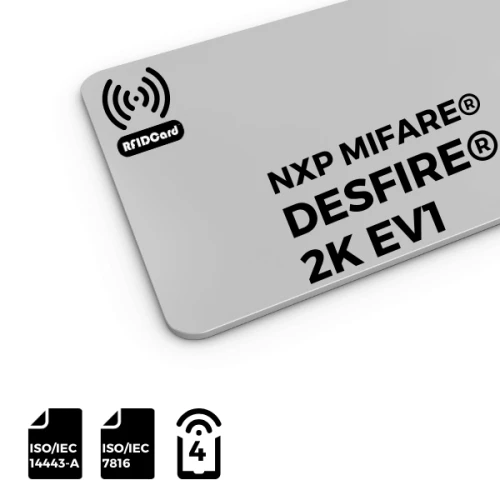
RFID Card CR80 MIFARE® DESFire® EV1 2K

The MIFARE® DESFire® EV1 2K RFID card is a secure, high-capacity contactless smart card ideal for various applications like access control, transportation, and payment systems. It features 2KB of integrated memory, advanced encryption standards for security, and is compatible with existing MIFARE® systems.


