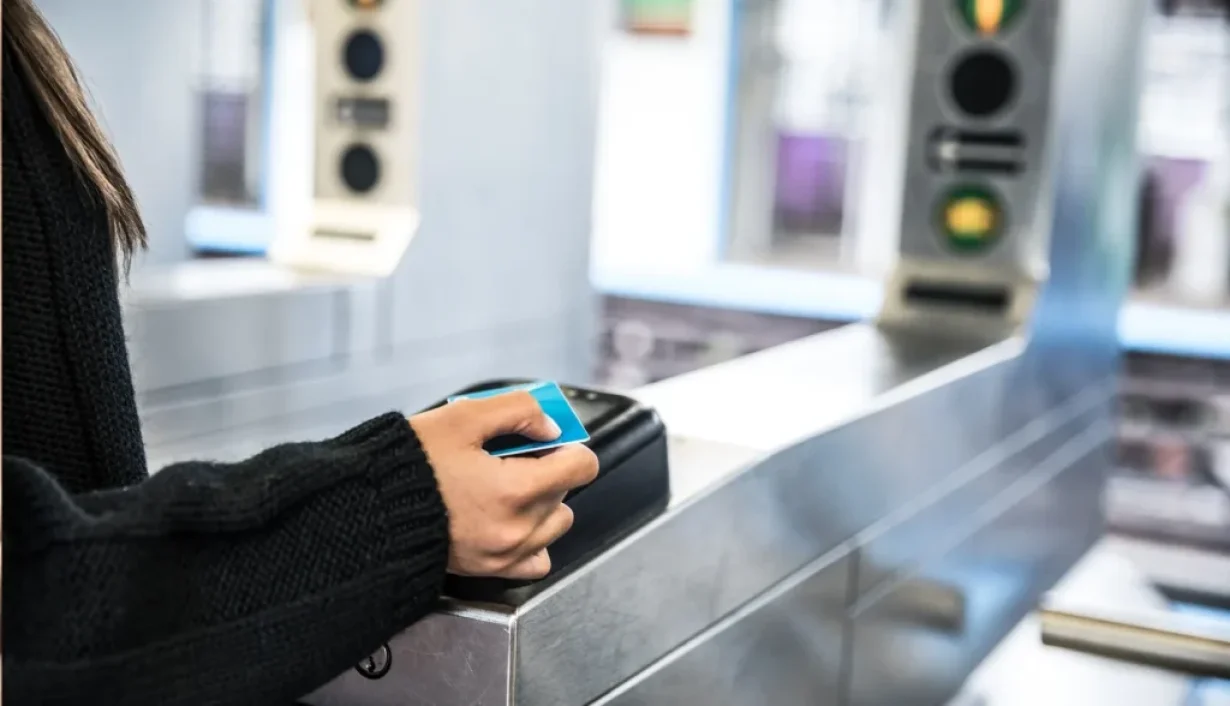

In today’s fast-paced, connected world, efficiency and convenience have become key priorities for both commuters and transportation providers. One technology that has quietly revolutionized how people travel, pay, and access services is Radio Frequency Identification (RFID). Specifically, RFID card uses in transportation have made journeys faster, safer, and more seamless. From tapping into metro gates to paying tolls on highways, RFID cards are now integral to public and private transportation systems worldwide. Their role continues to expand as cities and organizations adopt smarter infrastructure for the next generation of mobility.
1. What Are RFID Cards and How Do They Work?
Before exploring the diverse RFID card uses in transportation, it’s important to understand what RFID cards are and how they function. RFID, or Radio Frequency Identification, is a wireless technology that uses electromagnetic fields to identify and track objects automatically. An RFID system typically consists of two key components:
- An RFID card or tag, which contains a microchip and antenna to store and transmit data.
- An RFID reader, which emits radio waves and reads the card’s information when it comes within range.
When a person holds or taps an RFID card near a reader, the reader captures the unique identification data from the card instantly. This enables secure and contactless transactions — a major advantage in high-traffic environments like bus stations, train platforms, and toll booths.
2. Key RFID Card Uses in Public Transportation
The application of RFID technology has become foundational to the operation of modern public transport networks, significantly improving efficiency and the passenger experience.
2.1 Metro and Subway Systems
The most visible and widespread application of RFID card uses is in automated fare collection (AFC) systems for metro and subway networks. These systems have replaced paper tickets and tokens, ushering in an era of seamless travel.
- Tap-and-Go Ticketing: Passengers simply tap their RFID card or a device containing an RFID chip against a turnstile reader. The system instantly verifies the card’s validity, deducts the fare, and grants access. This process takes milliseconds, dramatically reducing queues and bottlenecks during peak hours.
- Automatic Fare Calculation: Advanced RFID systems can calculate fares based on entry and exit points (distance-based pricing) or time of day (peak vs. off-peak pricing). The card’s chip stores the entry point data, and the exit reader calculates the final charge, ensuring fair and accurate billing without requiring the passenger to pre-select a destination.
Metro and subway systems were among the first to adopt RFID card-based ticketing. Cities like London, Hong Kong, Singapore, and New York have all embraced RFID-enabled smart cards to replace paper tickets and magnetic stripe cards.
2.2 Bus Networks and Railway Stations
Beyond subways, RFID cards have streamlined operations in other modes of public transport:
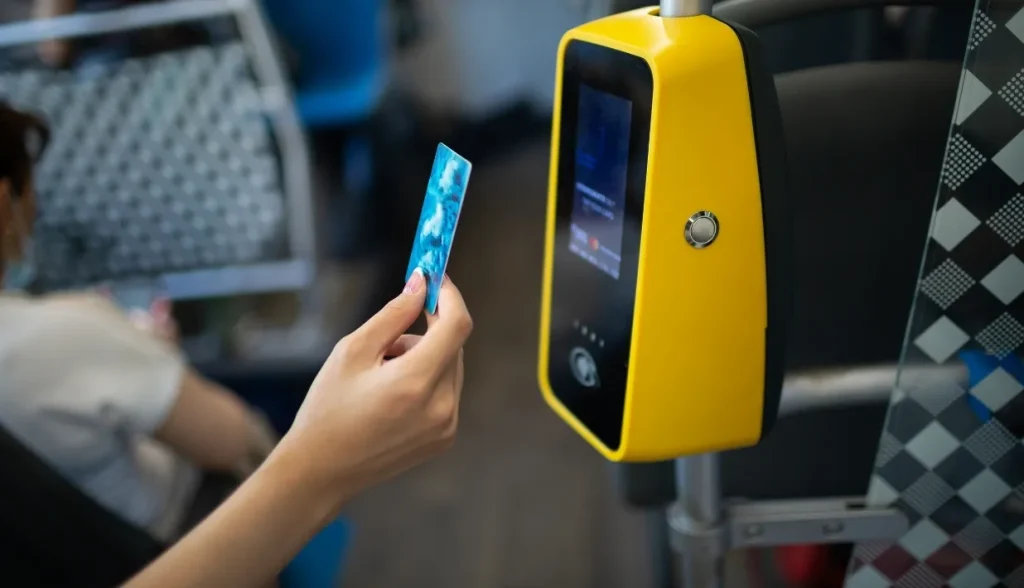
- Bus Networks: RFID cards allow passengers to tap and board quickly without fumbling for cash or paper tickets. This not only reduces dwell time at stops but also increases service punctuality. RFID-enabled systems also make it easier for operators to collect usage data and improve route planning.
- Railway Stations: In large railway stations, RFID technology aids in passenger flow optimization. Contactless check-ins and check-outs at platform gates help manage the high volume of daily travelers. Furthermore, some systems use RFID tags embedded in luggage or cargo to track their location and ensure timely transfer, enhancing the overall logistics of the rail network.
The cumulative effect of these RFID card uses is a significant improvement in both operational efficiency for the transport agencies and unparalleled convenience for the user.
3. RFID Card Uses in Toll and Parking Management
The revolution brought by RFID extends far beyond public transit, fundamentally changing how we manage vehicular traffic and access control.
3.1 Electronic Toll Collection (ETC)
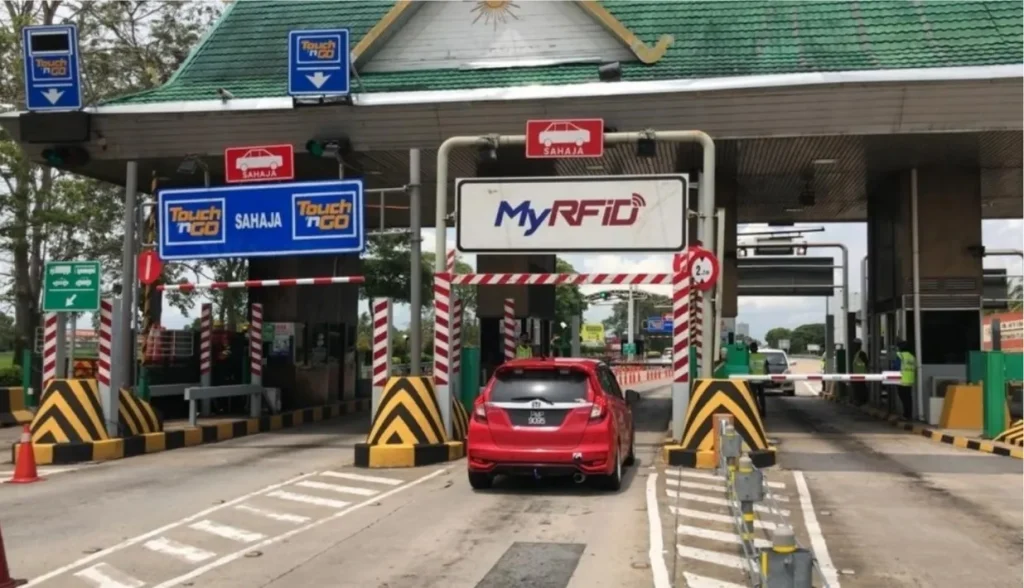
Electronic Toll Collection (ETC) systems are arguably one of the most impactful applications of RFID in private vehicle management. These systems allow drivers to pay tolls without stopping, eliminating the need for cash transactions and the resulting traffic jams at toll plazas.
- High-Speed Payment: A small RFID transponder is typically affixed to the vehicle’s windshield. As the vehicle passes through the toll lane, an overhead reader communicates with the transponder, instantly deducting the toll amount from a pre-paid account. This high-speed transaction capability is crucial for maintaining traffic flow on major highways.
- Global Systems: Prominent examples include the U.S. E-ZPass system, which operates across multiple states, and India’s FASTag, a nationwide initiative that has dramatically reduced congestion and fuel consumption at toll gates. The success of ETC demonstrates the power of RFID in automating high-volume financial transactions in a dynamic environment.
3.2 Parking Access and Payment
Parking facilities, both public and private, also benefit immensely from the automation provided by RFID technology.
- Automated Gate Control: Vehicles equipped with an RFID tag can be automatically identified upon entry and exit. The system logs the time and calculates the parking fee, which can be deducted automatically from a linked account or paid upon exit. This removes the need for physical tickets, reducing maintenance costs and the potential for ticket fraud.
- Reduced Congestion: By automating the entry and exit process, RFID systems minimize the time vehicles spend waiting at barriers, leading to smoother traffic flow within and around parking structures. This is particularly valuable in busy urban centers and large corporate campuses.
4. RFID Cards in Fleet and Vehicle Management
For commercial and government entities, RFID card uses provide powerful tools for managing large fleets of vehicles, enhancing security, and optimizing logistics.
- Vehicle Identification and Tracking: RFID tags can be embedded directly into vehicle components or attached as external labels. These tags allow organizations to accurately track vehicle maintenance history, inventory, and location within a depot or facility. For instance, a maintenance crew can instantly scan a vehicle’s RFID tag to pull up its complete service record, streamlining repair work.
- Access Control: For restricted areas, such as military bases, ports, or secure corporate parking lots, RFID cards are used to control vehicle access. Only authorized vehicles with the correct transponder can enter, providing an enhanced layer of operational security. This system is far more reliable and auditable than relying on visual checks or manual key entry.
- Operational Efficiency: In logistics and supply chain management, RFID is used to track trailers, containers, and even the goods inside them. This integration allows fleet managers to monitor the entire journey of assets, ensuring compliance with delivery schedules and optimizing route planning based on real-time data. The ability to quickly and accurately identify every asset in a fleet leads to significant gains in operational efficiency and cost reduction.
5. Conclusion
From metros and buses to tollways and parking lots, RFID card uses have transformed how the world moves. They bring unmatched convenience to passengers, operational efficiency to service providers, and valuable insights for city planners. As transportation networks continue to expand and modernize, RFID technology will remain a cornerstone of smart mobility. Its flexibility, speed, and reliability make it the ideal solution for the future of contactless travel.
Recommended Product
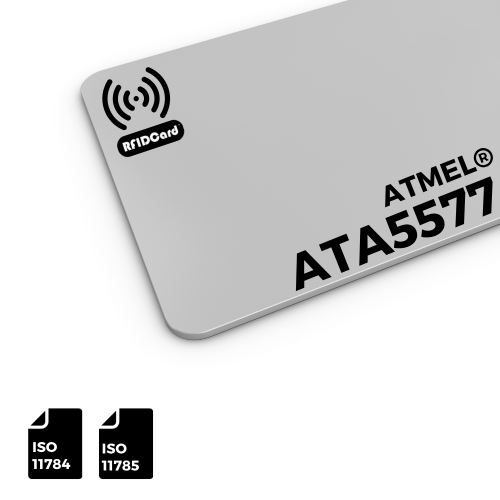
RFID Card Atmel® ATA5577

The ATA5577 RFID cards are made with Photo quality standard PVC sheets in the size of CR80, which are suitable for use with most direct thermal or thermal transfer card printers.. Atmel® ATA5577 is a contactless read/write identification transponder (IDIC®) for applications in the 125kHz frequency band. The total memory on-chip is 363-bit EEPROM (11 blocks with 33 bits each) where 7 × 32 Bits are user memory including 32-bit password memory.