Introduction
In today’s fast-paced business world, consumer demand for efficiency and convenience has reached unprecedented heights. Whether shopping daily, riding public transit, or checking in at hotels, people expect transactions to be completed at lightning speed. Radio Frequency Identification (RFID) technology, particularly its innovative applications in payments, is revolutionizing our daily interactions with astonishing speed and seamless experiences. This article will delve into the operational mechanisms of RFID payments, revealing the “magic” behind completing transactions in just 500 milliseconds and how this technology delivers unprecedented convenience and value to businesses and consumers worldwide.
1. RFID in Payment Systems: Deep Integration of HF and NFC

In the payment sector, high-frequency (HF) RFID technology plays a pivotal role, operating at a standard frequency of 13.56 MHz. HF RFID boasts a relatively short read range, typically spanning from a few centimeters to 50 centimeters. This short-range characteristic makes it highly suitable for payment scenarios requiring close proximity and secure interactions, such as bank cards, mobile payments, access cards, and public transit cards. Products like hotel key cards and access cards offered by RFIDlabel leverage HF RFID technology to ensure both security and convenience, finding widespread adoption in hotels, enterprises, and residential communities.
Near Field Communication (NFC) represents a vital extension and application of HF RFID technology, achieving exceptionally broad adoption in smartphones and wearable devices. NFC enables secure, rapid data exchange between devices at extremely close range (typically under 10 centimeters), allowing smartphones to effortlessly function as payment tools, transit passes, or access cards. With billions of NFC-enabled smartphones now prevalent globally, contactless payments have become a widely accepted and favored consumer payment method, significantly driving the growth of the RFID payment ecosystem.
The convenience of NFC payments lies in the user experience: simply holding a phone or payment card near a POS terminal completes the transaction without requiring a PIN (often waived for small payments) or other complex steps. This “tap-and-pay” experience significantly enhances payment efficiency and user satisfaction. For instance, in public transportation, passengers swiftly pass through turnstiles by lightly touching their phone or transit card, effectively alleviating congestion during peak hours.
2. The Magic of 500 Milliseconds: Analyzing the Speed Advantage of RFID Payments
The remarkable speed of RFID payments, enabling transactions within 500 milliseconds, stems primarily from its unique contactless data transmission mechanism and highly optimized transaction process. Compared to traditional payment methods requiring card insertion or swiping, RFID payments eliminate physical contact, mechanical friction, and the time spent waiting for chip reading and encryption verification, thereby drastically shortening the entire transaction cycle. This speed advantage holds immeasurable value in modern commercial environments.
Let’s illustrate the significance of this speed differential through a straightforward comparison, revealing how RFID payments surpass traditional methods:
| Payment Method | Average Transaction Time | Key Operation | Speed Advantage |
| RFID/NFC Payment | 100-500 milliseconds | Tap near reader for instant data exchange | Extremely fast, nearly imperceptible, significantly reduces queue time, enhances user experience and operational efficiency. |
| Chip Card Payment | Several seconds | Insert into POS terminal, wait for chip reading and encrypted verification | Relatively slow, requires user waiting, may cause queues and reduce efficiency. |
| Magnetic Stripe Card Payment | 1–2 seconds | Swipe card for magnetic stripe data reading | Fairly fast but low security, susceptible to magnetic interference, and gradually phased out. |
| Cash Payment | 15–45 seconds | Change calculation, bill counting, manual verification | Slowest, prone to errors, inefficient, and poses hygiene and security risks. |
Based on real-world examples, such as Japan’s IC cards (FeliCa chips), processing speeds can reach an astonishing 100 milliseconds with a reading distance of 10 centimeters. This enables passengers to pass through turnstiles with virtually no delay in high-traffic scenarios like public transit, dramatically improving throughput efficiency. Even EMV contactless credit/debit cards complete processing in at least 500 milliseconds with a reading distance of 4 centimeters. Notably, London Underground tested NFC payment technology but rejected it for failing to meet its stringent 500-millisecond transaction standard, underscoring the extreme pursuit of payment speed. For organizations like subway operators handling massive transaction volumes, every millisecond saved translates to substantial operational efficiency gains and improved customer service.
This “sub-second” transaction speed is crucial for high-traffic scenarios like public transit, retail checkout, large events, and theme parks. It significantly reduces queue times, boosts customer satisfaction, and greatly enhances overall operational efficiency, creating more transaction opportunities for merchants. In competitive markets, faster payments translate to higher customer conversion rates and stronger market competitiveness.
3. The Transaction Process of RFID Payments: The Instant from “Tap” to “Pay”

The swift completion of RFID payments relies on its streamlined, efficient, and seamlessly interconnected transaction process. The entire procedure unfolds rapidly with minimal user interaction, as if the card holds magic—transforming complex financial transactions into a simple “tap”:
Activation and Identification: When an RFID-enabled payment card or NFC-compatible device (such as a smartphone) approaches the reader, the reader emits radio frequency signals. For passive tags, these signals provide the energy needed for operation and activate the tag. Once activated, the tag immediately transmits its unique digital ID and other encrypted payment information back to the reader via its built-in antenna. This step marks the beginning of the transaction and forms the foundation for contactless interaction.
Data Transmission: Upon receiving the data from the tag, the reader swiftly transmits it to the connected point-of-sale (POS) terminal. NFC technology supports data transfer speeds of 106kbps, 212kbps, or 424kbps, ensuring efficient and real-time data transmission. This step is crucial for achieving the “500-millisecond” transaction time. The high-speed data channel guarantees rapid information flow, eliminating delays caused by slow data reading in traditional payment methods.
Verification and Authorization: The payment terminal sends the received data to the payment network for verification and authorization. This process involves multiple security checks, such as validating the card’s authenticity, confirming sufficient account balance, and performing necessary encryption verifications to prevent fraud. Modern payment networks possess robust processing capabilities and advanced algorithms, enabling them to handle a large volume of requests in parallel. This ensures that even this complex step is completed within an extremely short timeframe. For example, banking systems rapidly verify transaction details and return authorization results within milliseconds.
Transaction Completion and Confirmation: Once authorized by the payment network, the payment terminal immediately signals confirmation to the user, such as displaying “Transaction Successful” on the POS screen, emitting a beep, or lighting an indicator. Simultaneously, transaction records are updated in real-time and synchronized to the user’s bank account or payment app. From the user’s perspective, the entire process from “tap” to “pay” is nearly instantaneous. This dramatically enhances the payment experience, delivering unprecedented convenience to consumers.
4. Security of RFID Payments: Seamless Convenience and Robust Protection

Although RFID payments are renowned for their speed and convenience, security remains a cornerstone of their success. In fact, RFID payments incorporate multiple security mechanisms from the outset to safeguard user funds and information, making them a safer option than many traditional payment methods:
Card Never Leaves Your Hand: Contactless payments eliminate the need for users to hand their cards to cashiers during transactions, significantly reducing the risk of card loss, theft, or information skimming. This provides consumers with a heightened sense of control and security.
Encryption Technology: When using contactless cards for payment, the embedded EMV chip applies advanced encryption to your account information, preventing data from being illegally stolen or copied. RFIDlabel’s RFID cards utilize industry-leading encryption technology and security protocols to ensure data transmission integrity and confidentiality, effectively defending against potential cyberattacks.
Tokenization: When making NFC payments via smartphone, card details stored in digital wallets undergo “tokenization.” This replaces your actual card number with a randomly generated sequence (token), preventing merchants from viewing or storing your real account information during transactions. Even if data is compromised, attackers cannot access sensitive bank card information, significantly reducing the risk of personal data theft. This technology plays a crucial role in safeguarding user privacy.
Biometric and Password Verification: NFC payments via mobile devices typically require biometric authentication (such as fingerprint or facial recognition) or a password for identity verification, further enhancing transaction security. Some high-value transactions may also require a PIN code, providing dual protection for the transaction.
Short-Range Communication: NFC’s short-range communication capability (typically a few centimeters) inherently enhances security, as malicious readers must be in close proximity to your device to attempt data theft. This physical constraint makes remote information theft extremely difficult, effectively preventing “air gap” fraud risks.
These security measures collectively form a robust defense, enabling RFID payments to deliver unparalleled convenience while safeguarding users’ financial security and privacy.
5. Application Scenarios and Future Outlook of RFID Payments
The speed, convenience, and security of RFID payments have unlocked immense application potential across multiple industries, reshaping operational models and creating new value for businesses and consumers alike:
Retail: Global retailers like Decathlon have successfully implemented RFID express checkout systems. Customers simply place items into sensor baskets, where the system instantly identifies all products and calculates the total price, reducing checkout time by nearly 50%. This not only significantly enhances the customer experience by reducing queue wait times but also greatly optimizes inventory management and loss prevention capabilities.
Public Transportation: RFID/NFC technology is widely adopted in metro and bus systems across major global cities, exemplified by London’s Oyster Card, Japan’s FeliCa card, and China’s Intercity Transport Card. These systems enable rapid passenger transit, effectively alleviating peak-hour congestion and improving urban transportation efficiency.
Hotels & Access Control: Hotel key cards and access cards provide guests with seamless check-in experiences and convenient access management while enhancing security. Guests simply tap their card to enter rooms or public areas, significantly elevating the guest experience and projecting a modern image for hotels. Leading hotel brands can benefit from our customized solutions.
Events & Entertainment: Large music festivals, sporting events, and theme parks increasingly utilize RFID wristbands for cashless payments and identity verification. This streamlines purchasing processes, reduces cash handling risks, and delivers a more personalized customer experience. Attendees can focus on enjoying the event rather than waiting in payment lines.
Enterprise and Industry: Within enterprises, RFID cards can be used for employee attendance tracking, access control, and internal payments, improving management efficiency. In industrial settings, RFID tags enable asset tracking, supply chain management, and production process automation, facilitating refined management and boosting operational efficiency.
With the ongoing proliferation of the Internet of Things (IoT) and smart devices, RFID payment technology will continue to evolve and innovate. Future developments may include broader cross-platform integration, more advanced encryption techniques, deeper integration with biometric technologies (such as fingerprint and facial recognition payments), and applications in emerging fields like smart cities and smart homes. These advancements will collectively drive the formation of a more personalized, seamless, and highly secure payment ecosystem, revolutionizing global commerce.
Conclusion
RFID payment technology is profoundly transforming our payment habits and business operations with its exceptional speed, unparalleled convenience, and robust security. From rapid checkout at retail stores to instant transit access on public transportation, RFID’s “card magic” completes transactions in the blink of an eye—even within 500 milliseconds. This highly efficient payment method not only enhances the consumer experience but also delivers significant operational efficiencies and competitive advantages for businesses.
If you have any requirements for RFID cards or RFID solutions, or wish to learn more about integrating RFID technology into your business, please feel free to visit the RFIDCard official website to contact us. RFIDCard looks forward to partnering with you to explore the limitless possibilities of RFID technology and turn the “magic within the card” into reality.
Recommended Product
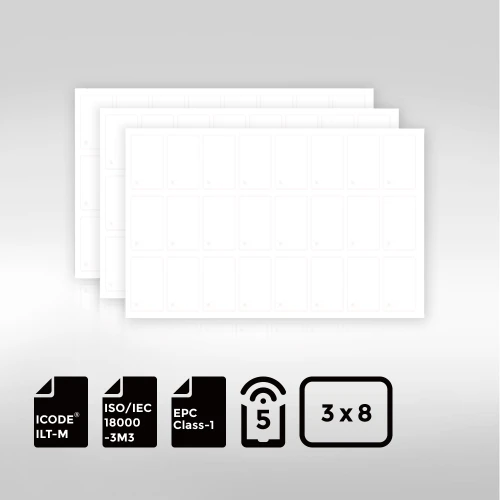
BioPoly™ Vinyl RFID Inlay Sheet NXP® ICODE® ILT-M

The NXP® ICODE® ILT-M BioPoly™ Vinyl RFID Inlay Sheet combines cutting-edge high-frequency RFID performance with a commitment to sustainability. Featuring the advanced ICODE® ILT-M chip and compliant with ISO/IEC 18000-3 Mode 3, it delivers ultra-fast data transfer, high memory capacity, and superior reading distances, making it ideal for applications such as supply chain management, asset tracking, logistics, and industrial automation.
Made from eco-friendly BioPoly™ vinyl, this inlay sheet helps your business reduce its environmental footprint while maintaining exceptional durability and printability. Whether used in custom labels, smart packaging, or intelligent inventory systems, the ILT-M BioPoly™ enables your brand to achieve operational efficiency, environmental responsibility, and a stronger connection with customers—all in one smart solution.