
Introduction
In today’s rapidly evolving digital world, we interact with various smart devices daily. From payments to access control, from data transfer to device pairing, Near Field Communication (NFC) technology is permeating every aspect of our lives with its “touch-and-go” convenience. But have you ever wondered why NFC devices from different brands and models can work together so seamlessly? Behind this lies the crucial efforts of one organization—the NFC Forum. This article will delve into how the NFC Forum ensures interoperability among NFC devices by establishing unified standards and certification mechanisms, ultimately delivering a seamless experience for users.
1. What is NFC?
NFC, or Near Field Communication, is a short-range wireless technology enabling secure communication between two devices when they are in close proximity (typically less than 4 centimeters). Operating in the unlicensed 13.56 MHz spectrum, it facilitates simple, fast, and secure data exchange. The core advantages of NFC technology lie in its convenience, security, speed, and versatility. It requires no complex pairing process—a simple tap completes the connection, making it ideal for scenarios such as mobile payments, transit cards, authentication, and device pairing.
2. Challenges of Interoperability
Imagine the inconvenience if your bank card could only be used at specific brands of POS terminals, or if your phone could only pair with headphones from certain manufacturers. In the realm of wireless communication, without unified standards, devices would routinely fail to “speak the same language,” severely hindering the widespread adoption and application of technology. NFC technology is no exception. To enable NFC chips, readers, and tags from different manufacturers to recognize each other and exchange data correctly, a globally recognized set of specifications is essential. This is precisely the core challenge faced and addressed by the NFC Forum.
3. The Mission and Core Role of the NFC Forum

The NFC Forum is a non-profit industry association established in 2004, with its primary objective being to promote the global adoption and standardization of NFC technology. By developing technical specifications, testing protocols, and certification programs, the NFC Forum ensures interoperability across diverse devices and application scenarios. This interoperability is crucial for NFC technology’s widespread adoption, as it eliminates potential compatibility barriers between different brands, enabling users to seamlessly interact with NFC tags using any NFC-enabled device.
The core functions of the NFC Forum can be summarized as follows:
Developing Unified Standards: Creating and maintaining a comprehensive set of technical specifications covering all aspects of NFC technology, from physical interfaces to data formats.
Promoting Interoperability: Ensuring compliant products are mutually compatible and enable seamless communication through rigorous certification programs.
Fostering Application Development: Encouraging and supporting innovation in NFC applications and services to broaden the technology’s scope of use.
Education and promotion: Raising public awareness of NFC technology to foster its widespread global adoption.
These collective efforts have built a robust ecosystem, enabling NFC technology to evolve from its initial concept into the ubiquitous convenience tool it is today.
4. NFC Forum Core Specifications: Building the Foundation for Interoperability
The NFC Forum has established the foundation for NFC device interoperability by publishing a series of detailed technical specifications. These specifications cover all layers of NFC communication, from the physical layer to the application layer, ensuring that different devices and tags “speak the same language” when interacting. Below are some key core specifications and their functions:
Logical Link Control Protocol Technical Specification (LLCP)
LLCP defines the OSI Layer 2 protocol for point-to-point communication between NFC devices. It supports two service types: connectionless services and connection-oriented services. Connectionless services provide minimal setup, suitable for small applications with limited data transfer requirements; connection-oriented services add ordered, reliable data transfer, flow control, and session-based service layer multiplexing. LLCP forms the foundation for bidirectional communication between NFC devices, such as file transfers or carrying network protocols like OBEX and TCP/IP.
Digital Protocol Technical Specification
This specification addresses the digital protocols for NFC device communication, providing implementation guidelines for ISO/IEC 18092 and ISO/IEC 14443 standards. It harmonizes integrated technologies, defines implementation options, and restricts standard interpretations to ensure global interoperability between diverse NFC devices and between NFC devices and existing contactless infrastructure (e.g., financial services and public transit). It covers bit encoding, bit rates, frame formats, protocols, and command sets.
Analog Technical Specification
The Analog Technical Specification addresses the analog characteristics of the NFC device’s radio frequency interface. It defines externally observable signal characteristics of NFC devices, including power requirements, transmission requirements, receiver requirements, and signal forms (time/frequency/modulation characteristics). This specification aims to ensure physical layer compatibility among NFC devices from different manufacturers. For example, it guarantees interoperability between devices using different technology types (e.g., NFC-A, NFC-B, NFC-F) and operating at various bit rates (106kbps, 212kbps, 424kbps).
Controller Interface Specification (NCI)
The NCI specification defines a standard interface between the NFC controller within an NFC device and the device’s main application processor. This enables device manufacturers to more easily integrate chipsets from different chip manufacturers and ensures functionality and interoperability between internal components of NFC devices. The existence of NCI accelerates the market introduction of NFC devices and provides a universal interface for various NFC devices, such as mobile phones, PCs, tablets, printers, etc.
NFC Data Exchange Format Technical Specification (NDEF)
NDEF is one of the NFC Forum’s most critical specifications, defining a universal data format for NFC Forum-compliant devices and NFC Forum-compliant tags. NDEF provides a standardized method for encapsulating and exchanging NFC application data, whether it’s a simple URL, text message, or more complex record types. All NFC Forum tag types support the NDEF format, enabling different devices to easily read and write information to NFC tags. This is central to achieving the “tap-and-go” experience.
Tag Type Technical Specifications
The NFC Forum defines multiple tag types (Type 1, Type 2, Type 3, Type 4, and Type 5), each with its specific technical foundation and application scenarios. These specifications detail how devices in NFC reader mode detect, read, and write NDEF messages on different tag types. For example:
| Tag Type | Technical Foundation | Key Features | Typical Application Scenarios |
| Type 1 | ISO/IEC 14443-A | Based on Topaz technology, read/write capability, limited storage capacity | Smart posters, single-use scenarios |
| Type 2 | ISO/IEC 14443-A | Based on Mifare Ultralight technology, read/write, limited storage capacity | Smart posters, retail product tags, membership cards |
| Type 3 | JIS X 6319-4 (FeliCa) | Based on FeliCa technology, large storage capacity, high security | Transportation cards, e-wallets, high-value applications |
| Type 4 | ISO/IEC 14443-A / B | Compatible with ISO/IEC 14443-A and B, large storage capacity, high security | Payment cards, access cards, electronic passports |
| Type 5 | ISO/IEC 15693 | Relatively long read/write distance, suitable for inventory management and logistics tracking | Industrial applications, asset management, libraries |
These tag type specifications ensure our RFID tag products—such as hotel key cards, access cards, and custom RFID tags—achieve seamless compatibility with NFC Forum-compliant reader/writer devices, delivering flexible and diverse solutions to our customers.
Simple NDEF Exchange Protocol Technical Specification (SNEP)
SNEP enables NFC devices to exchange NDEF messages with other NFC Forum devices in peer-to-peer mode. It utilizes the connection-oriented transmission mode of LLCP to provide reliable data exchange. SNEP forms the foundation for applications such as sharing contact information, images, or other data between NFC devices.
Activity Specification and Profile Specification
The Activity Specification explains how to use NFC digital protocol specifications to establish communication protocols with other NFC devices or NFC Forum tags. It describes the building blocks—referred to as “activities”—used to configure communication protocols. The Profile Specification further details how these activities are combined to serve specific use cases, such as discovering all services or establishing peer-to-peer communication.
5. NFC Forum Certification Program: The Ultimate Assurance of Interoperability
Merely possessing technical specifications is insufficient. The NFC Forum has established a rigorous certification program to ensure products genuinely comply with its defined standards. This program is crucial for maintaining the integrity and reliability of the NFC ecosystem. Certified products receive the NFC Forum’s official logo, signaling to consumers and businesses that the product has undergone rigorous testing and is guaranteed to interoperate with other NFC-compatible devices and tags.
The certification process typically encompasses the following aspects:
Conformance Testing: Verifies that the product correctly implements all functions according to NFC Forum specifications.
Interoperability Testing: Ensures the product can communicate seamlessly with other certified NFC devices and tags on the market.
Performance Testing: Evaluates the product’s performance in real-world scenarios, such as communication range, speed, and stability.
The value of the NFC Forum Certification Program is undeniable. It provides our customers with confidence that our RFID cards and tags can seamlessly integrate into their existing NFC infrastructure—whether hotel access systems, retail payment terminals, or asset tracking in supply chain management. This standardized certification mechanism significantly reduces the risk and complexity for customers deploying NFC solutions.
6. The Business Value of Interoperability: Why Choose Products Compliant with NFC Forum Standards?

The interoperability ensured by the NFC Forum is not merely a technical achievement; more importantly, it delivers significant commercial value to businesses. Choosing products compliant with NFC Forum standards translates into a series of tangible advantages.
Reduced Integration Costs and Risks: When all devices adhere to a unified standard, enterprises need not worry about compatibility issues between products from different suppliers. This greatly simplifies the system integration process, reduces the time and cost required for development and deployment, and lowers operational risks caused by compatibility issues.
Expanded Market Choice and Flexibility: Interoperability means businesses can select NFC products from a broader range of suppliers without being locked into specific brands or technologies. This increases procurement flexibility, helping companies secure more competitive pricing and superior service.
Enhanced User Experience: For end-users, interacting with NFC tags is effortless and swift, regardless of the brand of their phone or NFC reader, delivering a seamless, barrier-free experience. For instance, hotel guests can easily unlock doors with any NFC-enabled phone or access product information via NFC tags in retail stores.
Future-Proof Scalability: The NFC Forum continuously updates its specifications to accommodate technological advancements and emerging use cases. Choosing products compliant with NFC Forum standards means your investment is more forward-looking, better prepared for future technology upgrades and expansion needs.
Global Application Potential: The NFC Forum’s standardization efforts are global in scope, ensuring interoperability for compliant products worldwide. This is particularly crucial for businesses with international operations, such as multinational hotel chains or global retailers, as it guarantees consistency and efficiency across NFC solutions deployed in different regions.
Conclusion
NFC technology is profoundly transforming how the business world operates with its unique “touch-and-go” capability. The NFC Forum stands as a key driver behind this transformation. By establishing comprehensive technical specifications and implementing rigorous certification programs, it has created a universal language enabling seamless interoperability between NFC devices and tags. This not only ensures products from different manufacturers work together but, more importantly, delivers significant business value to enterprises. Benefits include reduced integration costs, expanded market choices, enhanced user experiences, future-proof scalability, and global application potential.
Choosing RFIDCard means selecting not only a factory with five production lines and industry-leading quality, but also a partner committed to delivering products compliant with global interoperability standards. We are dedicated to helping customers across North America, Europe, Australia, and beyond fully leverage the convenience and efficiency of NFC technology through our solutions. We look forward to partnering with you to unlock the future of “touch-and-go” connectivity.
Recommended Product
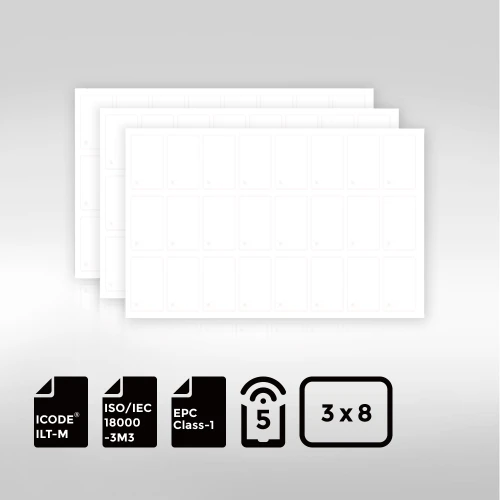
BioPoly™ Vinyl RFID Inlay Sheet NXP® ICODE® ILT-M

The NXP® ICODE® ILT-M BioPoly™ Vinyl RFID Inlay Sheet combines cutting-edge high-frequency RFID performance with a commitment to sustainability. Featuring the advanced ICODE® ILT-M chip and compliant with ISO/IEC 18000-3 Mode 3, it delivers ultra-fast data transfer, high memory capacity, and superior reading distances, making it ideal for applications such as supply chain management, asset tracking, logistics, and industrial automation.
Made from eco-friendly BioPoly™ vinyl, this inlay sheet helps your business reduce its environmental footprint while maintaining exceptional durability and printability. Whether used in custom labels, smart packaging, or intelligent inventory systems, the ILT-M BioPoly™ enables your brand to achieve operational efficiency, environmental responsibility, and a stronger connection with customers—all in one smart solution.