In today’s digital world, RFID technology has become a cornerstone for convenience and efficiency. From access control cards and membership passes to contactless payments, RFID-enabled devices are everywhere. However, with convenience comes risk, and RFID data protection has become a critical concern for both individuals and businesses. Without proper safeguards, sensitive information stored on RFID cards can be intercepted, cloned, or misused. This guide explores the most effective ways to secure your RFID data, ensuring peace of mind while enjoying the benefits of contactless technology.
1. Enable Encryption on RFID Devices
The first and most fundamental layer of defense in RFID data protection is the implementation of strong encryption. Encryption is the process of encoding information in such a way that only authorized parties can access it. When an RFID tag and a reader communicate, encryption scrambles the data stream, rendering it unintelligible to unauthorized skimming devices. Without the correct decryption key, any intercepted data is useless to a potential thief.
Modern RFID systems, particularly those used for high-security applications like banking and access control, rely on sophisticated cryptographic algorithms. Two of the most common and reliable standards are the Advanced Encryption Standard (AES) and the encryption protocols utilized by NXP’s DESFire family of microcontrollers. These encryption methods prevent unauthorized users from reading sensitive information, such as personal details, access permissions, or payment credentials. Regularly updating and maintaining encryption settings further strengthens RFID data protection.
2. Implement Secure Authentication Protocols
While encryption protects the data during transmission, secure authentication protocols ensure that only the intended, authorized reader can initiate the communication in the first place. Authentication acts as a digital handshake, verifying the identity of both the tag and the reader before any sensitive data is exchanged. This is a crucial component of a comprehensive RFID data protection strategy. The simplest form of authentication is single-factor, where the tag responds to any reader that sends a specific, unencrypted command. This is inherently insecure. Modern, secure RFID systems employ multi-factor authentication (MFA) principles, even in the low-power environment of an RFID transaction.
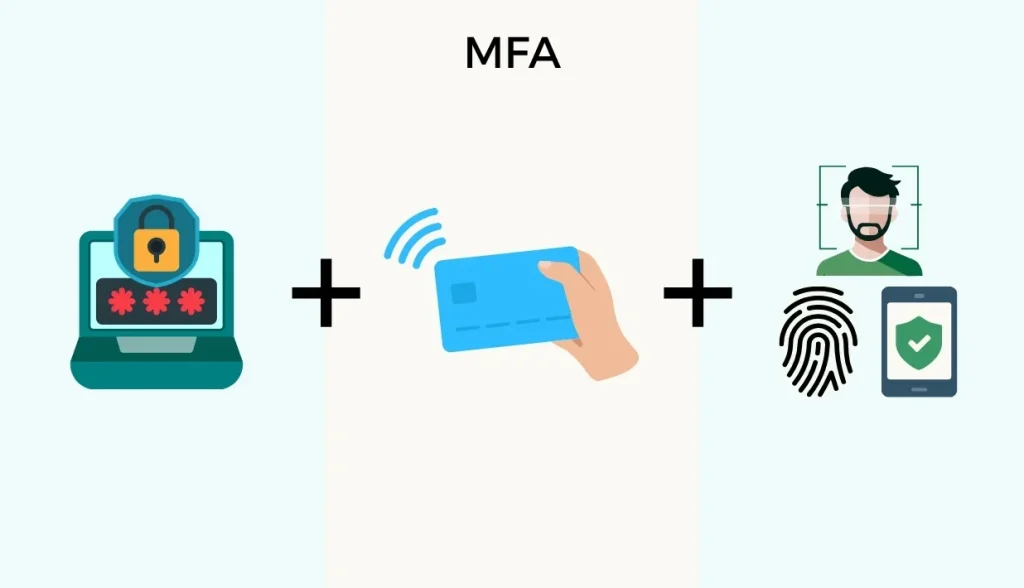
In the context of RFID, MFA often involves a combination of:
- Something the tag knows (a cryptographic key): The reader and tag perform a challenge-response protocol to prove they share the key without ever transmitting the key itself.
- Something the user has (the physical card/device): The physical possession of the card is the primary factor.
- Something the user is or knows (a PIN, fingerprint, or facial scan): This is where the integration with a host device, such as a smartphone, becomes vital.
For example, pairing RFID cards with biometric verification in corporate offices or high-security facilities drastically reduces the risk of breaches. Integrating secure authentication protocols is an essential step in any comprehensive RFID data protection strategy.
3. Regularly Monitor and Update RFID Systems
The security landscape is constantly evolving, and what is secure today may be vulnerable tomorrow. Therefore, a proactive approach involving regular monitoring and system updates is indispensable for maintaining effective RFID data protection, especially in enterprise environments.
3.1 Firmware and Software Updates
Just like any other computer system, the readers, controllers, and backend servers that manage RFID data rely on firmware and software. Vendors frequently release patches to fix newly discovered vulnerabilities, improve cryptographic performance, and address compatibility issues. Organizations must establish a strict patch management policy to ensure that all components of the RFID infrastructure are kept up-to-date. Failure to apply a critical security patch can leave a system exposed to known exploits, effectively nullifying all other security measures.
3.2 Vulnerability Detection and Mitigation
Continuous monitoring is essential for detecting anomalies that might indicate a security breach. This includes:
- Logging and Auditing: Every access attempt, successful or failed, should be logged. Automated tools can analyze these logs for suspicious patterns, such as an excessive number of failed read attempts (which could indicate a brute-force attack) or data access from an unusual geographical location.
- Physical Security Audits: Regular checks of reader placement and physical security are necessary to prevent the installation of unauthorized “rogue” readers or skimming devices.
By treating the RFID system as a dynamic, living network component rather than a static piece of hardware, organizations can quickly detect and mitigate vulnerabilities, ensuring that their data remains protected against the latest threats.
4. Advanced Protection Methods
Beyond the foundational security measures of encryption and authentication, several advanced techniques offer an even higher degree of RFID data protection, particularly in high-value applications like financial transactions and sensitive access control.
4.1 Tokenization and One-Time-Use Codes
In payment systems, the actual Primary Account Number (PAN) is the most valuable piece of data. Tokenization replaces this sensitive data with a non-sensitive equivalent, or “token,” that can be used for payment processing but holds no value to a thief. When an RFID-enabled device (like a contactless card or phone) is used, it transmits a token, not the actual card number. This token is a one-time-use code that is only valid for that specific transaction. Even if a malicious actor skims the token, it will be useless for any subsequent transaction, rendering the attack futile. This method is the backbone of modern mobile payment security and is increasingly being adopted in other areas, such as access control, where a temporary, single-use credential can be issued for visitor management.
4.2 Emerging Technologies: Blockchain for RFID Security
The decentralized and immutable nature of blockchain technology offers a promising new frontier for RFID security, particularly in supply chain management and product authentication.
- Immutable Record: When an RFID tag is scanned at a checkpoint, the transaction data (time, location, product ID) can be immediately recorded on a private or consortium blockchain. This creates an unchangeable, verifiable record of the item’s journey. Any attempt to tamper with the physical tag or the data associated with it would be immediately flagged as a discrepancy against the blockchain’s consensus ledger.
- Decentralized Access Control: Instead of relying on a single, centralized database for authentication, the access rights for an RFID tag can be managed by a smart contract on a blockchain. This distributes the point of failure and makes it significantly harder for a single breach to compromise the entire system.
While still in its early stages of adoption for this specific use case, the integration of blockchain with RFID promises to deliver a new level of transparency and security that goes far beyond traditional centralized systems.
5. Conclusion
In a world increasingly reliant on RFID technology, protecting your data is no longer optional—it is essential. By combining high-quality secure RFID cards, encryption, authentication protocols, system updates, and user education, you can build a robust defense against potential threats. Don’t leave your sensitive data unprotected. Upgrade to our RFID cards today and experience reliable, worry-free protection for your access control, membership, or payment systems. Shop now and keep your information safe from unauthorized access.
Recommended Product
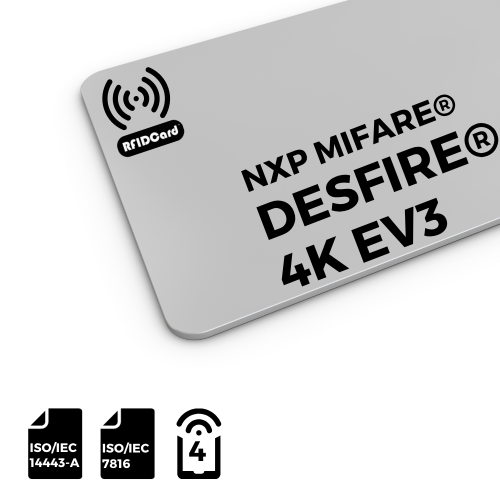
RFID Card NXP MIFARE® DESFire® EV3 4K

Blank or customized printing RFID cards with a choice of dimensions are available. The MIFARE® DESFire® EV3 4K is Common Criteria EAL5+ security certified for smart card IC products. The MIFARE® DESFire® EV3 4K ICs fully comply with NFC Forum Type 4 Tag.