In today’s increasingly digital and connected world, RFID technology plays a vital role in everything from access control and cashless payments to smart events and logistics. At the heart of these systems lies the RFID card — a compact yet powerful tool that enables contactless data exchange. However, when businesses plan to adopt RFID-based solutions, one of the first questions they face is about RFID card cost. The total cost is not fixed; it varies depending on multiple factors such as chip type, materials, printing, data encoding, and order volume. Understanding what drives RFID card cost is essential for making informed purchasing decisions and optimizing your project budget without compromising on quality.
1. Key Factors That Influence RFID Card Cost
The final price of an RFID card is the result of several interdependent components, each contributing a significant portion to the overall manufacturing expense. These factors range from the core technology embedded within the card to the aesthetic and functional finishing touches.
1.1 Chip Type and Frequency: The Core Technology
The most significant driver of the RFID card cost is the embedded microchip and its operating frequency. RFID systems operate across three primary frequency bands, each suited for different applications:
- Low Frequency (LF – 125 kHz): These chips offer short read ranges (typically a few centimeters) and slower data transfer rates. They are commonly used for access control, animal identification, and car immobilizers. LF chips are generally the least expensive option.
- High Frequency (HF – 13.56 MHz): HF chips provide a moderate read range (up to 1 meter) and are the standard for applications requiring more data and security, such as smart cards, public transport tickets, and NFC (Near Field Communication) applications.
- Ultra-High Frequency (UHF – 860–960 MHz): UHF chips offer the longest read range (up to 12 meters) and the fastest data transfer, making them ideal for supply chain management, inventory tracking, and toll collection. While the chips themselves can be relatively inexpensive in high volumes, the overall system infrastructure (readers and antennas) is often more costly.
Beyond the frequency, the specific chip model is crucial. Industry-standard chips like MIFARE , ICODE, and UCODE each come with different features that directly impact the price. The more advanced the chip — such as those with encryption (like MIFARE DESFire EV2 or NTAG424 DNA) — the higher the RFID card cost due to added manufacturing complexity and security features.
1.2 Card Material and Durability
The physical construction of the card is the second major factor influencing the RFID card cost. The choice of material determines the card’s durability, lifespan, and resistance to environmental factors.
| Material Type | Typical Use Case | Durability & Features | Cost Implication |
| PVC (Polyvinyl Chloride) | Standard ID cards, membership cards | Standard durability, flexible, widely accepted | Lowest cost, standard option |
| PET (Polyethylene Terephthalate) | High-wear applications, harsh environments | More durable, heat-resistant, longer lifespan | Moderate increase over PVC |
| PETG (Polyethylene Terephthalate Glycol) | Eco-conscious, high-durability needs | Better environmental profile than PVC, highly durable | Moderate to high cost |
| Eco-friendly/Wood/Paper | Single-use tickets, green initiatives | Biodegradable, unique aesthetic, lower longevity | Variable, often higher than PVC |
1.3 Printing and Customization Options
The visual appeal and branding of an RFID card are achieved through various printing and customization processes, which introduce another layer of cost variability.
- Blank Cards: The least expensive option, where the card is delivered without any printing, suitable for in-house thermal printing.
- Offset Printing: Used for large-volume orders, this method provides high-quality, full-color artwork and is the most cost-effective for complex designs.
- UV Printing: A digital printing method that offers vibrant colors and the ability to print on non-standard materials, often used for smaller runs or highly detailed designs.
Beyond the base printing method, personalization features add to the expense. These include:
- Variable Data Printing: Adding unique elements like a person’s name, photograph, or a unique serial number.
- Security Features: Holograms or UV-visible security inks to prevent counterfeiting.
- Finishing Touches: Matte or gloss lamination, magnetic stripes, signature panels, or slot punching for lanyards.
The complexity and number of these customization steps directly correlate with the final price. A simple, pre-printed card with a standard logo will be significantly cheaper than a fully personalized card with a high-security hologram and individual photo ID.
1.4 Encoding and Data Programming
The final step in the manufacturing process is encoding the chip with the necessary data, which is critical for the card’s functionality. This process involves writing specific information onto the chip’s memory, such as:
- Unique Identifier (UID) Numbers: The standard, unique serial number of the chip.
- Access Permissions: Programming specific sectors of the chip for use in access control systems.
- Encryption Keys: Loading cryptographic keys to secure communication between the card and the reader.
The complexity of the encoding process directly impacts the overall RFID card cost. Simple encoding of the UID is a quick, automated process. However, complex, multi-sector encoding, data encryption, or the use of proprietary encoding software requires more time, specialized equipment, and rigorous quality control, leading to a higher service charge per card.
2. RFID Card Prices
The following table shows the prices of some RFID cards from RFIDCard:
| Card Specification | Typical Application | Cost (1000 pieces) | Type of RFID Card |
| NXP® NTAG® 213 NFC card | Marketing, event ticketing, simple NFC tags | $164 | HF 13.56MHz |
| NXP® MIFARE® DESFire® Light | Access management, Event ticketing, Loyalty cards | $632 | HF 13.56MHz |
| NXP® UCODE® 8 | Baggage Tagging, Inventory, Supply Chain Management | $260 | UHF 860~960 MHz |
3. How to Reduce RFID Card Cost Without Compromising Quality
For organizations looking to optimize their budget, several strategies can be employed to lower the unit price without sacrificing the necessary functionality or quality.
3.1 Choose the Right Chip for Your Application
The most common mistake is over-specification. Purchasing a high-security MIFARE DESFire EV2 chip for a simple membership card that only requires a unique ID is an unnecessary expense. Assess your application’s true needs:
- Do you need encryption? If not, a simpler, less expensive chip will suffice.
- Is a long read range necessary? If the card will be tapped, an HF chip is sufficient; a more expensive UHF chip is only needed for long-range tracking.
By precisely matching the chip’s capabilities to the application’s requirements, you can significantly reduce the base RFID card cost.
3.2 Optimize Printing and Packaging
Printing and finishing can add substantial cost. Consider simplifying your design:
- Reduce Color Count: Fewer colors in the design can sometimes lower printing costs, especially for smaller runs.
- Standardize Personalization: Use a standard, pre-printed design and only personalize the essential variable data (e.g., UID and serial number) instead of full-color photo IDs, if possible.
- Bulk Packaging: Opting for standard bulk packaging instead of individual card sleeves or custom boxes can reduce labor and material costs.
3.3 Partner with reliable suppliers
Working with a dedicated RFID card suppliers, such as RFIDCard, offers several advantages that lead to cost savings:
- Technical Consultation: RFIDCard can provide expert advice on the most cost-effective chip and material combinations for your specific use case, preventing costly over-specification.
- Quality Control: Robust quality checks minimize the rate of defective cards, ensuring that you are not paying for unusable inventory.
A reliable partner will not only offer competitive pricing but also provide the technical support necessary to ensure the cards integrate seamlessly with your existing infrastructure, avoiding hidden costs down the line.
4. Conclusion
Understanding RFID card cost involves more than checking a price list — it requires knowing what drives those numbers. Factors such as chip type, material, customization, and order volume all play a critical role in determining the final price. By identifying the right balance between quality and budget, businesses can choose RFID cards that meet both performance requirements and financial constraints. Contact our team today to find your best-fit RFID solution and enhance your business operations with confidence.
Recommended Product
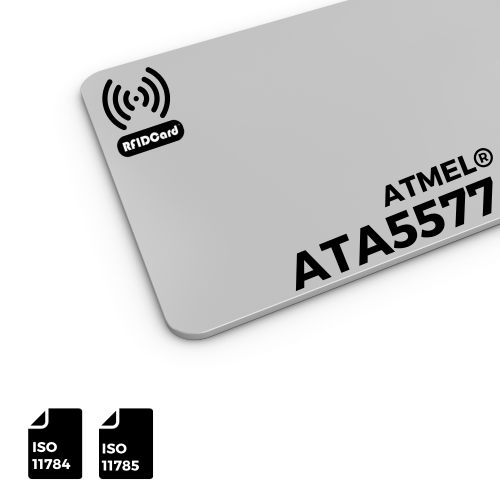
RFID Card Atmel® ATA5577

The ATA5577 RFID cards are made with Photo quality standard PVC sheets in the size of CR80, which are suitable for use with most direct thermal or thermal transfer card printers.. Atmel® ATA5577 is a contactless read/write identification transponder (IDIC®) for applications in the 125kHz frequency band. The total memory on-chip is 363-bit EEPROM (11 blocks with 33 bits each) where 7 × 32 Bits are user memory including 32-bit password memory.