In an era defined by seamless connectivity and instant access, the humble NFC reader chip stands as a pivotal innovation, quietly transforming how we engage with technology, commerce, and security. We are witnessing a profound shift in various sectors, driven by the compact yet powerful capabilities of Near Field Communication (NFC) technology. This article delves into the practical applications and underlying mechanisms that make NFC an indispensable component of our increasingly interconnected world.
The Core Technology: Understanding NFC
NFC is a short-range wireless technology that enables communication between devices when they are brought within a few centimeters of each other. Operating on the principle of electromagnetic induction, NFC allows for rapid, secure data exchange without the need for complex pairing processes. This simplicity is its greatest strength, facilitating intuitive interactions that are both efficient and user-friendly.
How NFC Works: A Brief Overview
At its heart, NFC operates at 13.56 MHz and typically functions in two modes: active and passive. In active mode, both devices generate their own electromagnetic fields to transmit data. In passive mode, one device (the initiator) generates the field, and the other (the target) draws power from it to communicate. This passive capability is crucial for devices like NFC tags, which can operate without their own power source.

Beyond Payments: Diverse Applications of the NFC Reader Chip
While often associated with mobile payments, the utility of the NFC reader chip extends far beyond tap-and-pay transactions. Its versatility makes it suitable for a myriad of applications, enhancing convenience and security across different industries.
Enhancing Access Control Systems
NFC technology is rapidly becoming the standard for modern access control. From corporate offices to residential buildings and public transportation, NFC-enabled cards and smartphones offer a secure and convenient alternative to traditional keys and swipe cards. We see this implemented in:
- Corporate Security: Employees use NFC badges or their smartphones to gain entry to restricted areas, with data encrypted for enhanced security.
- Smart Homes: Residents can unlock doors with a tap of their phone, integrating seamlessly with smart home ecosystems.
- Public Transit: Commuters utilize NFC-enabled transit cards or mobile wallets for quick and efficient boarding, reducing queues and streamlining operations.
Revolutionizing Retail and Marketing
NFC offers innovative ways for businesses to interact with customers, providing personalized experiences and streamlining operations. We have observed significant advancements in:
- Smart Posters and Product Tags: Customers can tap their phones on NFC-enabled posters or product labels to access detailed information, promotions, or even make a purchase directly.
- Inventory Management: Retailers use NFC tags for efficient tracking of goods, reducing manual errors and improving supply chain visibility.
- Loyalty Programs: NFC allows for effortless enrollment and redemption in loyalty programs, enhancing customer engagement without the need for physical cards.

The NFC Reader Chip in Action: Real-World Impact
To illustrate the transformative power of NFC, let’s consider a prominent example of its application in a large-scale urban environment.
Case Study: Transport for London (TfL) Contactless Payments
Transport for London (TfL) has been a pioneer in integrating contactless payment technology, largely powered by NFC, into its vast public transport network. Since its full rollout in 2014, millions of commuters have benefited from the ability to use their contactless bank cards or NFC-enabled mobile devices to pay for journeys on the Tube, buses, trams, DLR, London Overground, TfL Rail, and most National Rail services in London. This system has significantly reduced queuing times, eliminated the need for pre-purchased tickets, and provided greater flexibility for travelers. The success of TfL’s implementation demonstrates the robustness and user acceptance of NFC technology in high-volume, critical infrastructure.

Future Prospects: The Evolving Role of NFC
The capabilities of the NFC reader chip are continually expanding. We anticipate further integration into healthcare for patient identification and data access, in industrial settings for asset tracking and maintenance, and in smart cities for enhanced public services. The drive towards greater automation and seamless interaction ensures that NFC will remain at the forefront of technological innovation.
Conclusion: Embracing the NFC Revolution
The pervasive influence of the NFC reader chip is undeniable. From simplifying daily transactions to securing sensitive data and streamlining complex operations, NFC technology is a cornerstone of modern convenience and efficiency. We are committed to providing cutting-edge RFID and NFC solutions that empower businesses to harness this transformative technology. Explore our comprehensive range of products and discover how we can help you integrate NFC into your operations by visiting rfidcard.com today. We invite you to learn more and connect with our experts to find the perfect solution for your needs.
FAQs
What is the primary security advantage of using NFC for payments and access control?
NFC’s main security advantage is its extremely short communication range (a few centimeters), which significantly reduces the risk of unauthorized interception. Additionally, it often employs encryption and tokenization for sensitive data.
How does NFC differ from other wireless technologies like Bluetooth or Wi-Fi in terms of application?
NFC is designed for very short-range, instantaneous, and secure interactions (e.g., payments, access control) with minimal setup. Bluetooth offers a longer range for device pairing (e.g., headphones), while Wi-Fi provides the longest range and highest data rates for networking and internet access, but with higher power consumption and more complex setup.
Recommended Product
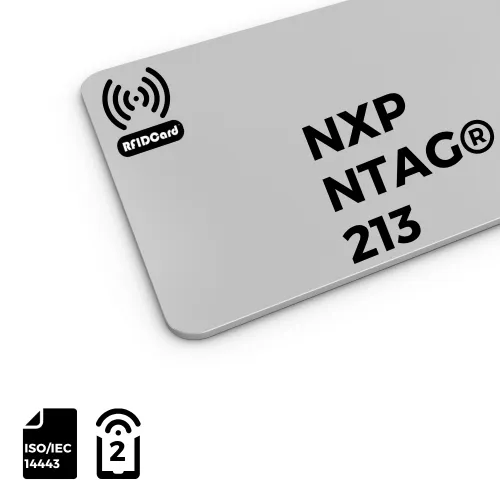
NXP NTAG® 213 Card NFC Type 2 | ISO14443-A CR80

The NTAG® 213 RFID card is fully comply to NFC Forum Type 2 Tag and ISO/IEC14443 Type A specifications., which programmed 7-byte UID with 144 bytes user memory available (36 pages). The card made with Photo quality standard PVC sheets into size of CR80, that are suitable for use with most direct thermal or thermal transfer card printers.