
Introduction
In today’s highly digitized business environment, tracking and analyzing the customer journey has become crucial for enterprises to achieve precision marketing and enhance return on investment (ROI). In recent years, Near Field Communication (NFC) technology has redefined offline advertising and product interaction through its unique “one-touch” experience. It is not merely a convenient payment or access control method, but also a powerful data collection tool that transforms previously ambiguous offline interactions into quantifiable, trackable customer journey data.
This article will delve into how NFC advertising empowers businesses to achieve precise tracking of effectiveness, as well as its core value in building comprehensive customer profiles and optimizing marketing strategies.
Part One: Mechanisms and Advantages of NFC Advertising Tracking

NFC technology enables two devices to communicate contactlessly at close range (typically within 4 centimeters). When a customer’s smartphone “taps” an NFC-tagged billboard, product packaging, or display, a pre-set digital command—such as redirecting to a specific webpage, downloading an app, or playing a video—is instantly triggered.
The Essence of Tracking: Seamless Transition from Physical to Digital
Traditional offline advertising, like posters or flyers, offers limited direct measurement of effectiveness. The core value of NFC advertising lies in providing a unique digital entry point for every physical interaction.
Establishing Data Collection Points (Touchpoints): Each NFC tag functions as a data collection point within the customer journey. Every tap generates a data record including a timestamp, geolocation (if authorized by the user), and device ID.
Building Behavioral Chains: By tracking customers from the initial “tap” on an ad through subsequent web browsing, form submissions, and even final inquiries or purchases, businesses can construct a complete behavioral chain. This seamlessly bridges previously fragmented online and offline data.
Unique Advantages in B2B Marketing
For B2B enterprises, particularly distributors, retailers, and large brand clients (such as apparel brands like Uniqlo and Zara), NFC tracking offers unparalleled advantages over traditional technologies:
| Features | Value Delivered by NFC Technology | B2B Application Scenarios |
| Instant Access and Convenience | No need to open apps or scan codes—one touch delivers instant access, reducing transaction costs for users. | At trade shows, potential distributors tap sample tags to instantly access product specifications and wholesale price lists. |
| Data Accuracy | Each tap represents an active, explicit user intent expression, ensuring high data quality. | Apparel brands track consumer interaction frequency across stores and product display zones to optimize merchandising strategies. |
| Traceability and Anti-Counterfeiting | Combined with secure encrypted NFC chips, it enables item-level traceability from factory to end-user. | Luxury brands or high-value industrial goods ensure distribution channel transparency and prevent counterfeiting. |
| Dynamic Content Updates | Tag content can be flexibly modified (depending on chip type and platform) for real-time advertising optimization. | Retailers can instantly change the coupons or product detail pages linked to NFC tags based on inventory or promotional activities. |
Part Two: Applications and Insights of NFC in the Customer Journey
The customer journey is typically divided into stages such as awareness, consideration, purchase, retention, and advocacy. NFC technology plays a crucial role in data capture and experience enhancement at every stage.
Awareness and Consideration Stages: Measuring Advertising Effectiveness
Question: Which ad format best attracts potential customers’ “taps”?
NFC Insight: By embedding NFC tags in ads across different locations (e.g., transit passes in subway systems, keycard displays in hotel lobbies), businesses can precisely compare interaction rates (Tap Rate) across various creative designs and placements. Interaction rates directly reflect an ad’s appeal.
Purchase Stage: Connecting Products with Digital Services
Question: What’s the next step after customers encounter the product?
NFC Insight: Embedding NFC in product packaging (e.g., RFID tags on apparel) allows customers to tap directly into product registration, usage tutorials, or after-sales service pages. This not only enhances user experience but, more importantly, captures critical conversion data from “product ownership” to “service utilization.”
Retention and Advocacy Stage: Driving Repeat Purchases and Word-of-Mouth
Question: How can we encourage repeat purchases and sharing?
NFC Insight: Customers can instantly receive exclusive discount codes for repeat purchases or join loyalty programs by tapping product tags. For our renowned hotel brand clients, guests can quickly submit service evaluations by tapping their room key cards, providing valuable real-time feedback that helps boost customer retention.
Part Three: Comparative Analysis of NFC and Traditional Tracking Technologies
To better understand NFC’s advantages, it’s essential to compare it with common tracking technologies on the market—QR codes and Bluetooth.
| Features | NFC Tag | QR Code | BLE Beacon |
| Interaction Method | Physical “Tap” | Requires Camera/App Scan | Automatic Detection/Requires Bluetooth |
| User Experience | Minimal, Fast, Seamless | Requires Focusing, Demanding Lighting | Requires Bluetooth, May Trigger Notifications |
| Data Collection | Precise “touch” events | Scan events (prone to accidental scans) | Area dwell time, distance |
| Cost (Tag) | Slightly higher (includes chip) | Extremely low (printing only) | Higher (includes battery and circuitry) |
| Security/Anti-Counterfeiting | Encryptable, supports secure authentication | Easily replicated, lower security | Higher (typically used for indoor positioning) |
| Power Requirements | Passive | Passive | Active |
| Applicable Scenarios | Product authentication, payments, quick interactions | Ad display, URL redirection, information storage | Indoor navigation, precision push notifications, zone analysis |
NFC excels in delivering seamless user experiences and precise interactive data capture. It captures customers’ proactive, deliberate “tap” actions, which more directly reflect their intent to engage than QR code ‘scans’ or Bluetooth “area dwells.”
Part Four: Professional Support and Future Outlook for RFIDCard

As an RFID card and tag supplier with five production lines dedicated to industry-leading quality, RFIDCard is committed to providing comprehensive support—from hardware to solutions—for global customers. Our products, including NFC tags with custom logos and shapes and optional eco-friendly materials, form the physical foundation for your NFC advertising tracking strategy.
We understand that the success of NFC advertising tracking relies not only on high-quality tags but also on the underlying data platform and analytical capabilities. Our expert team assists clients with:
Tag Customization & Encoding: Batch-encoding NFC tags with precise URLs or data tailored to clients’ marketing campaign needs.
Materials and Durability: Provide tag materials suitable for diverse environments (including major export markets like North America, Europe, and Australia), ensuring long-term stable operation of data collection points.
B2B Solution Integration: Integrate NFC tap data with clients’ existing CRM or marketing automation systems to automate customer journey management.
Conclusion
What happens after a light touch? The answer is: a brand-new, quantifiable customer journey begins.
NFC technology is transforming traditional, immeasurable offline interactions into digital assets. For businesses seeking wholesale, flexible minimum order quantities and aiming to enhance competitiveness through technological innovation, investing in NFC ad tracking is the essential choice to bridge physical products with digital marketing strategies.
By adopting industry-leading NFC cards and tags from RFIDCard, your business will be able to: – Precisely measure the true impact of offline advertising – Gain deep insights into customer behavioral preferences during product interactions – Optimize marketing budget allocation to achieve higher conversion rates.
Recommended Product
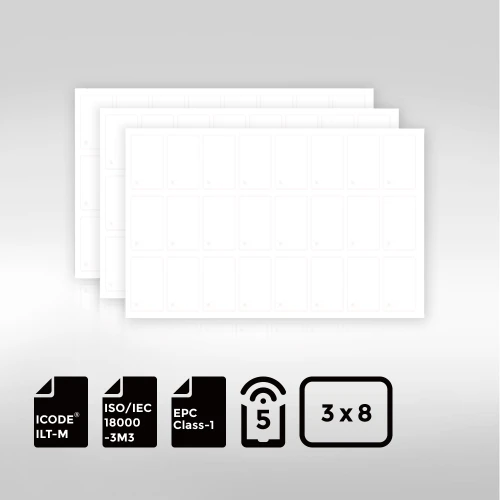
BioPoly™ Vinyl RFID Inlay Sheet NXP® ICODE® ILT-M

The NXP® ICODE® ILT-M BioPoly™ Vinyl RFID Inlay Sheet combines cutting-edge high-frequency RFID performance with a commitment to sustainability. Featuring the advanced ICODE® ILT-M chip and compliant with ISO/IEC 18000-3 Mode 3, it delivers ultra-fast data transfer, high memory capacity, and superior reading distances, making it ideal for applications such as supply chain management, asset tracking, logistics, and industrial automation.
Made from eco-friendly BioPoly™ vinyl, this inlay sheet helps your business reduce its environmental footprint while maintaining exceptional durability and printability. Whether used in custom labels, smart packaging, or intelligent inventory systems, the ILT-M BioPoly™ enables your brand to achieve operational efficiency, environmental responsibility, and a stronger connection with customers—all in one smart solution.