In the world of RFID (Radio Frequency Identification) technology, numerous terms and concepts can be confusing. One key yet often misunderstood identifier is the TID (Tag Identifier) number. The TID number plays a vital role throughout the RFID tag’s lifecycle. It is not merely a string of numbers but rather the unique “fingerprint” of each RFID chip. This article will delve into what is TID number and how it differs from other RFID identifiers like the EPC (Electronic Product Code), helping you better understand this core technology.
1. Definition and Importance of TID Numbers

The TID number, or Tag Identifier, is a unique, unalterable serial number permanently encoded into each RFID chip during manufacturing. You can think of it as the digital fingerprint of an RFID chip—a one-of-a-kind identifier that cannot be modified or rewritten. Unlike the EPC (Electronic Product Code), the TID number is not used to identify goods or assets but rather to identify the RFID chip itself. Its primary functions include:
- Chip Authentication and Anti-Counterfeiting: Since the TID is written by the chip manufacturer during production and is immutable, it can verify the authenticity of RFID chips, effectively preventing counterfeit products. This tamper-proof nature is one of the core values of the TID, providing a solid foundation for the security of RFID systems. When an RFID tag is read, its TID can be cross-referenced against a pre-stored list of legitimate TIDs in a secure database. This confirms whether the tag is an original factory product, effectively curbing counterfeiting and illegal replication.
- Quality Control and Traceability: Manufacturers can use TID numbers to track information such as the production batch, date, location, and even specific equipment used to produce the chip. This is crucial for product quality control and defect traceability. If issues arise in a particular batch, the TID number enables rapid identification of the source, allowing for swift recall or corrective actions to safeguard product quality and consumer rights.
- System Integration and Underlying Identification: Within complex RFID application systems, the TID serves as a foundational identifier that can be linked to EPCs or other business data in upper-layer applications. For instance, in asset management systems, an asset’s EPC may change with its status, while its TID remains constant as the permanent hardware ID. This layered identification mechanism enables more flexible data management while maintaining the stability of the underlying hardware identity.
- Privacy Protection and Anonymity: In applications with stringent privacy requirements—such as personal identification or tracking sensitive items—direct use of the EPC may reveal excessive information. In such cases, the TID number can serve as a more anonymous identifier to verify the chip’s legitimacy without exposing details about the attached item. This provides greater flexibility and compliance for RFID technology implementation.
2. Structure of the TID Number

The structure of TID numbers is typically defined by the chip manufacturer, but they generally adhere to established standards such as the GS1 EPC Gen2 specification. Typically, a TID number comprises the following components:
- Manufacturer Code: This portion identifies the manufacturer that produced the RFID chip. Different chip manufacturers are assigned distinct codes to ensure global uniqueness. For example, a specific chip manufacturer may possess a fixed manufacturer code, and all chips produced by that manufacturer will have TID numbers containing this code.
- Chip Model/Type: This portion identifies the specific model or type of the chip. The same manufacturer may produce multiple chips with different functions, performance characteristics, or storage capacities. This code distinguishes between them. For instance, a chip designed for high-frequency applications and one for ultra-high-frequency applications will have different model codes within their TID numbers, even if produced by the same manufacturer.
- Serial Number: This is the most critical part of the TID number. It is a unique internal serial number for each chip, ensuring every chip possesses a one-of-a-kind TID. Even chips from the same batch and model will have distinct serial numbers. This serial number portion is typically incrementally assigned and automatically written by the manufacturer during production.
The length of the TID number generally ranges from 32 to 80 bits, depending on the chip type and manufacturer. For instance, some Gen2 RFID tags may feature a TID memory bank comprising 32-bit ROM (Read-Only Memory) and 96-bit ROM-NVM (Read-Only Non-Volatile Memory), which stores detailed chip information. The ROM section usually stores manufacturer and model information, while the ROM-NVM section may store more detailed serial numbers or other chip-specific data. This segmented storage design enables TID numbers to provide both generic identification information and chip-specific attributes.
3. TID and EPC: Key Differences and Synergies
In the RFID field, TID and EPC are the two most common identifiers, but their functions and purposes are entirely different. Understanding the distinction between them is crucial for the proper deployment and utilization of RFID technology. The following table compares TID and EPC:
| Characteristics | TID (Tag Identifier) | EPC (Electronic Product Code) |
| Function | Identifies the RFID chip itself | Identifies goods, assets, or locations |
| Modifiability | Non-modifiable; written by the manufacturer during production | Programmable; can be modified according to application requirements |
| Uniqueness | Globally unique; each chip has a one-of-a-kind TID | Unique within a specific application scope; reusable |
| Applications | Chip authentication, anti-counterfeiting, quality control, backend system integration | Supply chain management, inventory tracking, asset management, retail, etc. |
| Reading Frequency | Typically read during chip initialization or specific authentication scenarios | Frequently read in routine RFID applications |
| Storage Location | TID memory area of the chip (usually ROM) | EPC memory area of the chip (read/write) |
Although TID and EPC serve different functions, they can work together to provide more robust capabilities for RFID applications. For example, in certain advanced anti-counterfeiting systems, product authenticity can be verified by comparing the EPC and TID information on the tag. EPC identifies products, while TID verifies whether the chip carrying EPC information is genuine. This combined approach significantly enhances the security and reliability of RFID systems. In practical applications, EPC is typically used for rapid item identification and tracking, whereas TID serves as a deeper, tamper-proof authentication mechanism, providing an additional layer of trust for the entire RFID system.
4. Application Scenarios for TID Numbers

Although TID numbers are not read as frequently as EPCs in daily supply chain management, they play an irreplaceable role in the following scenarios:
- Anti-counterfeiting and traceability for high-value items: For luxury goods, pharmaceuticals, electronics, artworks, and other high-value items, TID numbers serve as crucial evidence for anti-counterfeiting. By reading the TID and comparing it with legitimate TID information in the database, counterfeit products can be effectively identified. For instance, pharmaceutical companies can use TIDs to verify drug authenticity and prevent counterfeit medicines from entering the market. Luxury brands can track their products’ entire lifecycle—from production to sale—ensuring consumers purchase genuine items.
- Asset Tracking and Management: In scenarios demanding stringent asset security—such as tracking IT equipment, tools, critical documents, or high-precision instruments—TID numbers serve as the underlying unique identifier, ensuring tamper-proof asset integrity. Even if physical tags are damaged or lost, the TID remains readable as long as the chip exists, enabling precise asset identification and management. This is crucial for large enterprises, data centers, or leasing companies to achieve efficient asset management.
- Production Line Quality Control and Automation: During RFID tag manufacturing, TID numbers help manufacturers track each chip’s production history, including production time, assembly line, and test results. This enables manufacturers to promptly identify and isolate defective products, enhancing overall product quality and production efficiency. On automated production lines, TID numbers can also identify and validate semi-finished products or components, ensuring production accuracy and traceability.
- IoT Device Authentication and Security: With the proliferation of the Internet of Things (IoT), RFID chips are widely integrated into smart devices ranging from home appliances to industrial sensors. TID numbers serve as unique hardware identifiers for these devices, facilitating device registration, authentication, and secure communication. For instance, in smart access control systems, only RFID cards with valid TID numbers are recognized and granted entry, ensuring physical security. In industrial IoT, TID numbers verify the authenticity of sensors or actuators, preventing unauthorized devices from accessing networks.
- Supply Chain Transparency and Compliance: In industries demanding high transparency and compliance—such as food safety or healthcare—the TID number serves as a critical link in product traceability chains. By integrating EPC and TID information, a comprehensive traceability system spanning raw materials to end consumers can be established. This fulfills regulatory requirements while enhancing consumer trust in products.
5. Reading and Management of TID Numbers
Although the TID number is non-modifiable, its reading and management are critical for the proper functioning of RFID systems. Typically, TID reading occurs automatically when the RFID chip is activated. The RFID reader transmits radio frequency signals to activate the chip within the tag, which then transmits its stored information, including the TID. In most applications, TID reading is transparent—users need not directly interact with or monitor the specific TID value, as the system handles this automatically in the background.
TID management primarily involves the following aspects:
- Database Association: Enterprises typically establish a database linking TID numbers to related product data such as EPC, batch information, production dates, and sales records. This enables querying a product’s complete lifecycle information using its TID number.
- Access Control: In security-sensitive applications, permissions can be enforced for reading and accessing TID numbers. Only authorized readers or systems can access TID information, preventing unauthorized data leaks or misuse.
- Data Analytics: By analyzing large volumes of TID numbers and their associated data, companies gain insights into product distribution channels, market coverage, and counterfeit activity, supporting informed decision-making.
Conclusion
The TID number is a fundamental and critical component of RFID technology, providing each RFID chip with a unique, immutable digital fingerprint. Though not as widely recognized as the EPC, the TID number plays an irreplaceable role in chip authentication, anti-counterfeiting, quality control, and advanced system integration. Understanding the characteristics of TID numbers and their synergistic relationship with EPCs enables businesses to leverage RFID technology more comprehensively, enhancing supply chain efficiency, strengthening product security, and optimizing asset management. For enterprises seeking to deepen their understanding of RFID technology and pursue customized RFID solutions, the TID number is undoubtedly a key identifier worthy of attention.
RFIDCard is committed to delivering industry-leading RFID products and customized solutions, including hotel key cards, RFID cards, access control cards, and tailored RFID solutions. We fully recognize the importance of TID numbers in ensuring product authenticity and system security, and can provide clients with TID-based anti-counterfeiting and traceability solutions. If you have any questions about RFID technology or require customized RFID products and services, please feel free to contact us at any time. We are committed to providing you with professional support and assistance.
Recommended Product
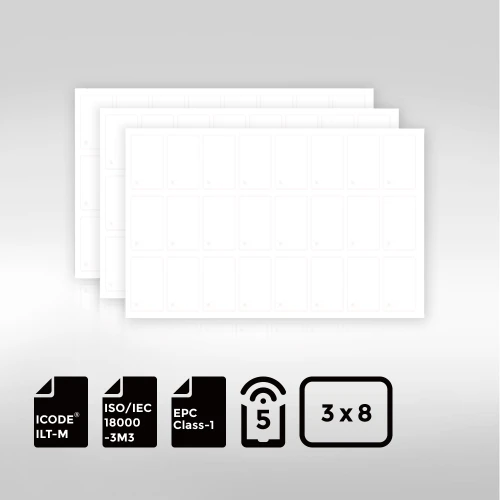
BioPoly™ Vinyl RFID Inlay Sheet NXP® ICODE® ILT-M

The NXP® ICODE® ILT-M BioPoly™ Vinyl RFID Inlay Sheet combines cutting-edge high-frequency RFID performance with a commitment to sustainability. Featuring the advanced ICODE® ILT-M chip and compliant with ISO/IEC 18000-3 Mode 3, it delivers ultra-fast data transfer, high memory capacity, and superior reading distances, making it ideal for applications such as supply chain management, asset tracking, logistics, and industrial automation.
Made from eco-friendly BioPoly™ vinyl, this inlay sheet helps your business reduce its environmental footprint while maintaining exceptional durability and printability. Whether used in custom labels, smart packaging, or intelligent inventory systems, the ILT-M BioPoly™ enables your brand to achieve operational efficiency, environmental responsibility, and a stronger connection with customers—all in one smart solution.