Understanding the relationship between RFID frequency and tag performance is critical when purchasing and selecting RFID tags, readers, or integrated RFID solutions. So, how does RFID frequency specifically affect tag performance? What role does it play in read range, data transmission speed, and environmental adaptability? For those who are not familiar with RFID technology, mastering this information is particularly critical. This article will delve into the relationship between RFID frequency and tag performance to help you choose the most appropriate RFID solution based on your specific application scenario.
RFID Frequency Overview
Frequency is the measure of how often a periodic event repeats within a specific unit of time. In physics, especially in the context of electromagnetic waves, frequency usually refers to the number of vibrations of the wave, usually expressed in Hertz (Hz).
In RFID technology, frequency refers to the rate of electromagnetic waves used for wireless communication. RFID systems transmit data between readers and tags through radio waves. Different frequency bands (such as low-frequency LF, high-frequency HF, ultra-high frequency UHF, and microwave bands) correspond to different characteristics, such as reading distance, data transmission speed, and sensitivity to environmental interference. These characteristics determine the application scenarios suitable for each frequency.
RFID technology mainly operates in several different frequency ranges, including low frequency 125-134.2 kHz, high frequency 13.56 MHz, and ultra-high frequency 860-960 MHz.
What is RFID Low Frequency?
As per international standards, low frequency operates within the range of 30 to 300 KHz. The low frequency of RFID is mainly 125 KHz and 134.2 KHz. A notable feature of RFID LF tags is that they use near-field inductive coupling to communicate with the reader and writer and obtain the required power from it. Since these tags are passive, their reading range is usually very short, only a few inches. At the same time, the data transmission speed of LF tags is relatively low and can only store a small amount of data. Since the anti-collision function of LF tags is limited, the function of reading multiple tags at a time is also relatively limited.
The antenna of LF tags is usually wound with hundreds of turns of copper coils, and this design makes the manufacturing cost of the tags high. However, RFID LF tags perform well in liquid and metal environments, which is why they are irreplaceable in some specific applications. LF tags are widely used in access control, animal identification, car anti-theft systems and other fields. The automotive industry is the place where RFID LF tags are most applied.
What is RFID High Frequency?
High-frequency RFID primarily operates at 13.56 MHz, which falls within the 3 to 30 MHz range.HF tags use near-field inductive coupling technology, do not require built-in batteries, and the reading distance is generally within 3 feet. Its data transmission speed is higher than that of low-frequency tags, and it supports an anti-collision function, allowing multiple tags to be read simultaneously in the same area.
The antenna of HF tags is usually made of 3 to 7 turns of copper, aluminum, or silver coils, making it cheaper to manufacture and thinner. In the interference of special environments, although HF tags can be read effectively, their performance will be unstable. HF tags are commonly utilized in retail smart shelves, libraries, logistics, and asset tracking.
What is RFID UHF Frequency?
UHF RFID operates in the frequency range of 860 to 960 MHz. It is typically used in passive and semi-passive RFID tags. The reading distance of UHF tags is the farthest among the three frequencies, and it can reach 6 meters or even more than 10 meters. And it supports an anti-collision function, which is suitable for reading multiple tags at the same time.
UHF antennas are usually made of thin copper, aluminum, or silver. Since its antenna is easy to manufacture, the cost is the lowest. However, RFID UHF frequency does not work well on water or metal objects because these substances interfere with the signal. UHF readers communicate through radio waves. Although the signal may change due to multipath effects, affecting the reading accuracy, UHF tags are widely used in supply chain and logistics management due to their economy and high performance. For a detailed comparison of LF, HF, and UHF RFID, see our guide to the [Difference Between LF, HF, and UHF RFID].
How RFID frequency affects tag performance
Understanding the impact of RFID frequency on tag performance can help us choose the tag that best suits specific application needs, thereby optimizing data processing efficiency and system reliability.
- Read range
UHF tags provide the longest read distance due to their long wavelength, suitable for applications in large warehouses and logistics centers. In contrast, LF and HF tags are suitable for close-range identification, such as access control and animal identification.
- Data transmission speed
High-frequency (HF) and ultra-high-frequency (UHF) tags have better data transmission speed than low-frequency (LF) tags, suitable for scenarios that require rapid processing of large amounts of data, such as real-time inventory management and rapid asset tracking.
- Interference and signal strength
Different frequencies have different sensitivities to environmental factors. UHF tags are prone to signal interference in metal and liquid environments, while LF tags are more stable in these environments. Choosing the right frequency requires consideration of the specific application environment.
- Tag durability and reliability
Although the frequency itself does not directly affect the physical durability of the tag, different frequency RFID systems have different requirements for tag packaging materials, which indirectly affects the long-term performance of the tag. For example, UHF tags may require materials that are more resistant to environmental interference.
How to determine RFID frequency for your application
To fully leverage the benefits of RFID technology, choosing the right frequency is critical for different application scenarios.
- Inventory management
UHF frequency is the best choice in retail and warehouse environments. Its long-range reading capability and fast data transmission make inventory counting more efficient, significantly reducing processing time and improving operational efficiency.
- Asset tracking
LF and HF frequencies are more suitable for industries that require precise positioning and long-term monitoring. These frequencies maintain stability in complex environments, ensure the accuracy and reliability of asset information, and meet scenarios with high requirements for tracking systems.
- Access control and security
LF and HF frequencies are ideal for access control and authentication systems due to their short-range reading and low interference. These frequencies provide stable performance and reliable security control solutions.
- Medical equipment management
HF frequency excels in medical equipment and drug tracking. It can reliably read tags in hospital environments and effectively avoid metal interference, ensuring the safe management of equipment and drugs.
- Library management
HF frequency is widely used in library book management. Its short-range reading and anti-collision functions make the borrowing and returning process efficient and fast, greatly improving the library’s operational efficiency.
- Supply Chain Management
UHF frequency plays an important role in supply chain management. Its long-range reading capability enables rapid tracking of goods during transportation and distribution, improving the transparency and efficiency of the supply chain.
- Production Line Monitoring
In the manufacturing industry, UHF frequency RFID tags can monitor every link on the production line, improve production efficiency, and ensure product quality.
RFID frequency has many effects on tag performance. The right frequency can not only optimize the efficiency of the system but also improve reliability. In different application scenarios, it is crucial to select the appropriate RFID frequency according to specific needs to give full play to the performance advantages of the tag. As a leading RFID supplier, we provide comprehensive one-stop RFID solutions to meet your various needs. Please feel free to contact us at RFID.CARD, we will help you choose the best RFID solution.
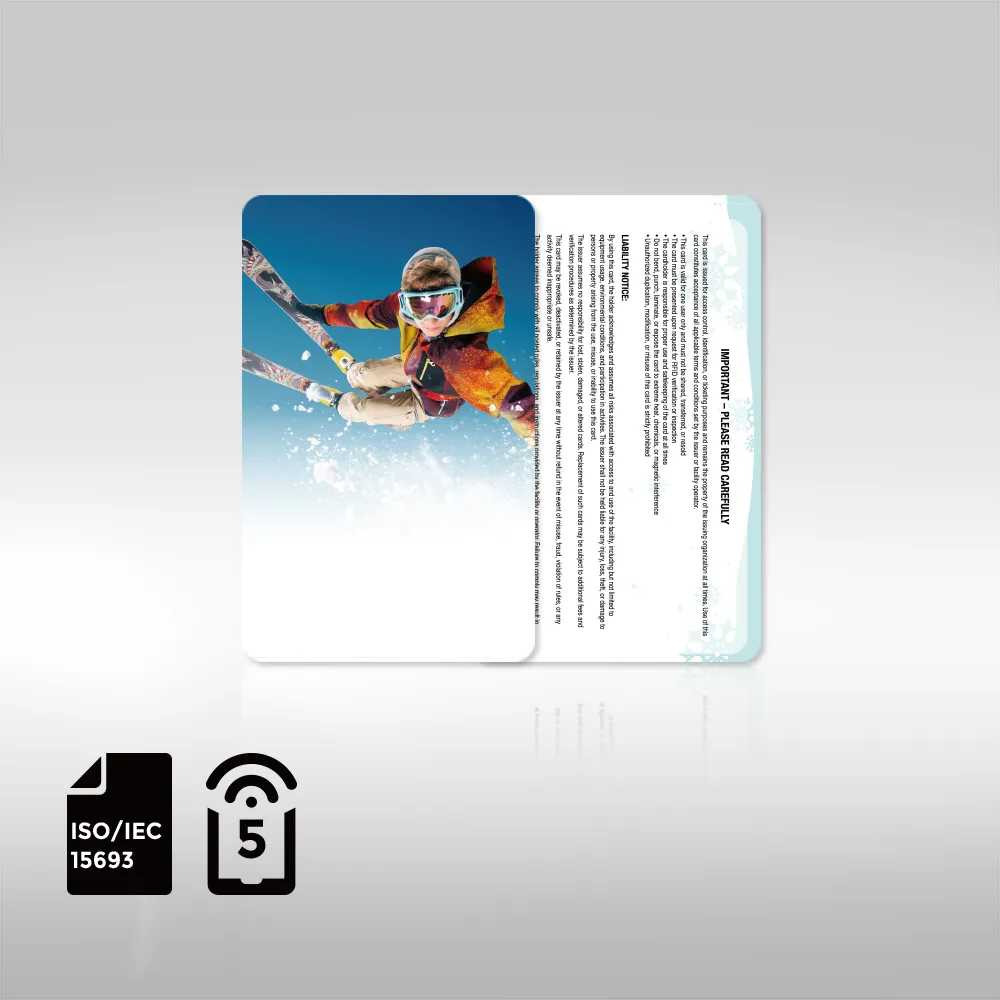
RFID Ski Pass Card NXP ICODE® SLIX2

The NXP ICODE® SLIX2 RFID Ski Pass Card is a high-performance HF smart card designed for ski resorts, mountain attractions, and outdoor access applications. Embedded with the NXP ICODE® SLIX2 chip, this card operates at 13.56 MHz and complies with ISO/IEC 15693 and NFC Forum Type 5 standards, providing reliable contactless identification and fast access validation. With long read range capability, anti-collision support, and sufficient user memory, it is suitable for lift access control, season passes, guest identification, and resort ticketing systems.

Wooden Hilton Key Card Copy
The wooden RFID key cards we designed for Hilton Hotels are made from sustainable, natural, eco-friendly wood, and their unique texture exudes a luxurious feel. Each card is fully customized to seamlessly integrate with Hilton’s existing RFID locking system, providing guests with secure and convenient access.

ColorEdge™ Hilton Key Card Copy
Our ColorEdge™ card is specifically designed for Hilton Hotels. Unlike ordinary white PVC cards, this card uses ColorEdge™ material, which not only provides secure room access but also aligns well with Hilton‘s brand image, reflecting the hotel’s fashion and luxury. Its unique design allows every guest to experience a high-end stay, perfectly combining security and style.

Hotel Key Card
Our ColorEdge™ card is designed to deliver a premium experience beyond traditional white PVC cards. Made with advanced ColorEdge™ material, it provides reliable room access while enhancing the visual appeal with a refined, stylish finish. Combining functionality, durability, and elegant design, this card helps hotels create a more memorable guest experience while reflecting a modern and sophisticated brand image.

RFID Card CR80 ST25TV02KC
The ST25TV series fully comply to NFC Forum Type 5 Tag and ISO/IEC15693 specifications.The ST25TV02KC NFC card is uniquely identified by a 64-bit UID with up to 2.5 Kbits of EEPROM. It features advanced TruST25™ digital signature for product authenticity and supports Augmented NDEF for dynamic data exchange, making it an ideal solution for secure identification and engagement applications.

100% Plastic-Free RFID Paper Card NXP® MIFARE Ultralight® EV1
The 100% plastic-free RFID Paper Card uses an innovative paper-based antenna to replace traditional plastic and PET structures, significantly reducing environmental impact. As the industry’s first developer of paper-based antenna RFID cards, we are committed to advancing truly 100% eco-friendly RFID solutions. Powered by the NXP® MIFARE Ultralight® EV1 chip and compliant with ISO/IEC 14443-A, it ensures reliable contactless performance for access control and identification applications.

BioPoly™ Stone RFID Card Made with 100% Paper-Based Antenna NXP® MIFARE Ultralight® EV1
The RFID BioPoly™ Stone Card Made with 100% Paper-Based Antenna is designed for brands seeking high performance with a lower environmental footprint. Featuring a Zero PET, Zero PVC paper-based antenna combined with durable BioPoly™ Stone, it delivers rock-solid strength and reliable RFID performance. As the industry’s first developer of paper-antenna RFID cards, we continue to advance eco-friendly RFID solutions through sustainable innovation. Powered by NXP® MIFARE Ultralight® EV1 and compliant with ISO/IEC 14443-A, it is ideal for access control and identification applications.

RFID Playing Cards with Multi-Card Stack Reading

BioPoly™ Vinyl RFID Inlay Sheet MIFARE Ultralight® EV1
The MIFARE Ultralight® EV1 BioPoly™ Vinyl RFID Inlay Sheet combines sustainable BioPoly™ Vinyl with advanced 13.56 MHz RFID technology. Featuring the MIFARE Ultralight® EV1 chip, compliant with ISO/IEC 14443-A and NFC Forum Type 2 standards, it offers 48 or 128 bytes of secure user memory for versatile applications. Lightweight, durable, and available in customizable sizes, it delivers eco-friendly, high-performance RFID solutions for smart ticketing, access control, and brand protection.

BioPoly™ Vinyl RFID Inlay Sheet MIFARE Ultralight® C
The MIFARE Ultralight® C BioPoly™ Vinyl RFID Inlay Sheet combines sustainable BioPoly™ Vinyl with advanced 13.56 MHz contactless technology. Featuring the MIFARE Ultralight® C chip with ISO/IEC 14443-A and NFC Forum Type 2 compliance, it offers 144 bytes of user memory and enhanced security features. Lightweight, durable, and customizable, it’s ideal for eco-conscious applications like transit, ticketing, and access control.

BioPoly™ Vinyl RFID Inlay Sheet MIFARE Ultralight® AES
The MIFARE Ultralight® AES BioPoly™ Vinyl RFID Inlay Sheet features BioPoly™ Vinyl, a biodegradable PVC containing bio-based additives and metal salts that are safe and eco-friendly. Unlike traditional PVC, BioPoly™ Vinyl biodegrades fully within about three years, significantly reducing environmental impact. The inlay is equipped with the MIFARE Ultralight® AES chip, offering strong AES-128 encryption for secure data protection and fast, reliable contactless communication compliant with ISO/IEC 14443-A standards. Its compact design supports versatile applications such as ticketing, access control, and loyalty programs. This product combines sustainability with high security and performance, ideal for eco-conscious businesses.