
Do you want to know what role RFID technology plays in contemporary life? Radio Frequency Identification, we often call it RFID, is a smart technology that automatically detects and tracks tags attached to items through the use of electromagnetic fields.
We could say that every part of our daily lives now incorporates this technology, and it brings us efficient and easy access to many different sectors. Let’s examine seven common RFID applications and how they can help streamline processes and increase general productivity in this blog.
Access Control Systems
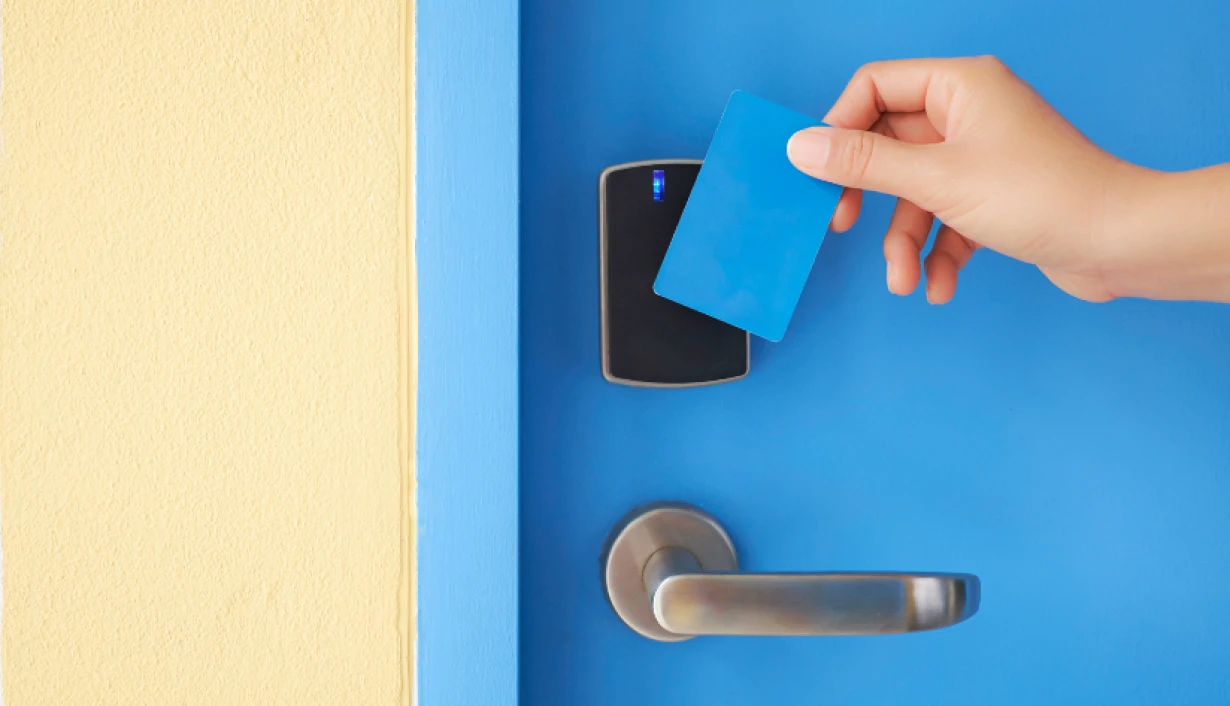
We can see that RFID technology is efficient in access control systems. When access cards are equipped with RFID tags, they can be quickly scanned by RFID readers. The access control system verifies the card’s credentials and permissions before granting entry to authorized users in buildings, schools, hospitals, and other facilities. Compared with traditional keys, RFID cards provide a more convenient access solution with features such as contactless identification and easier credential management. Security depends on the selected RFID technology and the overall access control system.
Inventory Management
By attaching RFID tags to products, shop associates can quickly and accurately scan these products using RFID readers, so shops can know in real-time how many of these products are in stock, whether they are out of stock, and replenish them promptly. According to the working principle, retailers can avoid stock-outs and backlogs. At the same time, with real-time tracking, sales associates can quickly tell customers where to find what they need.
Asset Tracking
Businesses can utilize RFID technology to manage and track assets by attaching RFID tags to items and using compatible readers and software systems to record identification data and movement events. RFID helps organizations improve asset visibility, support inventory workflows, and reduce the risk of misplaced or untracked assets.
Various industries currently employ RFID technology, including manufacturing, logistics and transport companies, retail, healthcare, education, and government organizations.
Supply Chain Management
RFID plays a vital role in supply chain management by enabling end-to-end tracking of products. From the manufacturing facility to the retail shop, RFID readers placed at key points in the supply chain can capture tagged product information and update inventory or shipment records. This visibility helps companies optimize supply chain processes, reduce costs, and improve operational efficiency.
General Retail
Retail environments use RFID technology to improve inventory accuracy, support loss prevention, and enhance customer experiences. When tagged products are stocked, sold, or checked, the RFID system can update inventory records more efficiently. RFID technology also enables the simultaneous reading of multiple items, helping streamline checkout and inventory processes.
Healthcare
Healthcare environments actively utilize RFID technology for tracking patients, medications, and equipment. The RFID tags attached to patients’ wristbands can help healthcare providers accurately identify patients and match them to their medical records, reducing errors and improving patient safety. RFID tags on medications and equipment can help healthcare providers track their inventory and ensure they have the necessary supplies when needed.
Smart Shelves
Some retailers are gradually adopting smart shelf technology, using RFID tags to monitor products on the shelves as well as to display product-related sales information. When tagged products enter or leave a smart shelf’s read zone, RFID readers can capture item information and software systems can update inventory records accordingly. This technology gives retailers real-time visibility of how much of each product is in stock, avoiding problems caused by under- or overstocking.
For customers, smart shelf technology means a more convenient shopping experience as they can find what they need more quickly and don’t have to wait in long checkout queues. With smart shelf technology, retailers are able to provide a more efficient service while saving themselves time and costs.
RFID technology now permeates every aspect of our lives and significantly impacts the way we interact with everyday objects. As RFID technology evolves, we can expect to see even greater convenience and efficiency provided by RFID technology.
FAQ:
1. What is RFID and its applications?
RFID is a technology that uses radio waves to identify and track objects, and applications include access control, inventory management, supply chain management, asset tracking, payment systems, passports and ID cards, animal tracking, library systems, healthcare, and manufacturing.
2. Where is RFID commonly used?
RFID is commonly used in access control systems, inventory management, payment systems, passports and IDs, animal tracking, library systems, healthcare, and manufacturing.
3. How is RFID used in everyday life?
RFID is used in everyday life for access control in buildings, tracking inventory in stores, making contactless payments, scanning passports and IDs at borders, tagging pets for identification, automating library checkouts, managing medical records, and tracking production in manufacturing.

RFID Card Low Frequency IC EM4450

Blank or customized printing RFID card with choice of dimensions available. EM4450 contains 1 kbits of EEPROM which can be configured by the user.