
In today’s fast-moving logistics and e-commerce environment, warehouse operations face constant pressure to deliver faster, more accurately, and at a lower cost. Traditional methods of scanning barcodes or relying on manual confirmation are no longer enough to meet these demands. This is where the wearable RFID reader steps in—a hands-free, high-performance tool that helps warehouse teams work smarter and more efficiently. As companies scale and consumer expectations rise, adopting wearable RFID solutions has become a key strategy for improving picking performance and reducing operational bottlenecks.
1. What Is a Wearable RFID Reader?
A wearable RFID reader is a compact, lightweight RFID scanner that workers can wear on their wrist, arm, hand, or clothing. It typically includes:
- UHF RFID Module: The core component responsible for transmitting radio waves and receiving data from passive RFID tags.
- Bluetooth Connectivity: Essential for real-time data synchronization, usually leveraging Bluetooth Low Energy (BLE) for fast, reliable, and power-efficient communication.
- Battery: Optimized for long shifts, often lasting 8 to 12 hours or more, with hot-swappable options to ensure continuous operation.
- Sensors and Feedback: Built-in vibration motors, LED indicators, and sometimes small displays provide immediate, non-visual feedback to the worker, confirming a successful pick or alerting them to an error.
Because the device stays attached to the worker, they can move freely without holding a traditional handheld scanner. Most wearable RFID readers connect to Android or iOS devices via Bluetooth and integrate directly with Warehouse Management Systems (WMS). This ensures that every scanned tag is instantly updated in real time.
2. Common Problems in Traditional Warehouse Picking
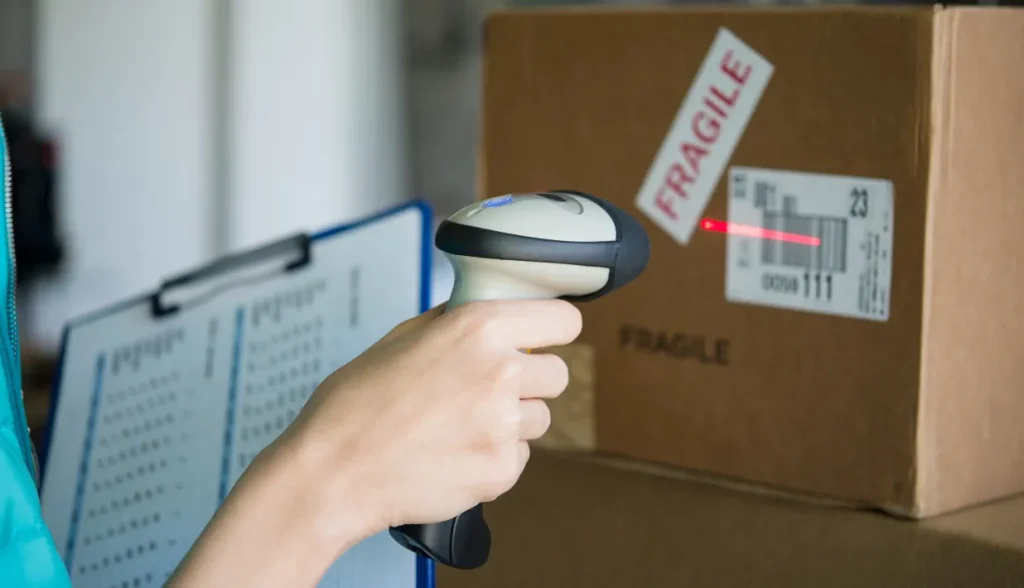
To fully appreciate the transformative impact of hands-free RFID technology, it is crucial to understand the inherent inefficiencies embedded in traditional warehouse picking processes:
- Slow Manual Barcode Scanning: Using handheld barcode scanners requires precise line-of-sight, one-at-a-time item scanning. This slows workers down significantly in high-volume environments.
- Higher Risk of Mis-picks: Manual verification means errors can occur, especially during peak seasons when speed increases. A single mis-pick can cause delays, customer dissatisfaction, and costly return processing.
These challenges illustrate why warehouses are increasingly shifting toward hands-free RFID solutions.
3. How Wearable RFID Readers Improve Picking Efficiency
The introduction of a wearable RFID reader fundamentally re-engineers the picking process, replacing friction and manual steps with seamless, automated data capture. This results in a multi-faceted improvement in overall warehouse efficiency.
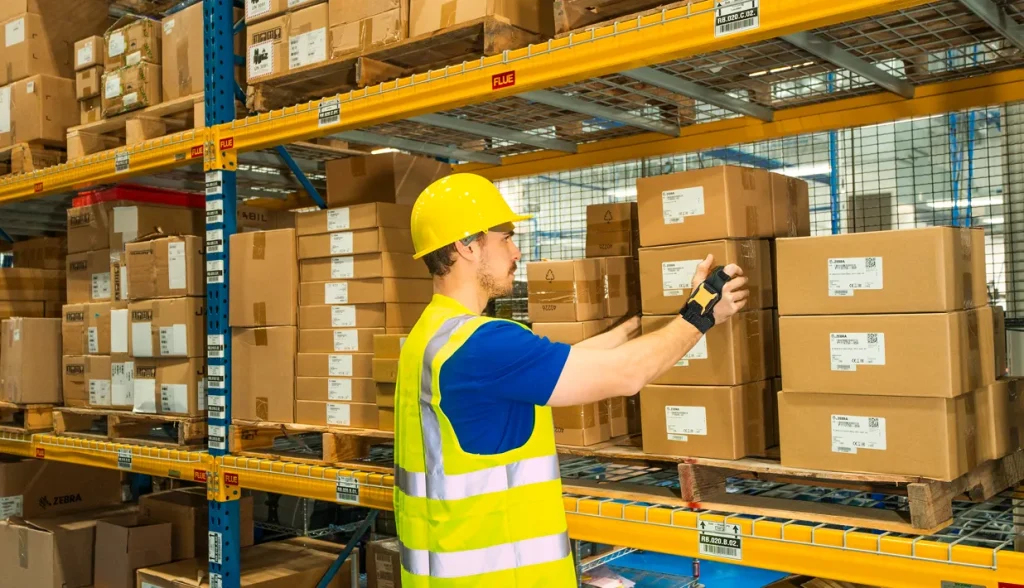
3.1 Hands-Free Operation
The most immediate and obvious benefit is the hands-free operation. By wearing the reader on the back of the hand or wrist, workers keep both hands completely free to handle products, operate forklifts, or push carts. This simple change eliminates the wasted time and motion associated with picking up and setting down a handheld scanner. The ergonomic benefit is substantial; it reduces the repetitive strain on the wrist and arm, leading to a more comfortable and sustainable work pace.
3.2 Faster Item Identification
The core technological advantage of RFID is its ability to enable faster item identification. Unlike barcodes, which must be scanned one at a time, UHF RFID allows for multi-tag reading. A worker can simply wave their hand over a bin or a batch of items, and the reader can scan hundreds of items per second. This capability is particularly powerful for batch or zone picking, where a worker is tasked with picking multiple items for multiple orders in a single pass. Instead of scanning 20 individual barcodes, the worker can confirm all 20 items are present and correct with a single, swift motion. This dramatically shortens the time spent on the data capture phase of the picking cycle.
3.3 Precise, Real-Time Item Verification
Accuracy is paramount, and the wearable RFID reader excels at precise, real-time item verification. As the reader captures the unique ID of an item, it instantly transmits this data via Bluetooth to the WMS application. The system immediately checks the item ID against the open order. If the correct item is picked, the worker receives instant positive feedback—a green LED flash or a gentle vibration. If the wrong item is picked, a different alert is triggered. This immediate feedback loop is critical because it catches mispicks at the point of error, preventing them from moving further down the fulfillment chain.
3.4 Increased Productivity and Flow
The cumulative effect of hands-free operation, faster identification, and real-time verification is a substantial increase in productivity and flow. Workers spend less time scanning and searching and more time moving product. The ability to instantly confirm a pick means faster task switching and a more continuous, uninterrupted flow of work. In large warehouses, this efficiency translates into better movement optimization, as workers can complete their assigned tasks more quickly and move on to the next location, maximizing the utilization of their time and the warehouse space.
4. Typical Use Cases of Wearable RFID Readers in Warehouses

Wearable RFID readers can be applied across multiple warehouse operations:
4.1 E-Commerce Order Picking
In the fast-paced world of e-commerce, speed and accuracy are non-negotiable. The wearable RFID reader is perfectly suited for this environment. As workers move through aisles, the hands-free nature allows them to handle multiple items simultaneously. RFID enables batch scanning, which is crucial for consolidating orders. Instead of searching for and scanning individual barcodes, the worker can verify they have picked the correct SKU instantly through the Bluetooth-linked application. This capability is invaluable during peak shopping seasons, such as Black Friday or Christmas, where the sheer volume of orders necessitates maximum efficiency to prevent backlogs and delays. The instant verification drastically reduces the risk of mispicks and safeguarding customer satisfaction.
4.2 Inventory Counting & Cycle Counts
Inventory management is often a labor-intensive and disruptive process. With traditional methods, workers must use handheld scanners, and often bend or climb to reach items for one-by-one scanning. The wearable RFID reader revolutionizes this. Workers can simply walk down aisles or past pallet racks while the reader continuously scans multiple RFID tags at once. Cycle counts that once took hours or even days can be completed in minutes, often without interrupting the normal flow of operations. This real-time, high-speed data capture provides continuous, accurate inventory updates, which is essential for preventing stockouts, avoiding overselling, and supporting complex omnichannel retail strategies where inventory visibility must be perfect across all channels.
4.3 Real-Time Item Tracking During Sorting
This reader is ideal for parcel hubs and sorting centers processing massive volumes. The system uses the continuous scan data to verify the item is being placed in the correct destination. To maintain the worker’s focus on the physical task, the reader provides immediate, non-visual feedback, such as a specific vibration pattern or an LED color change, ensuring items are sorted correctly without the worker needing to look away from the product to check a screen. This combination of hands-free operation and instant feedback ensures maximum sorting accuracy at maximum speed.
5. Key Features to Look for in a Wearable RFID Reader
If you are choosing a wearable RFID solution, consider the following:
- Strong UHF performance (long read range, high accuracy)
- Bluetooth 5.0 or better (stable connectivity)
- Long battery life (8–12 hours minimum)
- Lightweight ergonomic design (comfortable for long shifts)
- High durability / IP rating (dust & splash resistance)
- Compatibility with major mobile OS platforms
- Feedback indicators (LED, vibration, buzzer)
The best wearable readers combine performance, comfort, and seamless integration.
6. Conclusion
The wearable RFID reader is transforming warehouse picking by delivering hands-free operation, faster tag reading, real-time accuracy, and improved worker ergonomics. With rising customer expectations and labor challenges, businesses need tools that boost efficiency without adding complexity. Wearable RFID meets these needs perfectly. Ready to upgrade your warehouse efficiency? Contact us today to get your own wearable RFID reader and experience faster, more accurate picking from day one.
Recommended Product
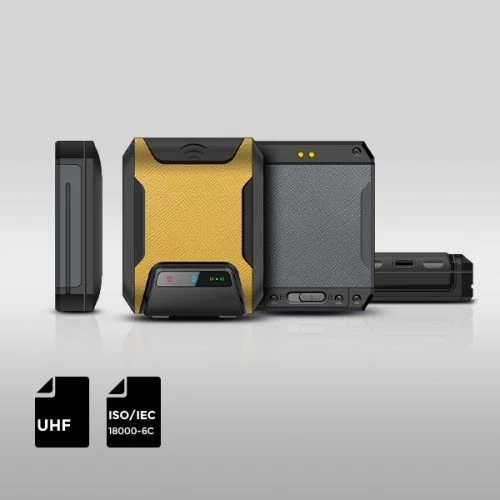
Wearable Bluetooth UHF RFID Reader AZ-MR20
With a built-in UHF module, the wearable Bluetooth UHF RFID reader possesses a powerful data collection and transmission function via a simple Bluetooth connection with Android/iOS devices. All these functions make it the most adaptable device in a wide spectrum of circumstances, such as logistics & express delivery, retail store management, warehouse management, power patrol inspection, asset management, e-commerce picking, ticket checking, etc., helping users free their hands and significantly improve work efficiency.