Radio Frequency Identification (RFID) technology has become a powerful tool across industries because of its capabilities like real-time tracking, data collection, and automation. RFID systems consist of tags, readers, and backend systems that communicate wirelessly, allowing for seamless monitoring and identification of objects, animals, and equipment. This technology has been widely used across various sectors in multiple industries, including agriculture.
As the global demand for food continues to rise and environmental challenges persist, technological advancements have become crucial for modern agriculture. Farmers are now turning to innovative technologies like RFID to boost efficiency, optimize resources, and ensure sustainable farming practices. Integrating RFID technology into agricultural operations aligns with the megatrend of precision agriculture, where data-driven insights allow for more accurate decision-making.
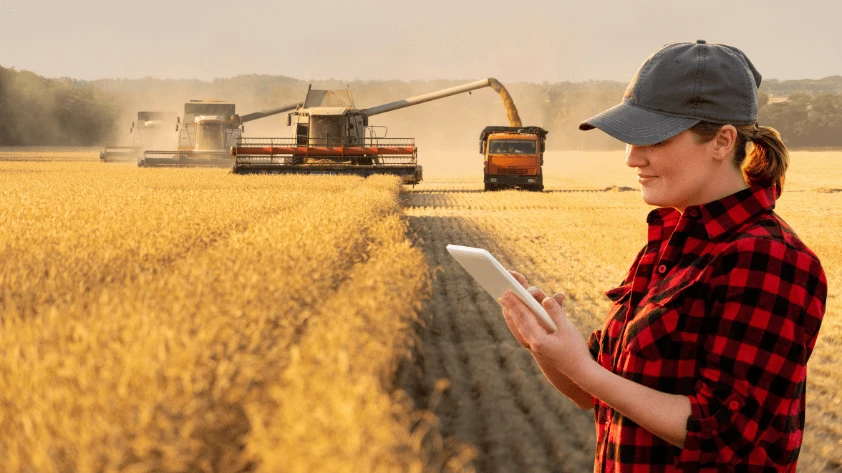
RFID is transforming farm management by automating tasks like livestock tracking, crop monitoring, equipment management, and supply chain transparency. This not only enhances operational efficiency but also helps reduce waste, improve animal welfare, and increase overall productivity. By providing real-time data and streamlining processes, RFID plays a vital role in modernizing agriculture, ensuring that farms of all sizes can operate more effectively in an increasingly competitive landscape.
What Is RFID Technology?
Definition of RFID
RFID is a wireless technology used to automatically identify and track objects, animals, or people through radio waves. It involves the use of RFID tags (to store data), RFID readers (to capture data from a distance), and backend systems (to process data). Unlike traditional barcodes, this system can track and manage assets in real-time without requiring line-of-sight scanning.
RFID is commonly used in applications such as inventory tracking and access control, and it is increasingly being utilized in agriculture to monitor livestock, crops, and farm equipment.
How RFID Works
The main components of an RFID system include tags, readers, antennas, and backend systems.
RFID tags: Small devices embedded with a microchip and antenna. They are attached to objects, animals, or equipment to store information.
RFID readers: Devices that transmit radio signals to communicate with RFID tags. They capture the data transmitted by the tags.
Antennas: Act as a link between RFID tags and readers by sending and receiving radio waves.
RFID backend systems: Backend systems that collects and processes the data sent by the reader, allowing for efficient management and decision-making.
Here’s how the process works
An RFID reader transmits a radio frequency signal through its antenna. When an RFID tag comes into range of the reader, it receives this signal and responds by transmitting its stored data. The reader captures this data and passes it to the system software for further analysis and use.
Different Types of RFID Tags
RFID tags come in various forms, suitable for different use cases depending on the application and environment. The main types of RFID tags include:
Passive RFID tags: These have no internal power source (battery) and derive energy from the RFID reader’s transmitted signal. They have a shorter read range (usually a few centimeters to a dozen meters) but are cost-effective and often used in applications like livestock tagging in agriculture.
Active RFID tags: These contain an internal battery that powers the tag and its transmissions, allowing for a longer read range (up to 100 meters or more). They are ideal for tracking large farm equipment and long-distance monitoring.
Semi-passive RFID tags: These also have an internal battery but only use it to power the tag circuitry, still relying on the reader’s signal to communicate. They fall between passive and active tags in terms of range and cost.

Passive RFID Tags of Different Frequencies
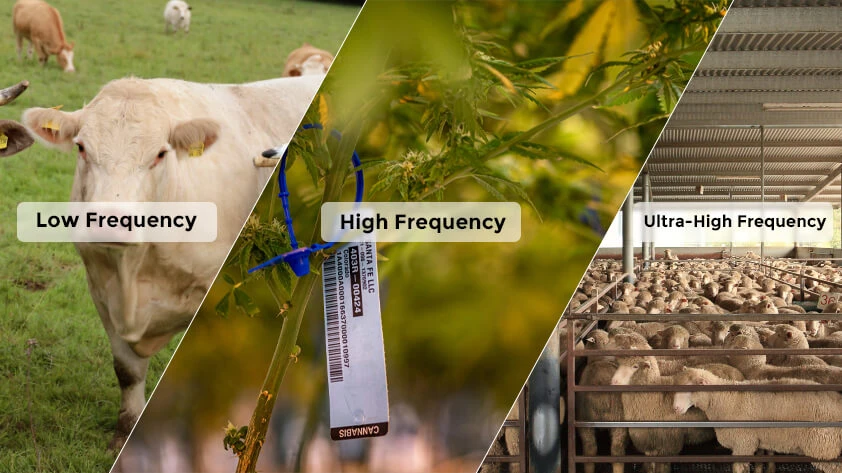
Depending on the operating frequency, passive RFID tags can also be divided into three types: low frequency, high frequency, and ultra-high frequency.
Low Frequency (LF) RFID Tags
Operating at 125 kHz to 134 kHz, these have a short reading distance (usually less than 10 cm) and strong penetration, making them suitable for environments that require close-range identification. They experience less interference from water and metal, making them ideal for complex agricultural scenarios.
Applications in Agriculture
Livestock management: LF RFID tags are often embedded in animal ear tags for livestock identification and tracking. Due to their strong penetration, LF tags can easily read tag data even when covered by animal skin, making them suitable for close-range reading and commonly used for tracking and health monitoring of livestock like cattle and sheep.
Feed management: Using LF tags to mark feed bags or troughs helps farm managers track and manage feed distribution, ensuring correct rationing.
High-Frequency (HF) RFID Tags
Operating at 13.56 MHz, these have a read distance of a few centimeters to 1 meter and fast data transmission. Although HF tags are sensitive to interference from water and metal, they are widely used in agricultural applications that require medium-range data reading.
Applications in Agriculture
Greenhouse crop management: HF tags are often used in smart greenhouses or vertical farms to help farmers monitor plant growth. Tags can store information such as plant species, planting dates, fertilization, and irrigation data, enabling managers to easily access detailed crop information.
Agricultural product tracking: HF tags can be used to label agricultural products, ensuring transparency in the supply chain from field to market, and helping to enhance food safety and quality control.
Ultra-High Frequency (UHF) RFID Tags
Operating at 860 MHz to 960 MHz, these have a long read distance, usually up to a dozen meters or more, and support batch reading and high-speed data transmission.
Applications in Agriculture
Large-scale livestock and equipment tracking: UHF tags are often used in large-scale livestock tracking systems on ranches. Farms can install fixed RFID readers to automatically record information when livestock enter or leave specific areas (such as milking stations and feeding areas). Additionally, you can install UHF tags on large agricultural equipment like tractors and machinery for long-distance tracking and anti-theft functions.
Agricultural product supply chain management: UHF tags track agricultural products from farms to supermarkets, monitoring the transportation path, storage environment, and sales circulation through long-distance data reading. They can also read multiple item tags during bulk transportation, greatly improving efficiency.
Granary and Storage Management: UHF RFID tags help identify grain lots, bags, pallets, and storage containers, enabling faster inventory checks and more accurate stock movement records. When integrated with temperature and humidity sensors, RFID-based systems can also support monitoring of grain storage conditions. By linking grain identification with inventory and environmental data, these systems help storage operators track stock, assess storage conditions, and identify potential risks to grain quality.
Common RFID Tag Types in Agriculture
Livestock ear tags: Typically LF passive RFID tags embedded in the ear tags of cattle, sheep, and other livestock. Used to track animal movement, health data, and reproduction records to improve herd management efficiency.
Livestock ingestion RFID tags: Tags that are swallowed by livestock and remain in the animal’s stomach. These tags ensure permanent identification for internal livestock tracking, especially on dairy farms.
Grain and crop RFID tags: Passive UHF identification tags can link silos or packages to inventory and distribution records.
RFID integrated sensors: Special RFID tags with integrated sensors that monitor environmental conditions like soil moisture, temperature, and humidity. They help farmers make data-driven decisions for crop management and resource optimization.
Key Applications of RFID in Agriculture
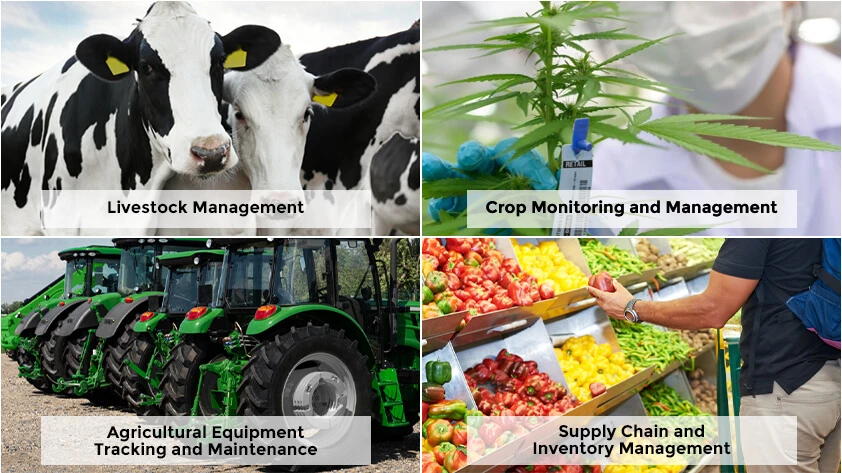
Livestock Management
RFID technology is widely used in livestock management to track various types of animals, including cattle, sheep, and pigs. By attaching RFID tags to each animal, farmers can easily monitor their activities and identify individuals within the herd. This tracking capability allows for effective monitoring of the animals’ health, reproduction, feeding schedules, and locations. The data collected through the RFID system helps farmers make informed decisions about breeding and feeding practices, thereby increasing productivity. Additionally, RFID aids in disease control and biosecurity, enabling the rapid identification and isolation of sick animals, which reduces the spread of disease within the herd.
Crop Monitoring and Management
In precision agriculture, RFID technology plays a key role in tracking crop growth and yield. Farmers can attach RFID tags to crops or use integrated RFID sensors in the soil to monitor environmental conditions like soil moisture and temperature. This real-time data helps farmers make timely decisions regarding irrigation and nutrient management. By applying RFID technology to irrigation systems, farmers can optimize water resource usage and minimize waste, achieving more sustainable agricultural practices. Furthermore, continuous monitoring of crop conditions supports better yield forecasting and crop management strategies.
Agricultural Equipment Tracking and Maintenance
RFID tags can be attached to various agricultural equipment to monitor their usage, locations, and maintenance schedules. This tracking capability helps farmers accurately record equipment utilization and ensure efficient use of machinery. By knowing the location of the equipment, farmers can prevent theft and unauthorized use. Additionally, RFID systems can send reminders for maintenance schedules, reducing downtime and improving operational efficiency. This proactive approach to maintenance can extend the lifespan of equipment and lower repair costs.
Supply Chain and Inventory Management
RFID technology significantly enhances supply chain and inventory management in agriculture. By tracking products from farm to market, farmers can ensure better traceability, enabling them to quickly respond to any issues that may arise. This traceability is crucial in reducing food waste, as it improves inventory control and monitors the freshness of products. Moreover, the integration of RFID with blockchain technology provides transparency in the food supply chain, allowing all stakeholders to access real-time data about the flow and status of products. This transparency enhances food safety and helps build consumer trust in agricultural products.
Benefits of RFID in Agriculture
Improve Efficiency
RFID technology can automate identification and data collection, reducing manual data entry and helping minimize human errors. For example, farmers can scan RFID tags attached to livestock, crop containers, or agricultural equipment to retrieve associated records and update inventory or movement data. When integrated with farm management software, RFID systems can help keep operational records up to date and improve the efficiency of routine farm activities.
Improve Livestock and Crop Health
RFID helps farmers associate livestock and crop records with the correct animal, batch, or growing area, supporting more organized health and production management. For livestock, RFID identification can link individual animals to health records, vaccination history, and veterinary observations. Monitoring physiological parameters, such as body temperature and heart rate, requires suitable sensors and a compatible monitoring system. In crop management, RFID can identify crop batches, containers, or monitoring locations, while soil moisture, temperature, and nutrient measurements rely on appropriate sensing equipment. Combining identification data with health and environmental records helps farmers assess conditions and make more informed management decisions.
Resource Optimization
RFID supports agricultural resource management by tracking feed, fertilizer, equipment, and other supplies throughout storage, distribution, and use. For example, RFID identification can help record feed inventory and distribution across livestock facilities, making stock levels and usage records easier to manage. In crop production, irrigation decisions can be informed by soil moisture data collected through suitable sensors, while RFID can help associate that data with the relevant field, crop batch, or equipment record. These applications help farmers improve resource visibility, reduce avoidable waste, and support more efficient farm operations.
Enhanced Traceability and Food Safety
RFID can support agricultural traceability by identifying products, batches, containers, and shipments and linking them to records from production through storage and distribution. These records can help farmers and supply chain operators trace product movements, locate affected batches, and investigate potential food safety issues. When integrated with traceability software and relevant operational records, RFID systems can also support documentation and reporting for compliance processes. The completeness and accuracy of traceability depend on how consistently data is recorded and linked across the supply chain.
Cost Savings
RFID can help reduce labor requirements for repetitive identification, inventory checks, and recordkeeping. For example, scanning tagged livestock, agricultural supplies, or equipment can make routine counts and movement recording more efficient than fully manual processes. RFID-based asset tracking can also improve visibility into equipment location and usage, helping farms investigate missing items and manage assets more effectively. Actual cost savings depend on the scale of deployment, tag and reader costs, system integration, and changes to existing workflows.

Challenges and Limitations of RFID in Agriculture
Implementation Costs
For small farms, the initial investment in an RFID system can be quite high. This includes the costs associated with purchasing and installing RFID tags, readers, software systems, and related infrastructure. While RFID can provide long-term cost savings and efficiency improvements, the steep initial investment may be unaffordable for small farmers, limiting the technology’s popularity and application.
Environmental Factors
Weather conditions can affect the performance of RFID systems. For instance, rain, humidity, and extreme temperatures may interfere with the transmission of RFID signals. Additionally, in certain specific environments, such as those with a lot of metal or liquid, the reading distance and accuracy of RFID may also be compromised. Therefore, farmers need to select the appropriate type of RFID tags based on environmental conditions to ensure the system’s effectiveness.
Data Management
RFID systems can generate a large amount of data that needs to be managed and analyzed effectively. Farmers must have the necessary data processing capabilities and tools to extract valuable information from this data. Managing and analyzing data requires not only expertise but also appropriate software support, which may pose a challenge for some small farms. Furthermore, issues related to data security and privacy need to be taken seriously to ensure that sensitive information does not get leaked.
Farmer Adoption
Farmers may be resistant to adopting RFID technology due to a lack of technical knowledge. Some farmers have limited understanding and application of new technologies, which may lead to a lack of awareness regarding the potential benefits of RFID systems. Additionally, the absence of training and education may prevent farmers from fully utilizing RFID systems. Therefore, the promotion of RFID technology needs to be accompanied by technical training and support for farmers.

Future Trends and Innovations in RFID for Agriculture
Integration with the Internet of Things (IoT), Drones, and Artificial Intelligence (AI)
As IoT technology rapidly develops, farmers will increasingly integrate RFID with IoT devices to create smarter agricultural management systems. They can use RFID tags alongside sensors and drones for real-time data collection and monitoring. Drones can fly over farmland, collecting data such as crop health and soil moisture, and transmit this information to farmers through the RFID system for comprehensive agricultural monitoring. Simultaneously, the application of artificial intelligence can analyze this data, providing farmers with more accurate decision support.
Advances in RFID in Automated Feeding and Irrigation Systems
Advancements in RFID technology will promote further development in agricultural automation. For example, by reading the RFID tags of livestock, automated feeding systems can accurately control the feed delivered, ensuring each animal receives the right amount of nutrition. In irrigation systems, RFID tags combined with sensors automatically adjust water levels and irrigation timing to meet the needs of different crops, improving water resource efficiency.
Application of Predictive Analytics in Livestock and Crop Health Management
By leveraging the vast amount of data collected by RFID, combined with predictive analytics technology, farmers are better equipped to manage the health of livestock and crops. By analyzing historical data, farmers can identify potential health issues and forecast future growth trends. This predictive capability enables farmers to take more proactive management measures, improving production efficiency and reducing losses. For instance, predictive analytics can help farmers implement preventive measures before pests and diseases emerge, ensuring the healthy growth of crops.

Case Studies of RFID Use in Agriculture
RFID Application in Large-Scale Livestock Farms
In large-scale livestock farms, RFID technology can support animal tracking and health management by linking identification data with activity and behavioral records. For example, RFID readers installed at feeding areas, drinking stations, or other monitored locations can record when individual cattle visit these areas and how frequently they return. By analyzing changes in these patterns over time, farm managers can identify potential deviations from normal behavior that may indicate health issues. When combined with veterinary observations and other relevant data, these insights can support earlier investigation and more informed livestock management decisions, while reducing the need for manual observation.
RFID Precision Agriculture in Vineyards or Grain Farms
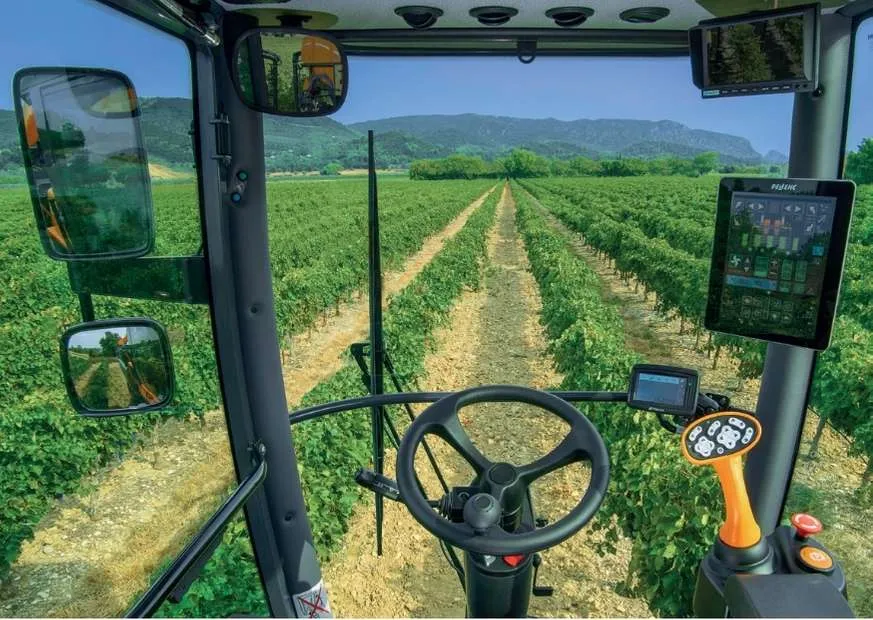
In vineyards and grain farms, RFID technology is utilized to achieve precision agriculture. Taking vineyards as an example, farmers can install RFID tags on each grape vine and connect them to soil moisture sensors. By monitoring soil and climate conditions in real-time, farmers can accurately adjust irrigation and fertilization plans to optimize grape growing conditions and increase yields. Additionally, in grain farms, RFID tags are used to track the growth stages and yields of crops. By analyzing this data, farmers can develop scientific agricultural management strategies to maximize resource utilization and improve crop quality.
RFID Supply Chain Transparency in Organic Agriculture
In organic agriculture, RFID technology is employed to ensure transparency in the supply chain. Some organic farms achieve full tracking from production to consumption by attaching RFID tags to each batch of products. These tags record key data during the planting, picking, and transportation of each product, allowing consumers to view the source and quality information of the product in real-time. In this way, farms not only enhance the traceability of products but also build consumer trust in organic products. The RFID system can help organize traceability records for audits and incident response.

How to Implement RFID on Your Farm
1. Evaluate Whether RFID is Right for Your Farm
Before deciding to implement RFID technology, you need to conduct a comprehensive assessment of your farm to ensure the suitability of the technology. Here are some specific steps:
Farm Size and Type
Small farms may face high initial investment issues, so you need to analyze whether RFID can bring significant efficiency improvements and cost savings. For medium-sized and large farms, the benefits of RFID are generally more pronounced, especially in livestock management and crop monitoring.
Consider the impact of farm type (such as orchard, grain farm, or livestock farm) on RFID application. For example, livestock farming requires real-time monitoring of animal health, while crop management focuses more on growing conditions and irrigation needs.
Existing Technical Infrastructure
Evaluate existing management systems and equipment, such as whether there is existing data management software, and whether there is sufficient network coverage and power support. RFID technology typically requires a good wireless network environment to ensure smooth data transmission. If the current technical infrastructure is not adequate, it may need to be upgraded or adjusted to support the new RFID system.
Specific Needs
Determine the specific needs of the farm in terms of management, tracking, monitoring, etc. For example, do you need to track the feeding and breeding cycles of livestock, or do you need to monitor the growth status and environmental conditions of crops? This will help clarify the specific application scenarios for RFID.
2. Choose the Right RFID System
To choose the right RFID system for different agricultural purposes, you need to consider the following factors:
Tag Type
Select the appropriate RFID tag. For instance, low-frequency (LF) tags are suitable for livestock management because they can effectively penetrate water and flesh; while high-frequency (HF) and ultra-high-frequency (UHF) tags are more suited for inventory management and crop monitoring due to their longer reading range and higher reading speed. Additionally, consider the durability and waterproofing of the tag to ensure it can function properly in various agricultural environments.
Reader Selection
Choose a suitable reader based on the type of RFID tag and the environment in which it will be used. For large areas of farmland, opt for a UHF reader with long-range reading capabilities to capture tag signals over a larger area. Additionally, ensure that the reader is durable enough to withstand dust, moisture, and shocks that may be encountered in agricultural settings.
Software System
Look for management software that can work seamlessly with RFID hardware. The software should support data collection, real-time monitoring, analysis, and report generation, and integrate smoothly with existing management systems, such as farm management software. Furthermore, it is essential to ensure that the software has a user-friendly interface that is easy for farmers to operate and understand.
3. Cost and Return on Investment (ROI) Considerations
When implementing RFID technology, a detailed analysis of the associated costs and return on investment is necessary:
Initial Investment
Calculate the total cost of hardware, including RFID tags, readers, installation, and software. Create a reasonable budget based on the size and needs of the farm. Also, consider possible additional expenses, such as technical support and maintenance costs.
Operational Costs
Assess the ongoing costs of maintaining the RFID system after implementation, including software updates, equipment maintenance, and data storage. Additionally, calculate the time and resources required to train employees, which should also be included in the overall cost assessment.
Expected Benefits
Evaluate the benefits of implementing RFID, such as improved efficiency, reduced labor costs, decreased resource waste, and enhanced product quality. This analysis can be conducted through simulations or pilot projects to collect preliminary data. It is also necessary to calculate the return on investment (ROI) by comparing productivity and costs before and after implementation. Consider long-term benefits, such as increased yields and reduced disease incidence.
4. Practical Tips for Successful RFID Implementation
Conduct a Pilot Project
Before full implementation, select a small area for pilot testing to evaluate the effectiveness and applicability of the RFID system in the actual environment. This helps identify potential problems and make necessary adjustments. Collect data and feedback from the pilot project to help make more comprehensive decisions.
Training and Education
Provide adequate training for employees to ensure that they understand the working principles and application value of RFID technology and are proficient in using the system and equipment. Regularly organize training updates to keep employees informed of the latest technology trends and system optimizations, improving their operational capabilities.
Continuous Monitoring and Optimization
After implementation, regularly monitor the operation of the RFID system, collect user feedback, evaluate the system’s performance, and make necessary adjustments and optimizations. You can also set up a dedicated team responsible for data analysis and system maintenance to ensure that the system always operates at its best.
Work with Technology Providers
Establish a partnership with a professional RFID technology provider to obtain technical support and services, ensuring smooth implementation and addressing possible issues. Technology providers can offer the latest industry trends and solutions to help farms better cope with future challenges.

Conclusion
Currently, RFID technology is profoundly transforming the way agriculture is managed. By enhancing the automation and real-time nature of data collection, it helps farmers more effectively track livestock, monitor crop health, manage equipment, and optimize supply chains.
In the future, RFID will enhance the accuracy and efficiency of farm management by integrating with big data, cloud computing, and advanced analytical tools. At the same time, as consumers place greater emphasis on food safety and traceability, RFID technology will help enhance the transparency and trustworthiness of the agricultural supply chain. Driven by sustainable agricultural practices, RFID will not only optimize resource use but also provide strong support for achieving environmental protection goals.

FAQs
1. What are the main applications of RFID technology in agriculture?
RFID technology has multiple applications in agriculture, including livestock management (such as tracking health and reproduction), crop monitoring (real-time tracking of growth status and environmental conditions), equipment tracking and maintenance (monitoring the use of agricultural machinery), and supply chain management (tracking the entire process of products from farm to market).
2. What is the initial investment cost of an RFID system?
The initial investment cost of an RFID system varies depending on the size of the farm, the type of RFID tags and readers required, the software system, and the infrastructure. Small farms may face higher relative costs, but in the long run, RFID can achieve a return on investment through improved efficiency and reduced labor costs. Farmers should conduct a comprehensive cost-benefit analysis before implementation.
3. Is RFID technology suitable for all types of farms?
Although RFID technology has broad applicability, its suitability depends on the type, size, and specific needs of the farm. Large livestock farms and grain farms are generally more likely to benefit from RFID technology, while small farms may need to evaluate their return on investment. Farmers should evaluate their own situation to decide whether to adopt RFID technology.
4. How to choose the right RFID tags and readers?
When choosing the right RFID tags and readers, farmers need to consider several factors, including the type of tag (such as low frequency, high frequency, or ultra-high frequency), durability (such as waterproof, wear-resistant), and reading distance and speed. The choice of tags should match the application scenario. For example, livestock management may require low-frequency tags, while crop monitoring may be more suitable for ultra-high frequency tags. Readers should also be selected based on the layout of the farm and the use environment.
5. What challenges should be noted when implementing an RFID system?
When implementing an RFID system, farmers may face a variety of challenges, including high initial investment, the impact of environmental factors on RFID performance (such as humidity, temperature), the complexity of data management, and farmers’ technical acceptance. To overcome these challenges, farmers should conduct sufficient preliminary assessments, select appropriate technology partners, and provide employee training to ensure the successful implementation and continuous optimization of the system.