
Today, student ID cards are used for much more than identification, campus access, library services, and school meal programs. With RFID technology, a single card can also support safer school transportation by recording when students board and exit the bus, helping drivers verify riders, assisting dispatchers, and keeping families informed.
Fairfax County Public Schools (FCPS) provides a useful example of this development. Beginning in the 2026–27 school year, students who ride FCPS school buses began using new ID cards to tap on and off the bus. The system connects the cards with upgraded driver tablets and a family-facing mobile app to improve student safety, transportation communication, and operational efficiency.
This article explains how RFID student ID cards support school bus safety, what information a school bus RFID system can record, and what school districts should consider before implementing a student check-in system.
What Is an RFID Student ID Card?
An RFID student ID card is a school identification card embedded with a small RFID chip. The chip stores or transmits a unique identification number that allows the card to communicate wirelessly with an RFID reader.
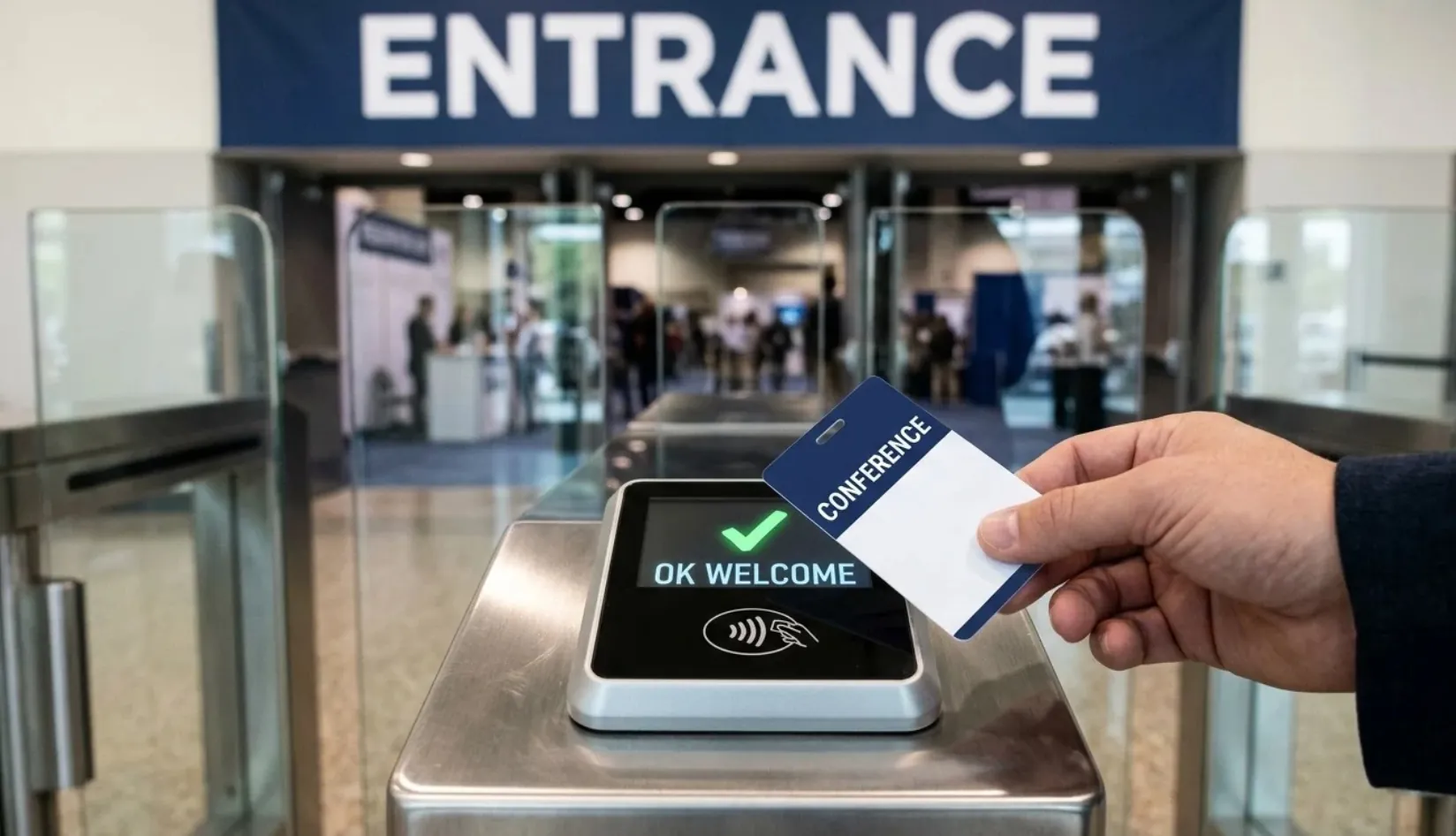
When a student brings the card close to a reader, the system recognizes the card without requiring physical contact, a barcode scan, or manual data entry. The unique card ID can then be matched with the student’s secure record in the school’s transportation or management system.
The card itself does not need to contain detailed personal information. In a well-designed system, it carries only a unique credential, while the student’s related information is securely managed in the school’s backend platform.
In this way, an RFID student ID card serves as both a physical school credential and a digital tool for improving student transportation safety.

How RFID Student ID Cards Work for School Bus Check-In and Check-Out
An RFID school bus system normally includes four main components: an RFID-enabled student ID card, a reader installed near the bus entrance, software that matches the card to a student record, and a mobile or web-based system used by drivers and transportation staff.
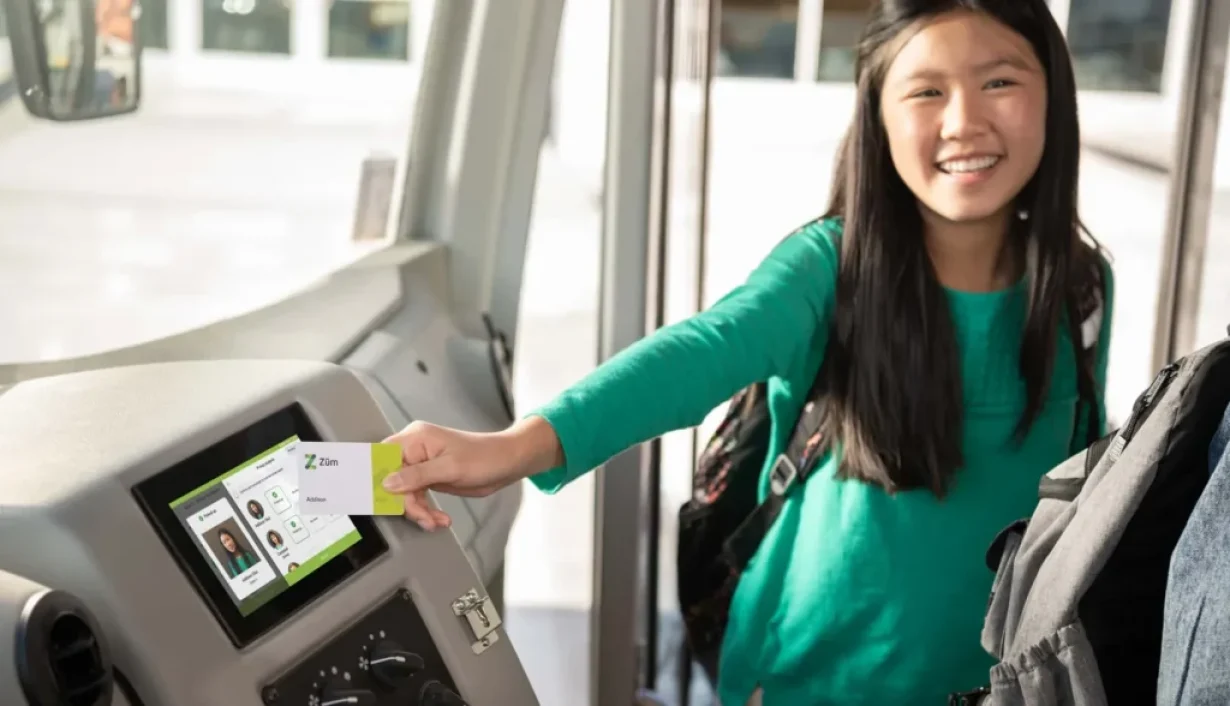
When a student boards the bus, the card is tapped or brought close to the reader. The system recognizes the card’s unique credential and records a boarding event. When the student leaves the bus, the student taps again, creating an exit event.
A typical workflow may look like this:
1.The school assigns a unique card credential to a student record.
2.The transportation platform connects the student with a route, bus, and approved stop.
3.The student taps the card when boarding.
4.The reader sends the event to the onboard tablet or transportation platform.
5.The system records the time, bus, and location associated with the event.
6.The student taps again when exiting.
7.Authorized staff and families receive information through approved dashboards or notifications.
Some systems use passive RFID cards, which do not require a battery. The card responds when it enters the reader’s field. This can make the card lightweight, affordable, and suitable for daily use by K–12 students. Industry systems such as Zonar’s Z Pass combine passive RFID cards with onboard readers, online reporting, and historical ridership data.
RFID is not the only identification technology available. Barcodes and QR codes can be inexpensive and easy to print, but they generally require a camera or scanner to see the code directly. NFC can support short-range contactless interactions, while biometric systems use fingerprints, facial features, or other physical characteristics. For many school bus applications, RFID offers a practical balance of quick scanning, low user effort, card durability, and compatibility with automated workflows.
What Information Can School Bus RFID Systems Record?
The exact data depends on the school’s software configuration and privacy policy. In general, a student bus tracking system may record:
•The student’s unique card or credential ID
•The date and time of a boarding event
•The date and time of an exit event
•The bus or vehicle associated with the scan
•The route and assigned stop
•Whether the event was a boarding, exit, or manual correction
•The driver or transportation staff member who managed the event
This information can help transportation departments answer practical questions quickly. Which students are currently assigned to a bus? Did a student board the expected vehicle? At which stop did a student exit? Which routes are consistently underused? How many riders are using a particular bus each day?
A well-designed system should separate the card’s technical credential from unnecessary personal information stored on the card itself. The card does not need to contain a complete student profile. Instead, the card can carry or present a unique identifier while the protected backend system manages the related student record.
That distinction is important for privacy and security. The card should identify an authorized record without exposing more personal data than the transportation workflow requires.
How Student ID Cards Connect with Bus Tablets and Parent Apps
An RFID student ID card is most useful when it works as part of a larger system. The card reader captures the event, but the bus tablet and transportation platform provide the operational context.
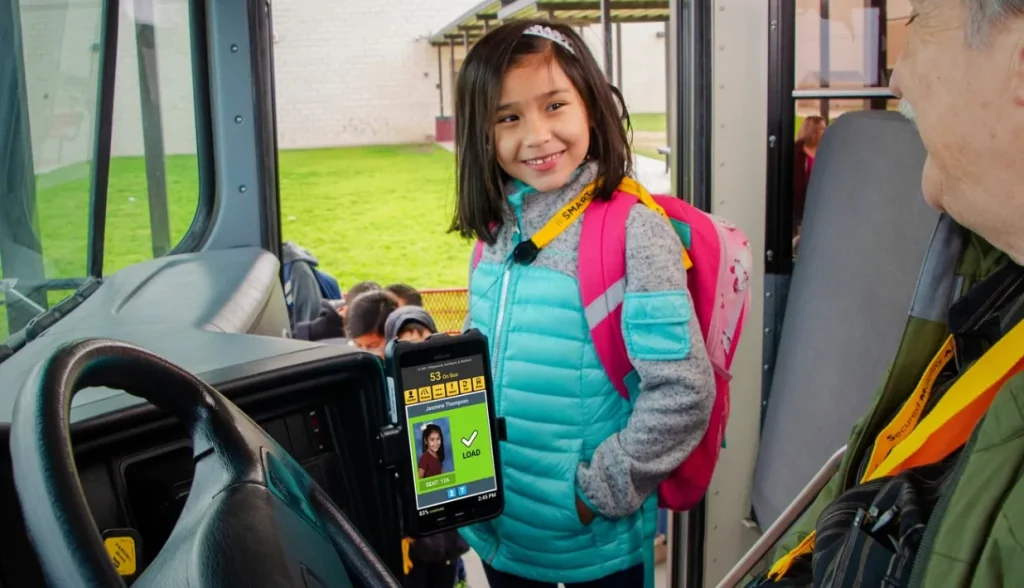
For the driver, the tablet may show the assigned route, expected stops, and a current rider list. A scan can help the driver confirm whether a student is boarding the correct bus. If the system detects an unexpected rider or route mismatch, the driver or transportation staff may be able to resolve the issue before the bus departs.
For the transportation department, the system can provide near-real-time visibility into ridership. Dispatchers may see which students are on a vehicle and respond more efficiently when a route is delayed, a bus changes direction, or an emergency occurs.
For parents and guardians, a connected app can provide notifications about bus location and student boarding or exit events. FCPS states that its new transportation app is designed to provide families with real-time bus location information as well as information about when a child boards or exits the school bus.
FCPS transportation information
The value comes from integration. A card that only identifies a student at the bus door is useful. A card connected to transportation software, route data, driver tools, and carefully designed family notifications can support a much more complete student check-in system.
Does RFID Bus Tracking Track Students or School Buses?
This is one of the most important questions schools should answer clearly for families.
An RFID student ID card system usually records a student’s interaction with a school bus at a specific time and place. It does not automatically mean that the student is continuously tracked after leaving the bus. FCPS explicitly explains that its system tracks the location of the school bus the student tapped onto, not the student’s personal location, and that the ID card itself is not continuously tracked.
Schools should explain this difference in plain language. Their privacy notice should describe what is collected, who can view it, how long it is retained, and when it may be shared. The system should also use role-based access so that drivers, dispatchers, administrators, and families see only the information needed for their responsibilities.
Student transportation data should be treated as sensitive school information. A practical privacy approach includes collecting only necessary data, protecting the student-to-card mapping, limiting retention, securing mobile connections, and documenting procedures for data requests, corrections, and security incidents.

What Schools Need to Consider When Implementing RFID Student ID Cards
A successful deployment involves more than ordering cards and readers. School districts should evaluate the full operating environment before selecting a supplier or system integrator.
First, define the purpose. Is the card intended only for bus ridership, or will the district later use it for meals, access control, library services, or field trips? A broader plan can reduce duplicate credentials, but it also requires stronger integration and data governance.
Second, test card and reader compatibility. Schools should confirm the RFID frequency, credential format, read distance, reader placement, software interface, and compatibility with existing student information and transportation systems.
Third, plan for real-world student behavior. Cards will be lost, bent, scratched, washed, or left in backpacks. Districts should test card durability, replacement rates, student communication, and reader performance in actual boarding conditions.
Fourth, prepare drivers and families. Drivers need simple instructions for normal scans, failed scans, wrong-bus alerts, and manual check-in. Families need clear information about card use, privacy, replacements, and what to do when a card is unavailable.
Finally, build privacy and security into the design from the beginning. Use a unique credential instead of unnecessary personal information on the card. Protect the backend database, limit access, establish retention rules, and provide an accessible fallback process.
For school districts planning a new program, the best starting point is a clear use case, compatible RFID technology, strong data protection, reliable replacement procedures, and a phased pilot. RFIDcard.com can help schools and transportation providers explore durable RFID student ID cards designed for integrated identification and access workflows.
Conclusion: The Student ID Card Is Becoming a Transportation Tool
School bus safety depends on knowing which students are on each bus, where they board, and where they exit. Traditional paper lists and manual headcounts can make this information difficult to manage, especially when routes change or buses become crowded.
For students, RFID cards can help reduce the risk of boarding the wrong bus or getting off at the wrong stop. They can also support faster assistance during transportation emergencies. For schools and transportation departments, RFID student ID cards provide more accurate ridership records, improve route visibility, reduce manual work for drivers, and make it easier to keep families informed.
For school districts planning a new program, the best starting point is a clear use case, compatible RFID technology, strong data protection, reliable replacement procedures, and a phased pilot. RFIDcard.com provides durable, customizable RFID student ID cards for schools and transportation providers seeking safer, more efficient, and better-connected student transportation systems. Contact RFIDcard.com to explore the right card solution for your school bus RFID system.
Frequently Asked Questions
Can one RFID student ID card be used for both school buses and campus access?
Yes, it may be possible when the card technology, reader infrastructure, credential format, and software platforms are compatible. Schools should confirm system requirements before assuming that one card will work across transportation, access control, cafeteria, and library applications.
Do RFID student ID cards need batteries?
Many school ID cards use passive RFID technology and do not require an internal battery. The card receives energy from the reader during a scan. The exact operating range and performance depend on the card, reader, installation, and surrounding environment.
Can an RFID system work when a school bus temporarily loses internet connectivity?
Some transportation platforms can store scan events locally and transmit them when connectivity is restored, but this is a system-specific feature. Districts should ask suppliers how offline events are timestamped, protected, reconciled, and displayed after synchronization.
What should be printed on the front of a student ID card?
The visible design should contain only information needed for practical identification and school policy. Many schools use the student’s name, photo, school, grade, or a school-issued identifier. Sensitive personal information should not be printed unnecessarily.
How long should student bus scan records be retained?
There is no universal retention period for every district. The school should establish a documented policy based on operational needs, applicable education-record and student-privacy requirements, incident response, and local rules. Data should not be kept indefinitely simply because storage is inexpensive.
Recommended Products

RFID Card CR80 MIFARE® DESFire® EV2 2K

The MIFARE® DESFire® EV2 2K RFID card is a secure, high-capacity contactless smart card ideal for various applications like access control, transportation, and payment systems. It features 2KB of integrated memory, advanced encryption standards for security, and is compatible with existing MIFARE® systems. The EV2 version enhances data protection and transaction speed, making it a reliable and efficient choice for modern RFID solutions.