In today’s rapidly evolving educational landscape, student ID cards have become a crucial tool for campus security, access control, and attendance tracking. Traditionally, these cards served as a simple form of identification. However, with the growing demand for more secure and efficient campus operations, schools must consider upgrading their ID card systems.
Traditional card technologies such as magnetic stripe and barcode cards, while still in use, are quickly becoming outdated due to their limitations in security and efficiency. This is where RFID (Radio Frequency Identification) technology steps in, offering a more secure, faster, and smarter solution. In this article, we’ll explore the technical aspects of RFID compared to traditional student ID cards, focusing on their security features, efficiency, and the impact of each technology on student life on campus.
1. Traditional Student ID Cards: Types & Limitations
Traditional student ID cards have been utilized for decades, primarily for identification on campuses. However, as technology has advanced, these cards are starting to reveal significant limitations. Let’s take a closer look at the two most common types of traditional student ID cards and the issues they present.
Magnetic Stripe ID Cards
How It Works
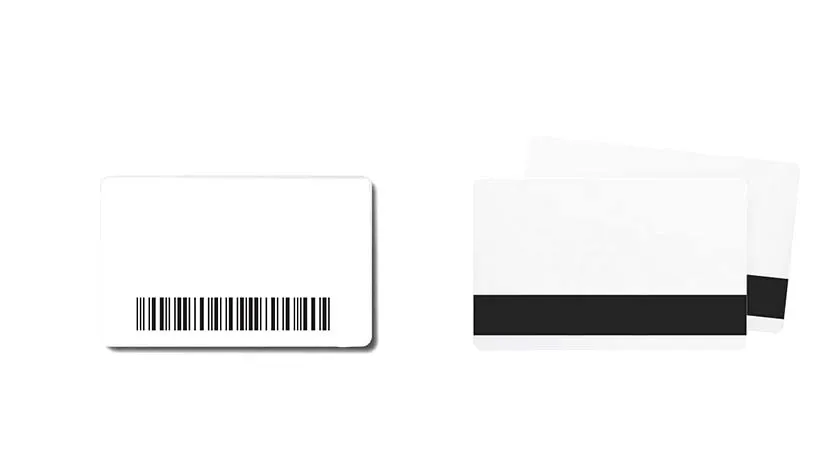
Magnetic stripe cards store data on a magnetic strip embedded on the back of the card. This data is read by a card reader when the card is swiped across a magnetic head. These cards have been widely used for many years in various applications such as identification and access control.
Security Issues
Magnetic stripe cards are prone to significant security risks. The data stored on the magnetic strip is not encrypted, making it relatively easy for unauthorized users to copy and clone the card. With the right equipment, anyone can read and replicate this data, posing a considerable security threat, especially when the cards are used for access control or financial transactions.
Efficiency Issues
Efficiency is another major concern with magnetic stripe cards. The magnetic strip can be easily worn out over time, leading to data corruption or total card failure. Consequently, the cards may need frequent replacements, creating a financial burden for schools and inconvenience for students. Furthermore, the process of swiping requires physical contact with the reader, which can create bottlenecks during peak periods, such as class changes or lunch breaks.
Ideal Use Cases
Magnetic stripe cards are typically found in schools with lower budgets or those implementing basic access control systems.
Barcode ID Cards
How It Works
Barcode cards feature printed barcodes on their surface, which are scanned by optical readers. These readers decode the series of bars to access corresponding data in a linked database. While this system is inexpensive and user-friendly, it presents its own challenges.
Security Issues
Similar to magnetic stripe cards, barcode cards have their own security vulnerabilities. Barcodes are openly visible and can be easily duplicated by anyone with a scanner and a printer, leading to misuse. There is no encryption or protective measures in place; once a card is cloned, it is difficult to prevent unauthorized access.
Efficiency Issues
The reliance on optical scanning for barcode cards means the scanner must be aligned appropriately with the barcode for successful reading. Over time, barcodes can fade or become scratched, making them difficult or impossible to scan. This can result in delays or frustration for students and staff. Additionally, the scanning process tends to be slower than RFID, especially during high-traffic times when many students are attempting to access systems simultaneously.
Ideal Use Cases
Barcode ID cards are commonly used in simple library or checkout systems, as well as for temporary ID cards. They are not suited for high-traffic or high-security environments where efficiency and data protection are critical.
2. RFID Student ID Cards: How They Work & Why They Excel
RFID student ID cards represent a transformative leap forward compared to traditional options like magnetic stripe or barcode cards, providing enhanced security, efficiency, and ease of use. Let’s delve into how RFID works and why it outperforms its predecessors.
RFID Technology Overview: 13.56MHz vs. 125kHz
RFID technology transmits data via radio waves between a tag (the student ID card) and a reader. The two most common frequencies used in RFID student ID cards are 13.56 MHz (HF) and 125 kHz (LF).
13.56 MHz RFID: This frequency is commonly employed in more advanced systems and is compatible with NFC (Near Field Communication) devices. It is ideal for secure applications, offering faster data transfer rates and a higher level of security through encryption. You’ll often find this frequency in student ID cards that integrate with access control, payment, and attendance systems.
125 kHz RFID: Typically used in simpler, lower-cost systems, 125 kHz can provide basic access control functions, but it lacks the advanced encryption that characterizes 13.56 MHz RFID, rendering it generally less secure.
For most modern student ID systems, 13.56 MHz RFID is the preferred choice due to its superior security features, faster read speeds, and compatibility with a wider range of systems.

Why RFID Is More Secure
RFID student ID cards offer substantial security improvements over magnetic stripe and barcode cards. Here’s how:
Data Encryption: Unlike traditional magnetic stripe and barcode cards that store data in plain text, RFID cards have the capability to encrypt the data during transmission. Even if someone intercepts the signal between the card and the reader, the information remains unreadable without the proper decryption key. This encryption helps safeguard student data, including access privileges and payment details, from unauthorized access or theft.
Copy Protection: RFID technology includes advanced copy protection through dynamic authentication. Unlike static data stored on magnetic stripe or barcode cards (like a student’s name or ID number), RFID cards can generate a unique, one-time-use authentication token with each interaction. Thus, even if someone clones the card, it would be rendered useless without the correct dynamic token, effectively preventing unauthorized access.
Contactless Authentication: RFID cards allow for contactless authentication, minimizing the need for physical contact between the card and the reader. Traditional magnetic stripe or barcode cards require users to swipe or scan the card directly against the reader, increasing risks of data theft, wear and tear, or user error. RFID technology enables authentication from a distance, substantially lowering the risk of loss or theft by minimizing the interaction between card and reader. Additionally, contactless authentication is faster and more efficient, reducing delays during peak periods, such as entering classrooms or cafeterias.
Why RFID Is More Efficient
RFID cards provide several key advantages in terms of efficiency, making them an ideal choice for modern campus environments.
Contactless Identification: RFID cards operate without the need for physical contact with the reader. A student simply brings the card within a short range (usually a few centimeters) of the reader for automatic identification. This is notably faster than swiping a magnetic stripe card or scanning a barcode, both of which require direct interaction with the reader.
Automation & Integration: RFID technology facilitates seamless integration with various campus systems, such as automatic attendance tracking, access control, and cashless payment processing. An RFID student ID card can automatically check students in for class, grant access to restricted areas, or facilitate purchases in the campus cafeteria—all without manual intervention. This automation saves time and ensures accurate records, a challenge often faced with traditional card systems.
Remote Permission Updates: Another significant advantage of RFID cards is the ability to remotely update permissions and settings. In contrast to magnetic stripe or barcode cards that require physical replacements or reprogramming when changes are necessary, RFID cards can be reprogrammed remotely through a central system. For instance, if a student’s access privileges change (such as gaining entry to a new building), this can be managed without issuing a new card or manually updating each individual card. This capability greatly simplifies the management of large student populations, especially as the school year progresses or as access requirements evolve.
3. Head-to-Head Comparison: RFID vs. Traditional ID Cards
To provide a clearer understanding of how RFID student ID cards stack up against traditional options such as magnetic stripe and barcode cards, here’s a detailed comparison of several key features: security, durability, efficiency, and integration.
| Feature | Magnetic Stripe | Barcode | RFID |
| Security | Low – Easy to copy or clone, no encryption. | Low – Can be photographed and copied easily. | High – Supports encryption; dynamic authentication makes it harder to clone. |
| Durability | Low – Prone to wear and tear, easily scratched, and can stop working after repeated use. | Medium – Can fade over time, especially with wear and tear. | High – No physical contact required, making it less susceptible to wear and tear, offering longer-lasting performance. |
| Efficiency | Low – Requires physical contact with the reader (swiping). | Low – Requires precise alignment with a scanner, which can cause delays. | High – Facilitates remote, contactless identification, faster data transfer, and higher throughput. |
| Integration | Limited – Can be used for basic functions like access and identification. | Limited – Primarily utilized for simple systems like library checkouts. | High – Can integrate into various systems, including access control, payment systems, attendance tracking, and more. |
This side-by-side comparison clearly demonstrates why RFID student ID cards are a superior choice for modern educational institutions. They offer enhanced security, greater durability, improved efficiency, and seamless integration with various campus systems.
4. How Schools Benefit from RFID Student ID Cards
Implementing RFID student ID cards offers several key advantages that enhance both security and campus management efficiency:
Enhanced Security
RFID cards provide significantly better security than magnetic stripe or barcode alternatives. The data transmitted is encrypted and dynamically authenticated, making it far more challenging to clone these cards. Moreover, if an RFID card is lost, it can be remotely disabled to prevent unauthorized use—unlike traditional cards, which can be easily misused if they fall into the wrong hands.
Accurate Attendance Management
RFID technology automatically records student attendance as they enter buildings or classrooms, thereby eliminating manual errors. This leads to more accurate data collection and significantly reduces the workload for staff, with potential errors decreasing by up to 80%. This streamlined process not only enhances accuracy but also frees up time for educators.
Automated Access Control
With RFID cards, gaining access to buildings and facilities becomes a breeze. Students can simply wave their card for entry, which speeds up access and minimizes the need for physical contact. This non-contact system reduces wait times and enhances security, with access rates reportedly improving by 40%.
Integrated Campus Management
RFID cards can seamlessly integrate with various campus systems, including dining services, library checkouts, and even public transportation. This eliminates the hassle of carrying multiple cards, streamlining resource management and enhancing the overall student experience. Students can enjoy an all-in-one card that simplifies interactions across campus.
Return on Investment (ROI)
While the initial investment in RFID technology may be higher than traditional options, it leads to long-term savings. By reducing costs associated with lost cards, administrative errors, and manual processes, schools can achieve greater operational efficiency. Over time, these savings can result in a strong return on investment, making RFID student ID cards a financially viable solution for modern educational institutions.
5. Implementation Guide: How to Transition to RFID Student ID Cards
Switching from traditional ID cards to RFID student ID cards may seem daunting, but with a structured plan, your school can navigate the transition smoothly without disrupting daily operations. Here’s a step-by-step guide to make the move:
Assess Your Current ID Card System
The first step in the transition process is to evaluate your existing ID card system. Determine if your school is currently using magnetic stripe or barcode cards. If so, check whether your card readers are compatible with RFID technology. If they aren’t, you will need to upgrade your infrastructure. Make sure the RFID readers you select are compatible with the frequency and type of RFID cards you plan to implement.
Choose the Right RFID Frequency (HF vs. LF)
RFID cards operate at different frequencies, primarily high frequency (HF) and low frequency (LF). For student ID cards, high frequency (13.56 MHz) RFID cards, such as the MIFARE® series, are the most commonly used. HF RFID provides superior security, longer read distances, and faster processing speeds, making it ideal for multi-application campus environments.
In contrast, low-frequency (125 kHz) RFID is generally less secure, has a shorter read range, and is primarily used for basic access control. When upgrading, it is advisable to choose HF RFID for greater compatibility with campus systems and a higher level of security.

Gradual Upgrade to Ensure Seamless Transition
You don’t have to implement RFID technology all at once. A gradual, phased approach is often the best strategy, especially for larger campuses. Begin by upgrading key areas, such as main entry points or high-traffic buildings. Install RFID readers in these locations first and ensure they operate seamlessly with the new student ID cards. Once this infrastructure is in place, you can expand to other areas like dormitories, libraries, and dining halls.
The key is to minimize disruption by carefully rolling out the RFID system, allowing your staff to become familiar with the new processes while ensuring the existing systems continue to run smoothly.
Common Pitfalls to Avoid
One of the most common errors schools make during the transition to RFID is simply replacing the ID cards without upgrading the systems. It is crucial to ensure that both your hardware (readers) and software (system management) are compatible with RFID technology. Skipping the upgrade of the backend infrastructure can lead to compatibility issues, resulting in delays and frustrations for both staff and students.
Another mistake is inadequate training for staff on the new system. Proper training and ongoing support are essential for a smooth transition and for ensuring that everyone can effectively use the new system.
Why Now Is the Best Time to Upgrade to RFID
Now is the ideal time for schools to transition to RFID technology. As campuses continue to digitize and interconnect, the demand for secure, efficient systems grows. RFID offers a scalable solution that enhances campus security, improves the student experience, and streamlines administrative processes. Furthermore, with the increasing demand for contactless systems, RFID provides a way to future-proof your campus infrastructure.
Get Started with a Free RFID Sample Card Test
If you’re ready to embrace RFID technology but are unsure where to start, we offer free RFID sample card testing services. Simply send us a sample of your current student ID card, and we will test it to ensure compatibility with our RFID systems. We will then send you a sample RFID card to confirm it works seamlessly with your campus systems. This is an excellent way to “try before you buy,” helping you feel confident in your decision before fully transitioning. Don’t wait—take the first step towards a more secure, efficient campus today!
FAQs
1 Can RFID student ID cards be hacked?
While no technology is entirely free of risk, modern encrypted RFID cards—such as MIFARE DESFire—are engineered with anti-cloning and tamper-proof features. These cards provide a significantly higher level of security compared to magnetic stripe and barcode cards, which are much easier to copy and hack. RFID technology encrypts data, making unauthorized access or duplication substantially more difficult.
2 Will our existing card readers work with RFID student ID cards?
This depends on the type of system currently in use at your school. If your school already utilizes RFID-compatible readers (like NFC-enabled devices), the transition to RFID student ID cards should be seamless. However, if you are still using magnetic stripe or barcode readers, you will need to upgrade to RFID-compatible readers to ensure smooth integration with the new cards.
3 Can RFID student ID cards be used for multiple applications?
Absolutely! RFID student ID cards are versatile and can easily integrate into a variety of campus systems. They can be utilized for access control (to doors and buildings), cafeteria payments, library checkouts, campus public transportation, attendance tracking, and much more. This capability not only enhances security but also streamlines campus operations, allowing for easier management of various systems with a single card.
4 What type of RFID technology is best for student ID cards?
The most widely recommended RFID technology for student ID cards is high-frequency (HF) RFID, operating at 13.56 MHz. This frequency is compatible with a broad range of systems, including access control, payment processing, and attendance tracking, while also delivering superior security. Popular chip options include MIFARE® DESFire®, MIFARE Ultralight®, and MIFARE Classic® EV1 1K, all of which provide excellent performance and security for educational institutions.
Recommended Products
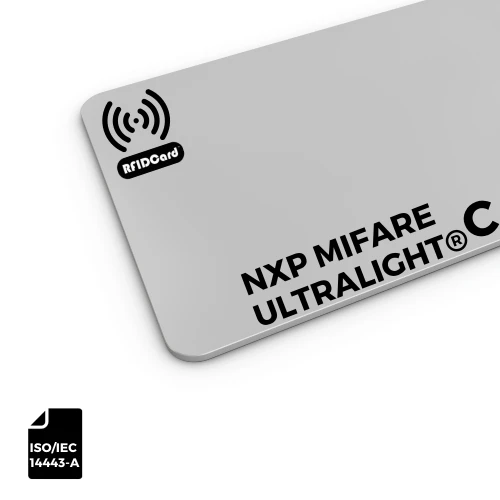
RFID Card NXP MIFARE Ultralight® C ISO14443-A CR80

The NXP MIFARE Ultralight® C blank RFID cards fully comply with ISO/IEC 14443-A. The RFID cards are made with photo-quality standard PVC/PET in the size of CR80, which are suitable for use with most direct thermal or thermal transfer card printers.