

In today’s rapidly expanding world of smart cards, digital ticketing, and connected products, choosing the right RFID technology has become a strategic decision for businesses. Among all global suppliers, the NXP RFID chip family is recognized as the benchmark for reliability, security, and interoperability. Whether the application involves contactless access control, theme park wristbands, transit cards, immersive retail experiences, or industrial asset tracking, NXP provides a complete portfolio of RFID solutions optimized for different needs. The purpose of this article is to help you understand the differences between three major product lines—NTAG, MIFARE, and ICODE—and choose the best NXP RFID chip for your specific project.
1. Overview of NXP RFID Chip Portfolio
NXP has meticulously positioned each of its three primary RFID chip families to serve distinct market segments, creating a powerful ecosystem that covers the full spectrum of HF contactless needs.
- NTAG: Primarily focused on NFC applications, designed for seamless interaction with NFC-enabled mobile devices, making it the champion of consumer engagement and smart packaging.
- MIFARE: The long-standing industry standard for secure access control and closed-loop ticketing systems, known for its robust security features and widespread adoption in public transport and campus environments.
- ICODE: Engineered for long-range HF applications, excelling in inventory management, asset tracking, and industrial logistics where anti-collision and extended read distance are paramount.
Each chip family is designed for different protocols and device environments:
- NTAG — Based on NFC Forum Type 2/4 standards. Ideal for NFC-enabled mobile interactions.
- MIFARE — Based on ISO/IEC 14443 Type A. Dominant solution for transportation cards and secure access.
- ICODE — Based on ISO/IEC 15693. Focused on HF long-range item identification.
2. NXP NTAG Series
NTAG is NXP’s flagship chip for NFC mobile applications, making it ideal for experiences where consumers interact with products through smartphones.NTAG chips support the NDEF data format, enabling developers to store URLs, product information, digital coupons, authentication keys, and other interactive content. Consequently, the wide adoption of NFC in smartphones has accelerated the popularity of NTAG worldwide.

2.1 Popular NTAG Models
The NTAG portfolio is extensive, but a few models stand out for their widespread adoption and advanced features:
- NTAG213, NTAG215, NTAG216: These are the workhorses of the NTAG family, compliant with NFC Forum Type 2. They offer varying memory sizes (144, 504, and 888 bytes, respectively) and are the most common chips found in smart posters, business cards, and general consumer NFC tags.
- NTAG424 DNA Series: Representing the pinnacle of NTAG security, the NTAG424 DNA series is compliant with NFC Forum Type 4. It introduces advanced features like Secure Unique NFC Message (SUN) authentication, which generates a unique, cryptographically secured URL each time the tag is read. This feature is crucial for preventing tag cloning and ensuring product authenticity, making it a powerful NXP RFID chip for brand protection.
2.2 Use Cases
The NTAG series excels in environments where the smartphone is the primary reader.
- Pros: NFC-enabled, universal smartphone compatibility, and native NDEF support.
- Best For: Branding and Marketing, Consumer Interaction, and Smart Packaging.
3. NXP MIFARE Series
MIFARE is the world’s most widely deployed smart card technology, with billions of cards issued across public transportation, corporate access control, and educational institutions. In fact, MIFARE technology was designed from the beginning for secure, multi-application use, ensuring that one card can therefore serve several roles: transit pass, building access, loyalty wallet, and identity proof.

3.1 MIFARE Chip Models
The MIFARE family has evolved significantly over the years, with security and functionality increasing with each generation:
- MIFARE Classic: The original and most widely deployed chip, offering basic security through a proprietary encryption algorithm. While still in use, it is often replaced by newer, more secure variants in new deployments.
- MIFARE Plus: Designed as a drop-in replacement for MIFARE Classic, it provides a crucial security upgrade by introducing the standardized AES (Advanced Encryption Standard) for authentication and data encryption, offering a clear migration path for existing systems.
- MIFARE DESFire EV3: This highly advanced, multi-application microprocessor-based IC offers the highest level of security, including AES 128-bit encryption, hardware-based security features, and support for a secure access module (SAM) for key management. The DESFire architecture allows for the creation of up to 28 different applications on a single card, each with its own set of files and access rights.
3.2 Use Cases
MIFARE is the definitive choice for secure, closed-loop systems requiring robust security and multi-application support.
- Pros: Leading security, exceptional interoperability within the MIFARE ecosystem, and proven reliability in high-throughput environments.
- Best For: Metro and Public Transit Cards, Campus Cards, Corporate Access Control, and Theme Park Tickets.
4. NXP ICODE Series
NXP dedicates its HF chip family ICODE to item-level tracking and logistics. Unlike short-range systems, ICODE supports longer read ranges within the HF band using ISO/IEC 15693. It delivers excellent performance for scanning multiple tags simultaneously—ideal for retail inventory, libraries, pharmaceutical logistics, and production automation.

4.1 Popular ICODE Models
The ICODE portfolio is optimized for industrial and logistics applications:
- ICODE SLIX Series: The standard bearer for the ICODE family, offering reliable performance and ISO/IEC 15693 compliance. The SLIX variants provide different memory sizes and features, serving as the foundation for most library and asset tracking systems.
- ICODE ILT (Inventory Logistics Tracking): The high-performance member of the ICODE family, specifically optimized for inventory and logistics management. Compared to traditional SLIX tags, ICODE ILT has significant enhancements in read sensitivity, multi-tag detection speed, and dense-tag environment performance.
4.2 Use Cases
ICODE is the go-to NXP RFID chip for logistics and industrial environments.
- Pros: Extended read range in the HF band, superior anti-collision performance, and high-speed detection.
- Best For: Library Systems, Asset Tracking, Pharmaceutical Logistics, and Supply Chain Management.
5. Feature Comparison
To make an informed decision, it is essential to compare the three families across their most critical technical features.
5.1 NFC Compatibility
The term NFC (Near Field Communication) is often used interchangeably with HF RFID, but in the context of NXP chips, it refers specifically to smartphone compatibility.
- NTAG is the undisputed leader here, as it is designed from the ground up to be read by any NFC-enabled smartphone.
- MIFARE chips, particularly the DESFire EV3, are increasingly compatible with smartphones through platforms like MIFARE 2GO, but this often requires specific software or a dedicated secure element on the phone. MIFARE Classic is generally not natively supported by most modern smartphones.
- ICODE’s primary focus is on dedicated, powerful readers, not mobile phones. While ICODE is compliant with the NFC Forum Type 5 standard, which allows for smartphone reading, its core strength and use cases are centered around industrial readers and long-range applications.
5.2 Security and Encryption
Security is a paramount concern, and NXP offers a tiered approach across its portfolio:
- NTAG: Security ranges from basic password protection (NTAG21x) to the advanced cryptographic authentication of the NTAG424 DNA, which uses AES-128 to generate a unique, secure message for every read, effectively eliminating the risk of simple tag cloning.
- MIFARE DESFire EV3: Offers the most robust security profile, leveraging hardware-based security, AES 128-bit encryption, and the ability to integrate with a Secure Access Module (SAM) for secure key storage and cryptographic operations outside the chip itself. This level of security is necessary for financial and identity applications.
- ICODE DNA: Brings AES authentication to the long-range segment, ensuring that even in industrial environments, the authenticity of the tagged item can be cryptographically verified.
5.3 Memory Architecture
The way data is stored and accessed is a major differentiator:
- NTAG memory is typically a simple, linear block of memory, optimized for storing a single NDEF message (like a URL or text record). The focus is on simplicity and speed of access by a mobile device.
- MIFARE chips, especially the DESFire series, feature a sophisticated multi-application architecture. The memory is structured with a master application and up to 28 sub-applications, each with its own file structure and access keys. This is ideal for converged applications where one card serves multiple, independent purposes.
- ICODE memory is optimized for simple, fast identification and inventory. While it supports user memory, its architecture is primarily designed for rapid anti-collision and reading of the unique identifier (UID) and Electronic Product Code (EPC) data.
6. How to Choose the Right NXP RFID Chip

Selecting the correct NXP RFID chip is a critical decision that impacts system performance, security, and cost. The application’s core requirements should drive the choice.
- If you need smartphone NFC interaction: Choose NTAG. NXP builds the NTAG series for consumer engagement, smart packaging, and any application where the user’s mobile phone is the intended reader. For high-security consumer applications, opt for the NTAG424 DNA.
- If the focus is secure access and ticketing: Choose MIFARE. For public transit, corporate ID, or campus cards, the MIFARE DESFire EV3 offers the necessary multi-application support, high security (AES), and established ecosystem.
- If logistics, tracking, or industrial inventory is the goal: Choose ICODE. The extended read range and superior anti-collision capabilities of the ICODE series make it the clear winner for bulk reading of items in a supply chain or library.
Checklist for Decision-Making:
| Factor | NTAG | MIFARE | ICODE |
| Security Level | Basic to Advanced (SUN) | High (AES, SAM support) | Medium to Advanced (DNA) |
| Reading Environment | Consumer/Mobile | Dedicated Readers/Terminals | Industrial/Long-Range Readers |
| Hardware Ecosystem | NFC-enabled devices | Smart Card Readers, POS | Industrial Readers, Gates |
| Data Model | Simple NDEF Message | Multi-Application, File-based | Inventory/UID/EPC Focus |
7. Conclusion
Each NXP RFID chip family—NTAG, MIFARE, and ICODE—serves a clearly defined purpose. NTAG enables NFC connection with mobile devices, MIFARE powers secure smart card systems for ticketing and access, and ICODE delivers high-performance asset tracking at scale. Security needs, user interaction methods, physical environment, and long-term scalability should drive your decision when selecting a chip. If you’re planning to develop contactless cards, interactive packaging, smart wristbands, or industrial tags, choosing the right chip is the foundation of a successful deployment. If you would like guidance on choosing the most suitable NXP RFID chip, need samples, or want to produce custom smart cards, our team can help you design the perfect solution for your application.
Recommended Product
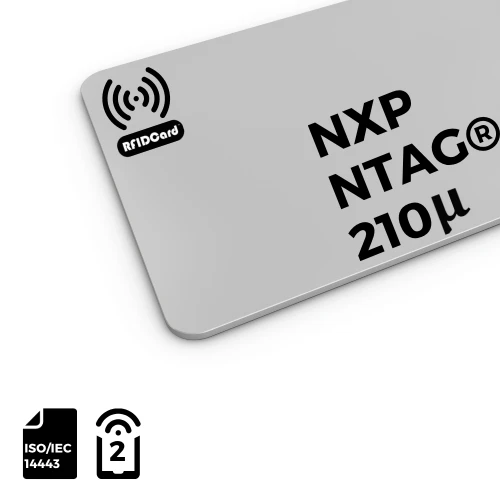
NFC Card NXP NTAG® 210μ

The NTAG® 210μ NFC card made with Photo-quality standard PVC sheets into size of CR80, that are suitable for use with most direct thermal or thermal transfer card printers. NFC Label or other types of tag with NTAG® 210μ IC also available upon request.
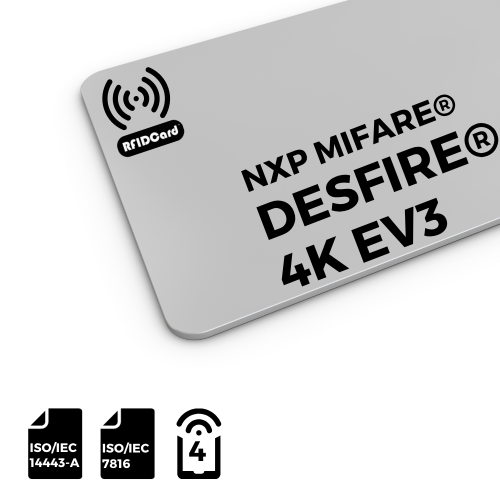
RFID Card NXP MIFARE® DESFire® EV3 4K
Blank or customized printing RFID cards with a choice of dimensions are available. The MIFARE® DESFire® EV3 4K is Common Criteria EAL5+ security certified for smart card IC products. The MIFARE® DESFire® EV3 4K ICs fully comply with NFC Forum Type 4 Tag.

RFID Card CR80 NXP ICODE® SLIX ISO15693 | NFC Type 5
Blank or customized printing RFID card with choice of dimensions available. ICODE®SLIX operating at 13.56MHz, supporting ISO 15693/ISO 18000-3 compliant infrastructures. ICODE® SLIX is also defined as NFC Forum Type 5 Tag IC.



