In the digital age, RFID technology is gradually changing the way we live and work with its unique charm and wide application fields. Whether it is logistics management, inventory management in the retail industry, or identity recognition and access control, RFID plays an indispensable role. So what is RFID and what is its workflow?
What is RFID?
In simple terms, RFID is a technology that uses wireless radio frequency signals for non-contact two-way communication to automatically identify target objects and obtain relevant data. A basic RFID system consists of tags, readers, antennas, middleware and background systems.
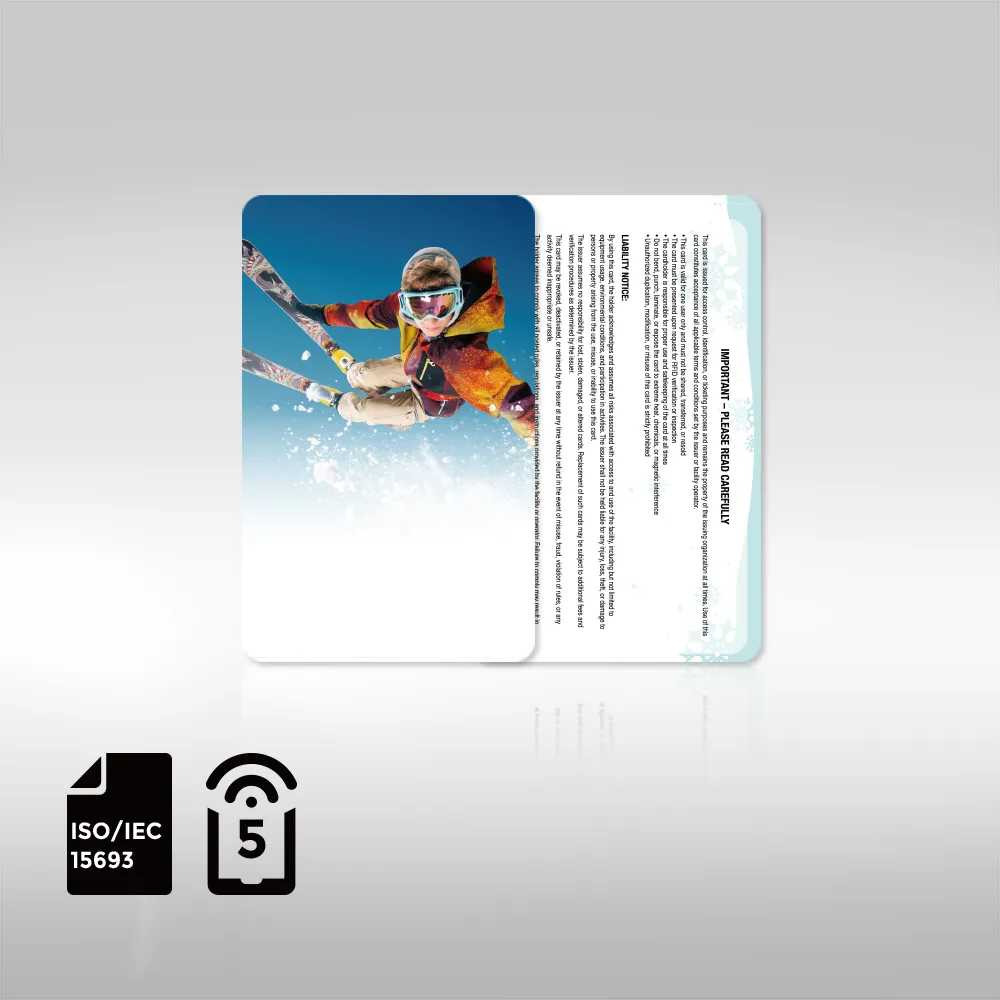
RFID tags contain a microchip and an antenna. Tags attach to objects, animals, or people to identify and track them. They include active tags (with built-in power supply) and passive tags (without built-in power supply, powered by readers).Readers send radio frequency signals and receive signals from tags. Readers can be fixed or handheld. They usually connect to a computer system to process and store information from tags. Antennas send and receive radio frequency signals. Readers communicate with tags through antennas. The shape and size of the antenna depends on the application scenario. The reader can have a built-in antenna or an external one.
Middleware manages and processes large amounts of data from RFID systems. It can filter, aggregate, interpret data, and integrate with back-end databases or applications. Back-end systems include databases and applications for storing, analyzing, and managing data collected from RFID systems. Back-end systems can be inventory management systems, customer relationship management systems, or other business applications.
This ability to obtain information without direct vision or physical contact is the core advantage of RFID technology.
What is the workflow of RFID?
The workflow of RFID can be summarized as three steps: “transmit-receive-process”:
Transmit: The reader transmits a radio frequency signal of a certain frequency through the antenna to form an electromagnetic field.
Receiving: When this electromagnetic field activates the RFID tag, the tag’s antenna receives the signal and sends the information stored in the chip back to the reader through radio waves.
Processing: After the reader receives the information sent by the tag, it transmits it to the middleware. The middleware filters, parses, and processes the data, and then transmits the useful information to the back-end system for processing and analysis.
This process is fast and automatic, and can complete the identification of one or more tags within a few milliseconds, greatly improving data processing efficiency.
Diversified applications: What are the uses of different types of RFID?
Low-frequency RFID: operates in the frequency range of 30 kHz to 300 kHz, usually used for short-range identification (several centimeters), such as access control, animal tracking, etc., because of its strong penetration, it is suitable for metal, liquid and other environments.
High-frequency RFID: operates in the frequency range of 3 MHz to 30 MHz, usually at 13.56 MHz. Suitable for medium-distance identification (several centimeters to one meter), commonly used in library book management, retail product tracking, etc., with fast reading speed and moderate cost.
Ultra-high frequency RFID: operates in the frequency range of 300 MHz to 3 GHz, usually at 860 MHz to 960 MHz. It suits long-distance identification (several meters to tens of meters), quickly reads multiple tags, and improves work efficiency. It widely serves logistics, supply chain management, intelligent transportation, and other fields.
Passive RFID: The tag has no built-in battery and needs to rely on the radio frequency energy provided by the reader to activate. Suitable for short-range to medium-range identification (several centimeters to several meters), this tag costs little, lasts long, and finds widespread use in retail product tracking, library management, and access control.
Active RFID: The tag has a built-in battery and actively sends signals. It is suitable for long-distance, high-speed moving object identification, such as vehicle management, container tracking, etc.
Different types of RFID technology have their own advantages and can meet various identification needs from simple to complex. From short distance to long distance, and are an indispensable part of modern information management.
FAQs about RFlD workflow
- Can RFID tags be reused?
Yes, most RFID tags are reusable. The reader/writer erases and rewrites the information on the tag to adapt to different application scenarios.
- How is the security of RFID technology guaranteed?
RFID systems usually use encryption technology to protect the security of data transmission. Prevent unauthorized access and data tampering, and ensure the accuracy and privacy of information.
- Is the implementation cost of RFID technology high?
The implementation cost varies depending on the application scenario and scale. Although the initial investment may be high, considering the long-term benefits such as improved efficiency and reduced errors, RFID technology can usually bring significant cost savings.