In modern enterprises, managing and tracking assets is an important task to ensure smooth operation. Whether in retail, logistics or manufacturing, enterprises need an efficient and accurate method to ensure the safety and location of assets. RFID (Radio Frequency Identification) technology provides an ideal solution in this respect, and RFID chip label and RFID inlay are two key components. So, what’s the difference between RFID chip labels and RFID inlays? In this article, we will explore the structure, functionality, and application scenarios of both in detail to help you better understand and choose the RFID solution that best suits your needs. Are you ready to explore the secrets of RFID RFID chip labels and RFID inlays? Let’s unveil RFID chip labels and RFID inlays.
What is RFID technology?
RFID (Radio Frequency Identification) technology is a non-contact communication technology that uses radio waves to identify and track objects. Readers or scanners, antennas and RFID chip labels are the three main RFID components. When designing a RFID system, the combination of RFID hardware and software is usually considered. For hardware, RFID readers, antennas and tags are usually selected according to the specific application. In addition, RFID printers and other accessories or peripherals are available.
The difference between RFID chip label and RFID inlay
oth RFID chip labels and RFID inlays are used to mark and record the information of objects, but they are different in structure and application. The specific differences are as follows:
RFID chip label: this is a small device that contains antennas and chips for storing and transmitting data. They are usually attached or embedded to objects that need to be tracked, such as containers in retail products or logistics systems. RFID chip labels can be active (with battery) or passive (without battery) and can be read over a long distance. It also includes printable surfaces that can add text, graphics or barcodes that are typically used to mark and track items in retail, healthcare and logistics applications. RFID chip labels can be read from short to medium distances.
RFID inlay: the RFID inlay is small and contains only antennas or coils, as well as chips. They are usually embedded in other objects, such as smart wristbands, clothing cloth or recyclable cups. RFID inlays can also be passive or active, but are usually read over short distances.
After understanding the basic construction and differences between RFID chip labels and inlays, we can delve deeper into their specific application scenarios and how to choose the RFID solution that works best for you. Whether it is the need for more durable RFID chip labels, or more suitable for embedded applications RFID inlay, each has its own unique advantages and scope of application. Next, we will analyze the components, cost-effectiveness, and printing capabilities of these labels in detail to help you make informed choices.
Components of RFID chip labels
RFID chip labels are usually made up of three things:
RFID chip (or integrated circuit): responsible for data storage and processing logic, according to the corresponding protocol for communication.
Tag antenna: receives and transmits signals from RFID readers, usually in a flat structure, encapsulated on a substrate such as paper or plastic.
Substrate: material used to install RFID tag antennas and chips. Common substrate materials include paper, polyester, polyethylene, and polycarbonate.
The difference between RFID chip labels and RFID inserts
RFID chip labels and inlays are different in physical characteristics and application scenarios. RFID inlay is part of the function of RFID chip label, but it can also be used separately. However, dry inlays lack stickiness and may need to be used externally. The wet inlay has an adhesive surface, which can be more easily fixed on the asset for tracking.
Cost and expense.
RFID chip labels is the most common and affordable RFID tag types. The cost of wet inlay is also more affordable. Their prices are relatively low and are suitable for retailers and small-scale users.
Printing ability.
RFID chip labels can be printed using RFID printers, but the text printed using RFID chip labels is clearer. Clarity is mainly due to the white background of the label.
Choose RFID chip label or RFID inlay?
If you need to track assets in transit, it is recommended that you use RFID chip labels. If it is used for wristbands or grotesque items, RFID inlay is a better choice. RFID chip labels are also generally more durable than RFID inlay, they are light, thin and versatile, so they are your ideal choice.RFID chip labels are light, thin, versatile, and usually more durable than RFID inserts, making it your ideal choice.
When choosing suitable RFID chip labels, it is very important to understand different types of chip tags and their specific application scenarios. According to the different requirements, RFID chip labels can be divided into ultra-high frequency, high frequency and low frequency chip tags, and can also be distinguished by use, such as industrial chip tags, LED RFID tags and RFID cable tags. Next, we will further explore these categories and their respective advantages to better meet your specific needs.
Types of RFID chip labels
According to your different needs, can be divided into ultra-high frequency, high frequency and low frequency chip tags, etc., can also be distinguished by use, such as LED RFID tags, On-metal tags and so on. For example, if you need to manage your clothing or some light assets, you can choose UHF LED RFID Hang Tag. It has its own red LED light, which can be used in clothing warehouse management, laundry scene and so on.
How to purchase and maintain RFID chip labels?
rfidcard.com provides a comprehensive range of RFID products and solutions, including procurement and maintenance services. Contact their team of experts for detailed information about the cost, setup and maintenance of RFID chip labels, and get specific solution recommendations.
Conclusion: choose the RFID chip label that suits you
All in all, RFID chip labels are ideal for efficiently managing and tracking assets. Whether used in retail, logistics or manufacturing, RFID chip labels can provide reliable solutions to help enterprises optimize operations and improve efficiency. Choose the appropriate RFID chip label to make your asset management more intelligent and efficient.
FAQ
Can RFID chip labels be reused?
Some RFID chip labels can be reused, but it depends on the type of tag and application scenarios. For example, some industrial-grade labels are designed to be durable and can be used multiple times, while disposable labels are not suitable for reuse.
What should I pay attention to in the installation and maintenance of RFID chip labels and RFID inlays?
When installing the RFID chip label, it is necessary to ensure that there is no interference in the tag position to ensure the reading effect. During maintenance, the chip tag and the working status of the RFID reader should be checked regularly, and the damaged chip tag should be cleaned and replaced.
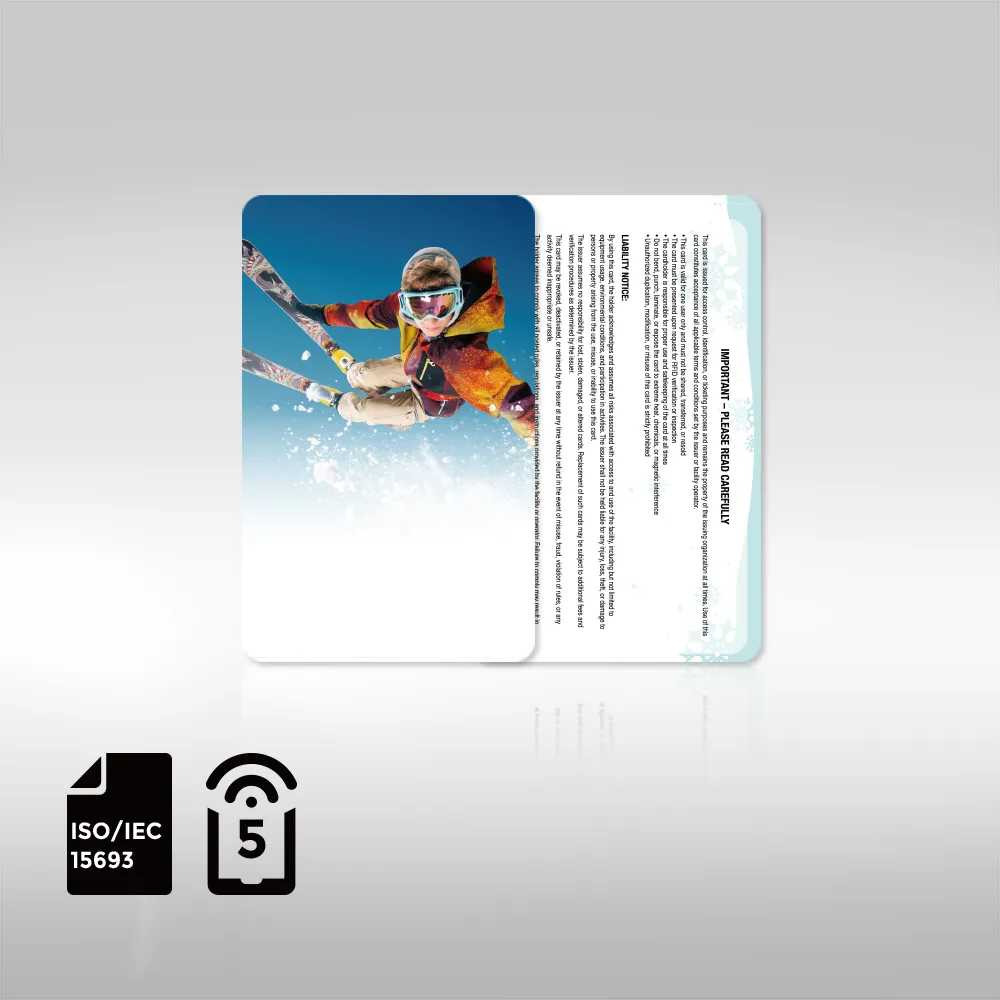
RFID Ski Pass Card NXP ICODE® SLIX2

The NXP ICODE® SLIX2 RFID Ski Pass Card is a high-performance HF smart card designed for ski resorts, mountain attractions, and outdoor access applications. Embedded with the NXP ICODE® SLIX2 chip, this card operates at 13.56 MHz and complies with ISO/IEC 15693 and NFC Forum Type 5 standards, providing reliable contactless identification and fast access validation. With long read range capability, anti-collision support, and sufficient user memory, it is suitable for lift access control, season passes, guest identification, and resort ticketing systems.