for privacy protection.With the popularity of RFID technology, many of us are concerned about how to prevent personal information from being accessed by unauthorized readers. You may have heard that aluminum foil can block RFID signals. But is this true, and is it the best way to protect your privacy?
In this guide, we’ll break down the science, the real-world limitations of DIY shielding, and how to more effectively block unauthorized RFID signals to keep your credit cards and identity safe.
Can aluminum foil block RFID signals?
The answer is that aluminum foil can block RFID signals, but the effect is imperfect. Aluminum foil can reflect and absorb electromagnetic waves, thereby blocking the transmission of RFID signals to a certain extent. Some people wrap their credit cards or passports in aluminum foil, hoping that this will prevent the information from being read. Although this practice can work in some cases, the effect is not stable for privacy protection.
1. Why Aluminum Foil Sometimes Works
To understand how aluminum foil can block RFID, it helps to know how RFID works.
RFID systems use radio waves to communicate between a reader and a chip inside a card. These signals can easily pass through materials like plastic, fabric, or leather — but metals behave differently.
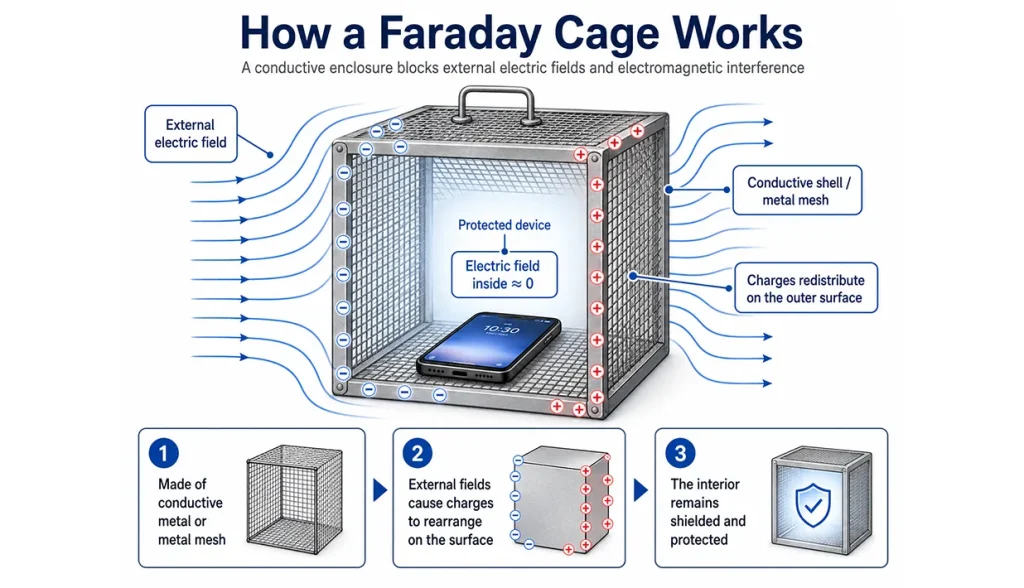
When radio waves hit a metal surface like aluminum foil, much of the signal is reflected away, while some is absorbed or weakened. This makes it harder for the signal to reach the chip or return to the reader.
This is similar to the idea of a Faraday cage — a conductive barrier that blocks electromagnetic signals when fully enclosed.
So, does metal block RFID? In many cases, yes — especially when the metal forms a complete barrier around the card.
However, this only works when coverage is consistent, which is where things start to break down.
This is why, in theory, aluminum foil can act as a simple RFID shield.
2. Why Aluminum Foil Often Fails in Real Life
While aluminum foil can block RFID signals in theory, real-world use is rarely that perfect.
Here’s where things get interesting — even a tiny gap can let signals pass through.
In everyday situations, foil is rarely wrapped tightly or evenly. It may be folded, creased, or slightly torn — and those small imperfections matter.
If any part of the card is exposed, even just the edges, the signal may still connect. It doesn’t take a large opening.
Movement is another problem. Inside a pocket or wallet, foil can shift or loosen, reducing its effectiveness without you noticing.
Stacking multiple cards can also create unpredictable results, as signals may reflect and find indirect paths.
And not all RFID systems are the same. Different frequencies respond differently to shielding, which adds another layer of inconsistency. If you want to understand how different RFID frequency types (LF, HF, UHF) affect performance, you can read this video (RFID Frequencies Explained: LF vs HF vs UHF) on RFID frequency differences.
So while aluminum foil might work in controlled conditions, in everyday use, the results are often unreliable to resistant RFID skimming.
3. Aluminum Foil vs RFID Blocking Wallet: Which Works Better?
When it comes to RFID protection, aluminum foil is often seen as a quick DIY solution. But in practice, it is not the only option available.
There are also purpose-built RFID protection methods, such as RFID blocking cards, RFID wallets, and RFID sleeves, which are designed specifically to reduce or prevent signal transmission.
The main differences between these options come down to three key factors: convenience, consistency, and reliability.
Aluminum foil is the most accessible option. Almost anyone can use it with minimal cost. However, it is not very practical for daily use. It can tear easily, lose shape, and requires careful wrapping to remain effective.
RFID blocking cards and wallets, on the other hand, are designed for everyday use. They offer built-in shielding materials that make them more consistent in real-world conditions. You don’t need to adjust or maintain them, which makes them more convenient for long-term use.
RFID sleeves sit somewhere in between. They are lightweight, easy to carry, and provide a more stable level of protection than foil. However, their effectiveness still depends on proper usage and replacement over time.
In terms of reliability, both RFID wallets and sleeves tend to perform more consistently than aluminum foil, especially in everyday environments where movement, pressure, and wear can affect shielding performance.
So while aluminum foil can work in theory, consistency is where other methods have an advantage.

4. Common Myths About RFID Protection
Beyond the misconception that aluminum foil can completely block RFID signals, there are several other common myths about RFID protection that are widely misunderstood.
Myth 1: Any metal material can block RFID equally
Another common assumption is that all metals provide the same level of RFID protection.
While metals can interfere with radio waves, not all materials perform equally in real-world conditions. Factors such as thickness, continuity, and design all influence how well the signal is blocked.
This is why some shielding methods are more reliable than others in everyday use.
Myth 2: RFID theft is extremely common in daily life
It is often suggested that RFID skimming is a widespread risk in everyday environments.
In reality, while RFID-related theft is technically possible, it is not as common as many people assume. Most modern cards already have basic protections built in, and actual incidents are relatively limited compared to traditional forms of fraud.
However, awareness of RFID security has grown, which is why interest in protective methods has increased.
Myth 3: More layers always mean better protection
It is easy to assume that adding more aluminum foil layers will automatically improve protection.
While additional layers can improve shielding in controlled conditions, they do not guarantee consistent performance in real-world use. Gaps, movement, and improper coverage can still affect results.
Overall, many of the common beliefs about RFID protection come from simplified explanations rather than real-world performance.
5. Is RFID Blocking Even Necessary? How to Protect Your Privacy Effectively
Once you understand how RFID works, a common question arises: do you really need to block RFID signals to protect your privacy?
The short answer is: it depends on your situation, not just the technology itself.
Understanding the Real Risk
When people ask, “Is RFID theft real?” they’re usually concerned about unauthorized scanning of contactless cards—like credit cards, IDs, or access cards. Technically, RFID skimming is possible, but in everyday life, it’s less common than you might think. Most modern cards have basic security measures, and an attacker generally needs to be very close—often just a few centimeters—to successfully scan a card.
This makes large-scale or random RFID theft rare in most environments.
When RFID Protection Matters
Even if the overall risk is limited, certain situations justify extra precaution:
- Frequent travel in crowded places
- Using contactless payment cards in public
- High concern about privacy in busy areas
- Carrying multiple RFID-enabled cards together
In these cases, RFID blocking isn’t about preventing a widespread threat—it’s about adding an extra layer of privacy protection.
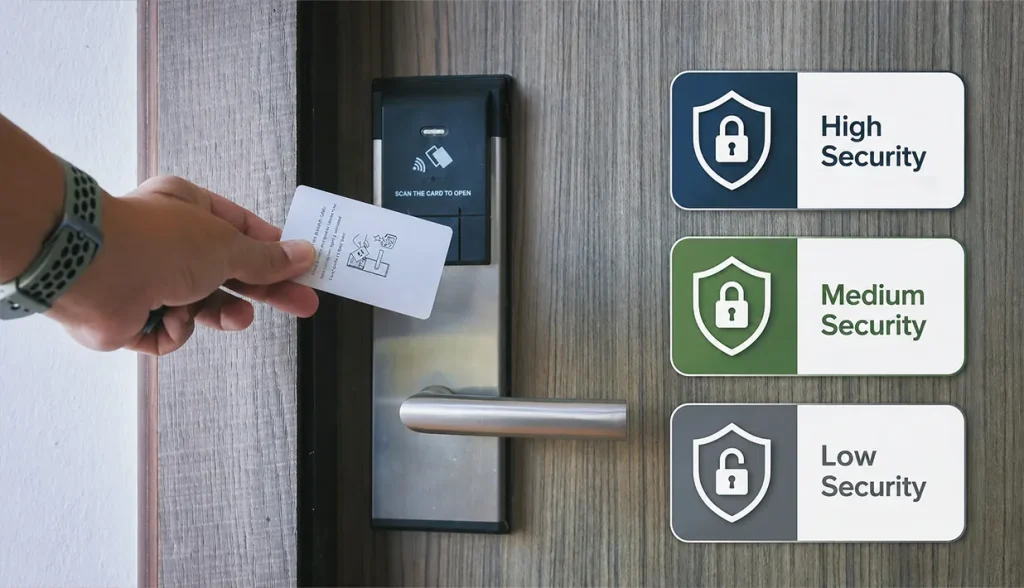
Different card types, different risk levels: Protect Your Privacy
It’s also important to understand that not all RFID cards are the same, and knowing the differences can help you protect your privacy.
Some cards, especially newer contactless payment cards, use dynamic encryption that significantly reduces the risk of cloning or unauthorized reading, making them safer for daily use.
Other cards, such as older access cards or certain low-security systems, may have weaker protection mechanisms, increasing potential exposure.
Because of this, the need to actively protect your privacy depends more on the type of card you carry rather than RFID technology in general.
From a broader perspective, this difference is also why industries such as hospitality, corporate access control, and secure facilities often evaluate RFID systems more carefully when choosing card technologies. Concerned about the security of your RFID system? Talk to our experts to find tailored solutions for your business.
FAQs
Q1: Does aluminum foil block RFID completely?
No. It can reduce or block signals in ideal conditions, but it is not always reliable in everyday use.
Q2: How many layers of aluminum foil are needed to block RFID?
There is no universal layer count for every card and reader. Frequency, coverage, gaps and wear affect the result. A test with your own card and reader checks only that setup and does not certify general protection.
Q3: Does aluminum foil block NFC signals too?
Yes, since NFC operates on similar frequencies (13.56 MHz), aluminum foil can interfere with those signals as well.
Q4: Can RFID signals pass through wallets or pockets?
Yes. Most regular wallets and clothing do not block RFID signals effectively.
Q5: Is RFID theft actually common?
It exists, but it is less common than many people think. However, awareness has increased in recent years.
Recommended Products
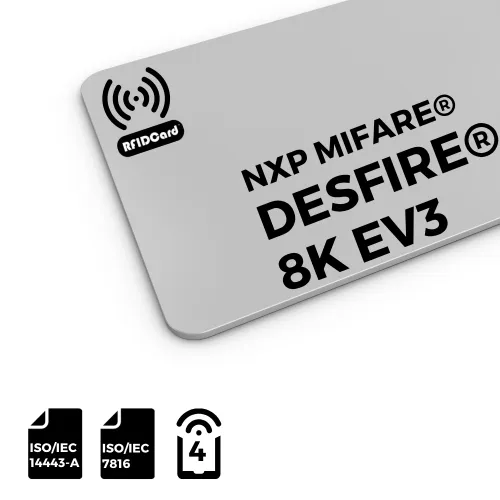
RFID Card NXP MIFARE® DESFire® EV3 8K

The NXP MIFARE® DESFire® EV3 8K RFID Card is designed for secure, contactless applications such as access control, public transport, and payment systems. It offers 8KB of storage, advanced AES encryption, and enhanced security features like mutual authentication. Compliant with ISO/IEC 14443 A, this card ensures compatibility with global contactless infrastructure, making it suitable for a variety of secure and efficient applications.