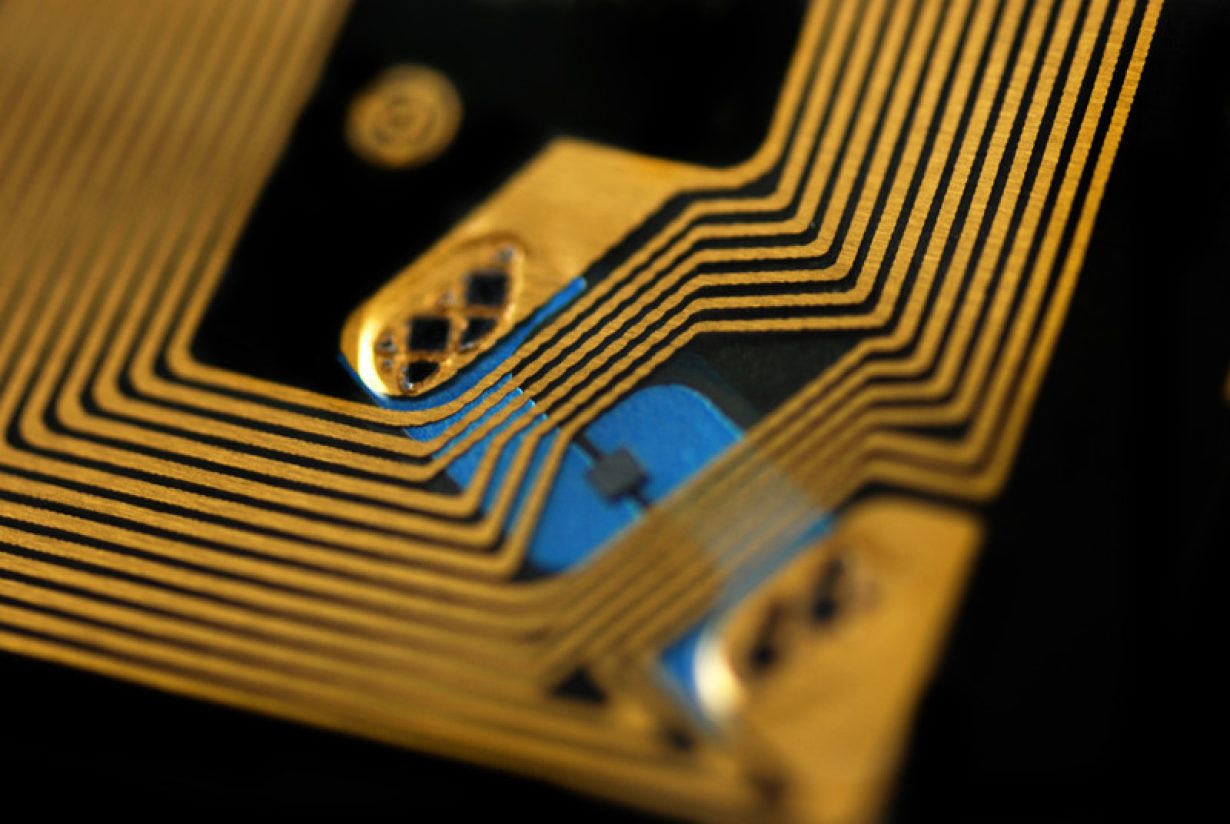

We all know that the basic principle of RFID (Radio Frequency Identification) technology requires only three components; tags, reader/writer devices, and software application. With these components, it is simple to embed these tags, it is easy to use, and it becomes a reasonable method for transmitting wireless communications.
These benefits of RFID technology bring revolution in wireless communication and digital transmission. The technology carries these advantages through RFID tags and readers that are operated according to various standards of frequency bands;
According to the electromagnetic spectrum, the LF range starts from 30 kHz and ends at 300 kHz, where 125KHz and 134.2 kHz is allocated for RFID transmission. The characteristics of LF tags are;
- They are passive tags
- They are used for short ranges (only a few inches)
- They can only store limited information
- They are used for partial data transfer rates
- They don’t contain anti-collision properties
- They require near-field inductive coupling to obtain power from readers
The HF range starts from 3 MHz and ends at 30 MHz, where 13.56 MHz is allocated for RFID transmission. The characteristics of HF tags are;
- HF tags are passive
- They are used for short ranges (typically less than 3 feet)
- In contrast to LF tags, HF tags have a higher data transfer rate
- They contain anti-collision properties
- They require near-field inductive coupling to acquire power from readers
- They have limited complexity and cost issues
The UHF range starts from 300 MHz and ends at 1000 MHz, where 433 MHz and 860-960 MHz frequencies are allocated for RFID applications. They can be divided into active, passive and semi-passive tags. Active UHF tags use 433 MHz frequency, whereas passive UHF tags or semi-passive tags use 860-960 MHz. The characteristics of UHF tags are;
- The read range of these tags includes 15 to 20 feet
- They have anti-collision capabilities
- They have the power to read several hundred tags at a time
- The passive and semi-passive tags require backscatter coupling, which is also known as far-field radiative coupling.
Microwave Frequency Band
The microwave frequency range starts from 1 GHz and ends at 10 GHz, where 2.45 GHz and 5.8 GHz frequencies are allocated for RFID applications. They can be divided into active, passive and semi-passive tags. The characteristics of microwave frequency tags are;
- The read range of passive microwave tags is 20 feet
- The read range of semi-passive microwave tags is 100 feet
- The read range of active microwave tags is 350 feet
- The size of passive microwave tags is relatively small than UHF passive tags, and they are expensive too
- Active microwave tags depend on their transmitter for transmission
- Like UHF tags, passive microwave tags, and semi-passive tags follow backscatter coupling for communication
RFID Technology and Wireless Communication
From the above RFID frequency bands, we can understand that RFID is supporting wide-range of frequencies and transmission ranges, allowing the wireless communication applications to employ RFID technology.
Automatic Identification and Data Capture (AIDC), another common term for RFID, is getting real-success in providing digital means of communication and wireless technologies due to rapid and reliable capturing of wireless signals.
Organizations of the digital world need a quick and yet accurate approach for monitoring data, products and business activities. Consequently, the ability to trace products in a supply chain store, do automatic transactions at the counter, process bank payments with swiping cards, unlock room’s doors makes RFID cards more intuitive and smarter.
Stock management enterprises, retail stores, inventory malls, forensic departments and educational institutions can’t process their operational activities and processes without using wireless communication as activities ranges from tracing assets to secured card payments, proving that RFID technology forms the root of these applications and technologies. Since RFID communication process covers four frequency bands of electromagnetic (EM) spectrum, it has the potential to help in every application of the digital era.