


RFID (Radio Frequency Identification) technology is an important part of modern automatic identification and data collection technology. It automatically identifies target objects and obtains relevant data through radio waves, and is widely used in logistics, retail, security, and other industries. In this process, RFID card readers play a vital role. This article will detail the types, functions, and selection guide of RFID card readers.
What is an RFID Card Reader?
An RFID card reader is a device used to communicate with RFID tags or cards. It acts as the bridge between physical identification objects and digital systems, enabling data to be captured and transferred into backend platforms for processing.
In most RFID systems, the reader is one of the core components that determines how efficiently data can be collected, especially in environments such as access control, logistics tracking, and inventory management.
How an RFID Card Reader Works
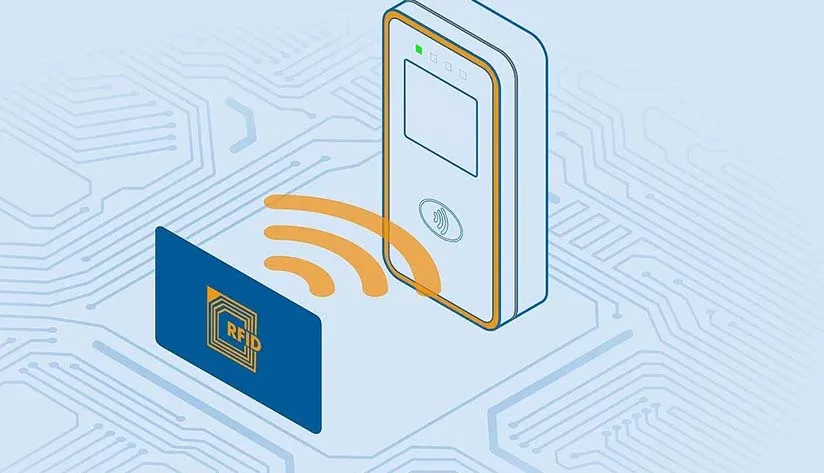
An RFID system operates through short-range radio frequency communication between the reader and the tag.
The reader first emits a radio signal to activate nearby RFID tags. When a tag enters the effective range, its internal antenna captures the signal and uses it to power the chip inside the tag. Once activated, the tag transmits stored data back to the reader, completing a contactless data exchange process.
This interaction happens in real time and does not require physical contact or direct line of sight, which is why RFID is widely used in fast-moving operational environments such as warehouse logistics, retail inventory, and secure access systems.
Key Components of an RFID Card Reader
An RFID card reader is typically composed of several functional modules that work together to enable stable communication and data processing.
Antenna
The antenna is responsible for transmitting and receiving radio signals between the reader and RFID tags. Its design and placement directly affect read range, coverage, and system stability, especially in environments with dense tag activity or interference.
RF Module (Transmitter & Receiver)
The RF module generates the radio frequency signals used to activate tags and receives the returning data signals. It operates within specific frequency ranges such as LF, HF, or UHF depending on the system configuration.
Processing Unit
The processing unit interprets the raw data received from tags and converts it into usable information. This data is then prepared for transmission to backend systems.
Interface Layer
The interface connects the RFID reader to external systems such as computers, databases, or enterprise platforms. Common communication methods include USB, Ethernet, Wi-Fi, or Bluetooth, depending on deployment requirements.
Versatility Specifications of RFID Card Readers
RFID card readers are designed with a range of technical capabilities that allow them to adapt to different environments and industry requirements. These specifications directly influence performance, efficiency, and system compatibility across applications such as access control, logistics, and inventory management.
Reading distance
RFID card readers can detect tags from a few centimeters up to several meters, depending on the system configuration and frequency type. This flexible read range allows RFID systems to support both close-range identification and long-distance tracking, making them suitable for diverse operational scenarios.
Reading speed
Reading speed is a critical performance factor in RFID systems. Modern RFID card readers are capable of capturing and processing multiple tag signals within seconds. This enables fast, continuous data collection and significantly improves operational efficiency in high-volume environments.
Supported frequency ranges
RFID technology operates across three main frequency bands: Low Frequency (LF), High Frequency (HF), and Ultra-High Frequency (UHF). RFID card readers are designed to support specific or multiple frequency bands to ensure compatibility with different RFID tags and industry-specific applications.
Compatibility and interoperability
RFID card readers are built in compliance with global RFID standards, ensuring seamless interoperability with a wide range of tags, cards, and backend systems. This eliminates the need for additional configuration or external adapters, simplifying system deployment and integration.
Scalability
RFID card readers offer strong scalability, allowing businesses to expand their systems as operational needs grow. Whether adding new access points, expanding warehouse zones, or increasing tracked assets, RFID infrastructure can be easily extended without requiring major system redesign
Types of RFID card readers
It’s important to understand the different types of RFID card readers available in order to select the right solution for specific application scenarios. Each type is designed for different operational environments, ranging from mobile use to fixed infrastructure systems.
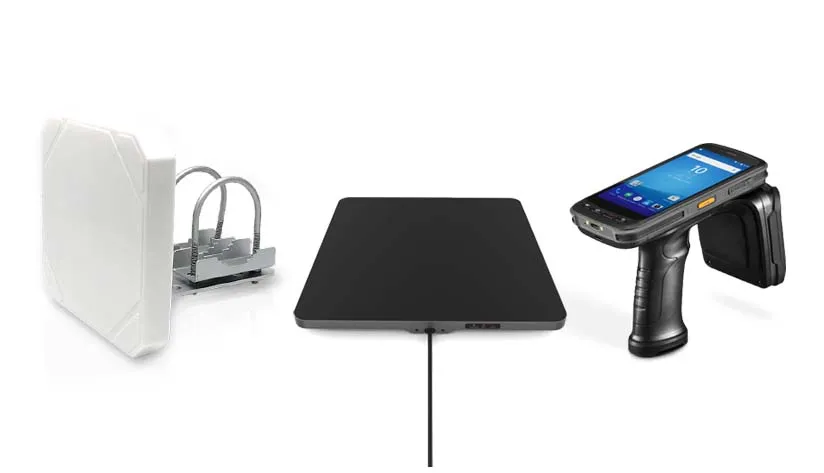
Handheld readers are lightweight and portable devices designed for mobile operations such as inventory management and asset tracking. Their main advantage is flexibility, allowing users to scan tags across different locations. However, their reading range is generally more limited compared to fixed systems.
Fixed readers are installed at specific locations and are commonly used in access control points, warehouse entrances, and production lines. They are designed for continuous, high-volume scanning with stable performance. While they offer strong reading capability, they lack mobility and flexibility.
Wearable readers are designed to be worn on the body, allowing hands-free operation for real-time data collection. They are commonly used in logistics, retail, and field service environments where mobility and speed are important. The main limitation is shorter battery life due to compact design.
Desktop readers are compact devices designed for stationary use in office, retail, or library environments. They are often used for employee card verification, visitor management, or small-scale tag reading tasks. They are easy to operate but typically have a limited reading range.
Integrated RFID Card Readers
Integrated readers are embedded into other devices or systems, providing a built-in RFID reading function. They are used in applications that require seamless system integration, such as smart terminals or automated kiosks. While they offer strong system compatibility, installation and configuration can be more complex.
RFID Gate Readers are designed for high-efficiency batch identification and directional monitoring in high-traffic environments. They are commonly deployed in warehouses, retail stores, libraries, and logistics hubs where real-time flow tracking is required.
These systems typically combine infrared sensing and UHF RFID technology to automatically detect movement direction and trigger tag reading. Built-in audio and visual alarm functions also support anti-theft and access control applications.
RFID gate readers are ideal for scenarios that require automated entry and exit monitoring, offering high accuracy in dense tag environments with minimal manual intervention.
Dual Band RFID Readers support both HF (13.56 MHz) and UHF (860–960 MHz) frequencies, allowing a single device to handle multiple RFID standards.
This makes them suitable for environments where different types of tags are used within the same system, such as mixed asset tracking, smart retail, or multi-application enterprise systems.
The main advantage of dual band readers is system flexibility, reducing the need for multiple hardware deployments. However, configuration complexity is generally higher compared to single-frequency readers.
Ceiling-Mount UHF RFID Readers
Ceiling-mount UHF RFID readers are installed overhead to provide wide-area coverage from above. They are commonly used in smart warehouses, large retail spaces, and automated logistics systems.
By leveraging top-down coverage, these readers can effectively monitor movement across large open areas while reducing blind spots. They are particularly useful in environments that require continuous tracking of assets or personnel flow.
The main advantage is wide coverage and reduced interference from ground-level obstacles, although installation planning is more critical compared to standard fixed readers.
How RFID Card Readers Are Used in Different Industries
Logistics management
In logistics, RFID card readers help to track and monitor goods in the entire supply chain in real time. From warehouses to distribution centers, these readers simplify inventory management, minimize errors and increase overall efficiency.
Retail
RFID technology is revolutionizing retail operations, allowing retailers to automate inventory management, prevent theft and enhance the shopping experience. RFID card readers enable fast and accurate inventory taking, ensuring the correct products are always on shelves.
Security and access control
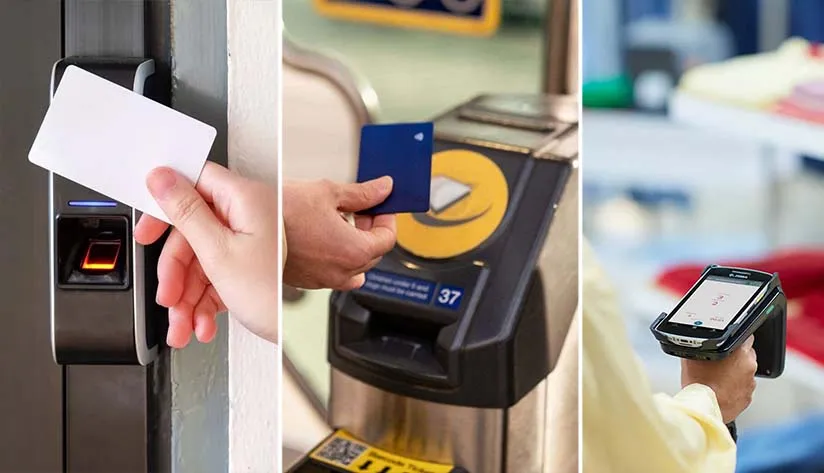
RFID card readers are widely used in access control systems in various places, including offices, hospitals and residential areas. These readers validate RFID-enabled access cards to enhance security. They limit unauthorized entry, providing peace of mind for facility managers and residents.
Healthcare industry
In the healthcare sector, RFID card reader plays a key role in asset tracking, patient identification, and medication management. These readers improve operational efficiency by accurately capturing data from RFID tags. They also enhance patient safety by tracking medical equipment, patient wristbands, and medication packaging.
Public transportation and parking management
It can be boldly said that RFID technology has changed public transportation systems and parking facilities around the world. The biggest feeling is that the RFID card reader realizes seamless charging, automatic charging, and efficient parking management. For car owners, it reduces congestion and improves the overall commuting experience.
How to Choose the Right RFID Card Reader
If your company is preparing to purchase an RFID card reader, it is recommended to understand the following purchasing recommendations before purchasing.
Identify the needs and application scenarios: Choose the appropriate reader type and specifications based on actual needs.
Consider frequency and range: Choose the appropriate frequency and power based on the use environment and distance requirements.
Evaluate environmental factors: Consider potential interference sources and obstacles, and choose readers with strong anti-interference capabilities.
Cost budget: Compare the prices of readers of different brands and models, and choose products with the best cost-effectiveness.
Compatibility: Ensure that the reader is compatible with current systems and technologies.
If you are looking for high-performance RFID card readers, our company offers a variety of readers to meet your different business needs. Whether it is handheld, fixed, wearable, desktop, or integrated, we have a solution for you. Click the link to learn more details and choose the RFID reader that best suits your needs.
Conclusion
As the Internet of Things (IoT) and other smart technologies advance rapidly, RFID card readers will become increasingly intelligent and integrated. In the future, RFID technology will be more widely used in smart cities, smart manufacturing, medical health, and other fields, opening up unlimited possibilities.
Choosing an RFID card reader that suits your needs is crucial to improving work efficiency and data accuracy. With the continuous advancement of technology and the continuous expansion of the market, we encourage everyone to continue to pay attention to the latest developments in RFID technology, seize opportunities, and meet challenges.
FAQs
1. What is the difference between an RFID card reader and a barcode scanner?
An RFID card reader uses radio waves to read information without requiring line-of-sight contact, while a barcode scanner needs to scan the pattern on a barcode to identify information.
2. How can I improve the read success rate of an RFID card reader?
To improve the read success rate, choose the appropriate frequency and power output, optimize antenna layout, minimize sources of interference, and select high-quality RFID tags and cards.
Recommended Products


