

Radio frequency identification (RFID) has become a critical tool in many industries, changing the way retail, logistics, healthcare, manufacturing and other fields operate. RFID technology enables enterprises to achieve efficient asset tracking, inventory management, identification and automated processes. However, as RFID applications expand, regulatory requirements for this technology are becoming increasingly stringent around the world. Enterprises must understand the regulations in each region and ensure compliance with relevant standards to avoid legal risks in operations and improve the effectiveness of RFID systems.
Differences in RFID regulations in different regions
The management of RFID in different regions of the world focuses on different regulations on frequency band usage, transmission power and data security.
North America (United States and Canada)
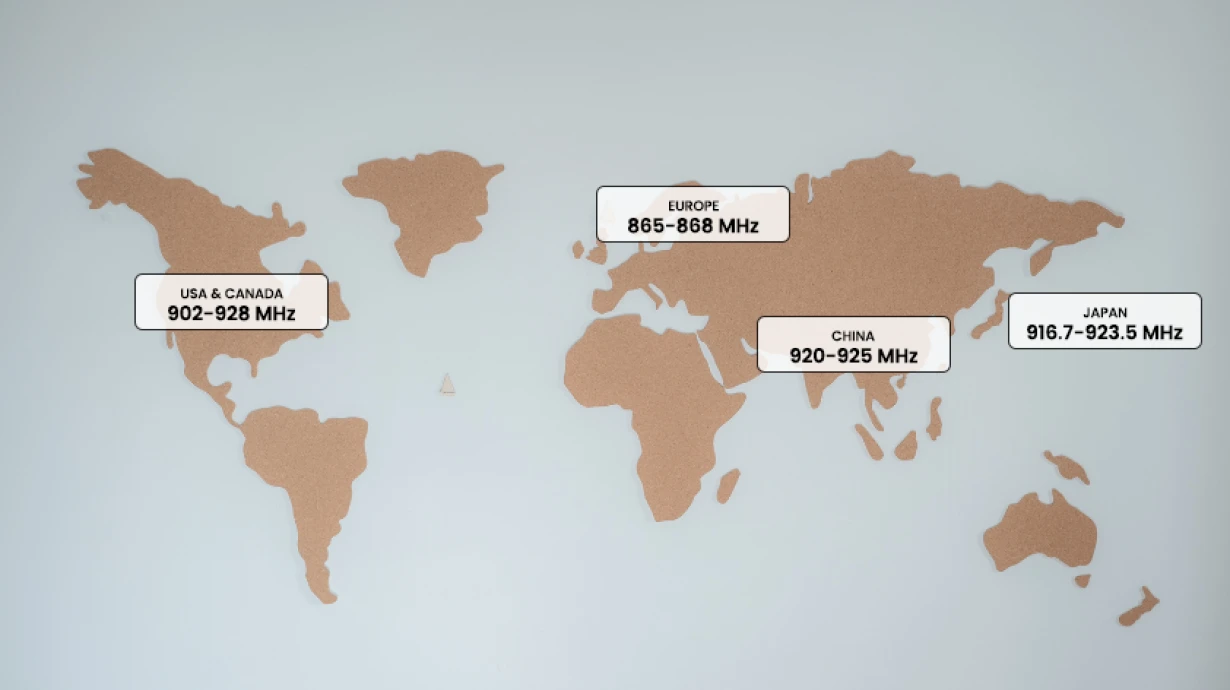
In North America, the management and use of RFID is subject to strict regulations, mainly regulated by the Federal Communications Commission (FCC) of the United States and the Canadian Department of Industry. The United States and Canada primarily use the UHF band (902-928 MHz) for UHF RFID technology worldwide. However, both countries impose clear restrictions on transmission power, typically limiting it to below 4 watts ERP (equivalent radiated power) to prevent RFID devices from interfering with other wireless communication systems.
In terms of application, RFID technology is widely used in the North American market, especially in the fields of retail, transportation and logistics. For example, American retail giants such as Walmart have adopted UHF RFID technology for inventory management and automatic settlement systems. In Canada, RFID is also widely used in supply chain optimization and commodity tracking, especially in the agricultural and energy industries.
Europe
The European Union manages UHF RFID systems through the ETSI EN 302 208 standard, which stipulates that its operating frequency band is 865-868 MHz and limits the transmission power to less than 2 watts. The purpose is to avoid interference with other electronic communication systems, especially in airports and areas with concentrated communication infrastructure.
RFID technology plays a significant role in Europe, especially in manufacturing and supply chain management. For example, Germany’s Industry 4.0 strategy promotes the construction of smart factories, where RFID tags automatically identify equipment and monitor production lines. In addition, RFID also plays a key role in Europe’s transportation and logistics systems, and many large logistics companies use the technology to track goods in real time, optimize transportation routes and reduce losses.
Asia (China and Japan)
As leaders in the Asian RFID market, China and Japan have their own RFID regulatory systems. In China, the UHF band of 920-925 MHz is widely used in logistics, transportation and retail. In order to promote the development of IoT technology, the Chinese government has promoted the application of RFID in smart cities and smart logistics. For example, RFID plays a core role in the automation system of e-commerce warehousing and ports.
In Japan, the frequency band used by RFID is 916.7-923.5 MHz. Its applications are mainly concentrated in retail, manufacturing and transportation. For example, 7-Eleven convenience stores have significantly improved the accuracy and efficiency of goods management by using RFID technology for inventory management. In addition, RFID also has important applications in Japan’s transportation system, such as contactless payment for tickets and real-time passenger flow monitoring.
International RFID standards
For companies that need to deploy RFID systems in different countries, products need to meet international standards. In response to this, the International Organization for Standardization (ISO) and the International Electrotechnical Commission (IEC) launched the ISO/IEC 18000 series of standards, which define RFID air interface protocols for different frequency bands, including low frequency (LF), high frequency (HF) and ultra-high frequency (UHF). These standards ensure interoperability between different RFID systems and facilitate cross-border applications.
The International Telecommunication Union (ITU) coordinates frequency allocations worldwide to ensure that countries can unify standards when allocating RFID spectrum to reduce wireless interference, which is particularly important for multinational companies.
The importance of compliance
Compliance is critical for any company planning to deploy RFID systems on a large scale. Here are a few key considerations:
Data privacy
RFID technology often involves the capture and storage of personal or corporate information, which makes data privacy issues particularly important. Many countries and regions have strict legal regulations on the use of RFID data. For example, the EU’s General Data Protection Regulation (GDPR) makes detailed provisions for data collection and processing of RFID systems. Companies must ensure compliance with relevant privacy protection requirements when using RFID technology, especially when processing customer data.
Wireless Interference Management
To prevent wireless interference caused by overlapping frequency bands between RFID systems in different countries, regulatory agencies in various countries have imposed strict restrictions on RFID power output and frequency band usage. Enterprises must ensure that their RFID devices can operate normally without interfering with other communication systems, especially in high-density communication areas such as large cities or airports.
Product Certification and Labeling
Many countries require RFID devices to be certified before entering the market. Taking the United States as an example, the FCC stipulates that all RFID devices sold on the market must be certified and labeled to prove that they comply with local legal requirements. In the European Union, RFID devices must carry the CE mark, which indicates that their products meet European safety, health and environmental standards.
As the application of RFID technology continues to expand around the world, it is critical to understand and comply with laws, standards and compliance requirements in various regions. By following international standards and ensuring compliance with local laws and regulations, enterprises can not only avoid potential legal risks, but also better leverage the advantages of RFID technology and improve operational efficiency and market competitiveness.
Frequently Asked Questions about RFID Regulations Worldwide
- What regulations should enterprises pay special attention to when deploying RFID systems in different countries?
The main regulations that companies should pay attention to include restrictions on RFID frequency bands and power usage in various countries, data privacy laws (such as the EU’s GDPR), and device certification requirements (such as the US FCC certification and the European CE mark).
- Why is compliance with international standards related to RFID particularly important for multinational companies?
Compliance with international standards (such as the ISO/IEC 18000 series) can ensure the interoperability of RFID systems worldwide, enable devices to be used legally in different countries and regions, and avoid wireless interference issues.
- How do the power limitations and frequency band usage of RFID devices affect their global deployment?
Different countries have different regulations on the transmission power and frequency bands used by RFID devices. Excessive power or incorrect frequency band usage may interfere with other communication systems.


